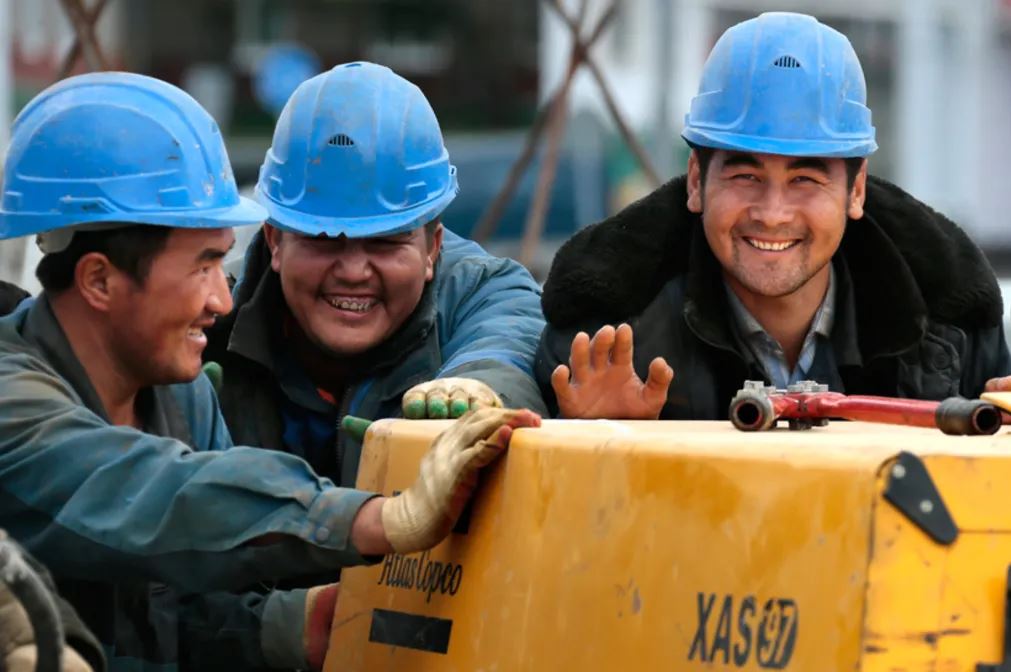
Stricter migration policies in Russia have led to a decline in the number of labor migrants from Central Asia, prompting concerns in countries heavily reliant on remittances such as Kyrgyzstan, Uzbekistan, and Tajikistan.
A report by Nezavisimaya Gazeta notes that the increasingly rigid legal environment in Russia is discouraging new arrivals and complicating the status of many already in the country.
Experts reportedly warn that without systemic reforms, the current approach risks pushing more migrants into illegal status.
Despite the reduction in migrant numbers, remittance flows to Central Asia remain strong. The International Organization for Migration (IOM) and the World Bank report that Tajikistan received US$5.8 billion in remittances in 2024 — a 27-percent increase compared to 2023.
Russia continues to be the main destination for Tajik workers. As of August 2024, over 1.2 million Tajik citizens were residing there. However, other countries are becoming increasingly popular. South Korea, for instance, officially employed 6,339 Tajik workers in 2024 — a 40% jump from the previous year.
Migration expert Asylbek Egemberdiyev believes Russia’s current policy framework is ineffective and counterproductive. “The lack of clear mechanisms for legal employment leaves migrants vulnerable and unprotected,” he said. Egemberdiyev advocates for a structured “work visa” system with terms ranging from six months to two years, allowing for transparency, legal protections, and more sustainable labor migration.
He also expressed concern over a Russian presidential decree enabling broader deportation of foreign nationals. According to estimates cited by Nezavisimaya Gazeta, there are currently around 70,000 undocumented migrants from Kyrgyzstan, 200,000 from Tajikistan, and more than 500,000 from Uzbekistan living in Russia.
The situation is further complicated in Kyrgyzstan, where over 100,000 citizens are reportedly unable to travel abroad due to administrative restrictions — exacerbating the impact of migration policy changes in Russia.
Egemberdiyev concludes that without reform, Russia risks damaging its long-term influence in the region, while Central Asian states face growing economic pressure as labor migration routes narrow.