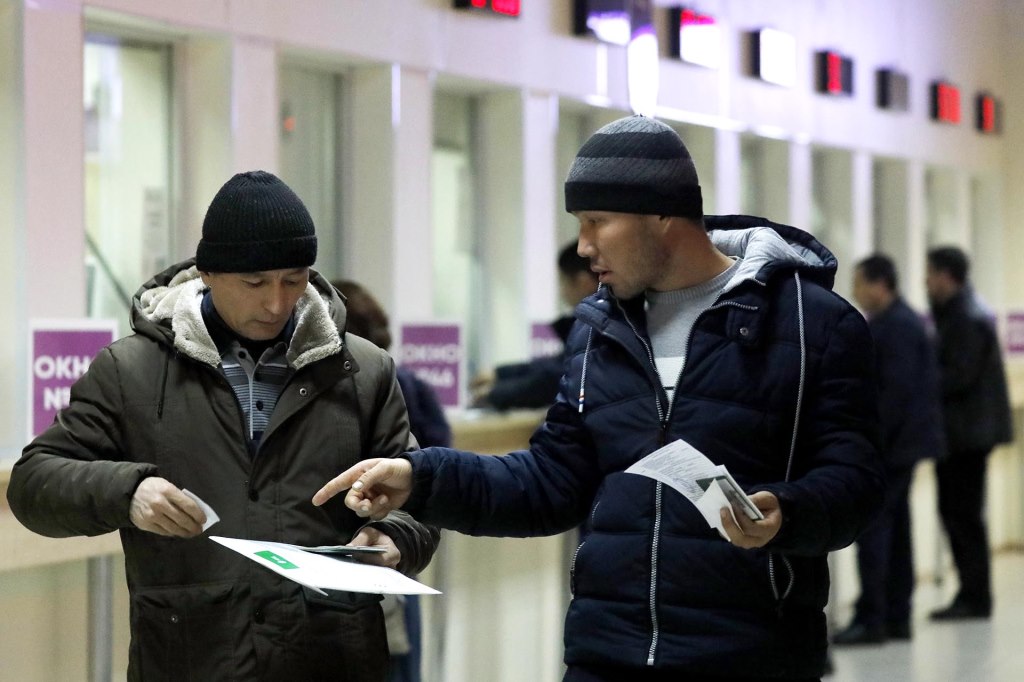
Starting September 1, a new pilot program will be launched in Moscow and the Moscow oblast to implement updated mechanisms for monitoring foreign nationals. The State Duma (Russia’s lower chamber of parliament) passed the corresponding law in its third reading.
According to the document, the experiment will run until September 1, 2029, and will apply to foreign citizens who entered Russia visa-free. Exceptions include citizens of Belarus, minors, diplomats and their families, and representatives of international organizations.
How will it work?
To receive public services related to migration, foreign nationals will be required to:
- Register at their actual place of residence;
- Undergo fingerprinting and biometric photography;
- Install a special mobile application and consent to the processing of their personal data, including location data and mobile device information.
Through the app, migrants must report their current location to the Ministry of Internal Affairs (MVD) and notify the authorities within three working days if they change their place of stay.
Exceptions apply when staying in hotels, health resorts, hostels, medical institutions, and other officially registered accommodations.
What happens if they don’t report?
If a migrant fails to provide location data — for instance, by disabling geolocation — for more than three working days, they will be removed from the migration registry. If they have no legal grounds to remain in Russia, their information will be added to a registry of “monitored persons.”
Removal from the registry may also occur if:
- The migrant is registered in a region not participating in the pilot program;
- They leave Russia;
- Or in the event of the migrant’s death.
New flexibility for migrant workers
The new law also grants additional rights to migrant workers: they will be able to work in two neighboring regions using a single work patent — for example, in both Moscow and the Moscow region, or in St. Petersburg and the Leningrad region.
Previously, employers and foreign workers were required to obtain separate work patents for each region, leading to higher costs and bureaucratic delays, especially for construction companies operating across regional borders.
What is the goal?
State Duma Speaker Vyacheslav Volodin says the new digital system is designed to “reduce violations and crimes in the migration sector” through the use of modern technology. If the experiment proves effective, it may be expanded to other regions across Russia.