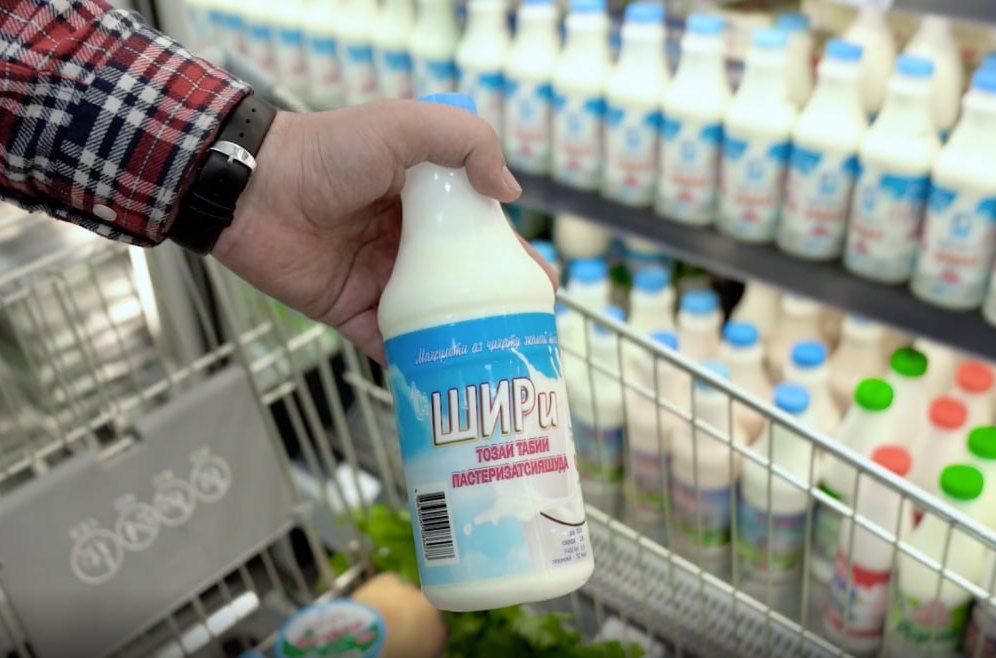
Milk prices in Tajikistan have nearly tripled over the past ten years, reflecting broader food inflation trends despite steady growth in domestic production. However, local supply still fails to meet national demand, pushing the country to increasingly rely on imports.
From 4 to 12 somonis: a decade of rising prices
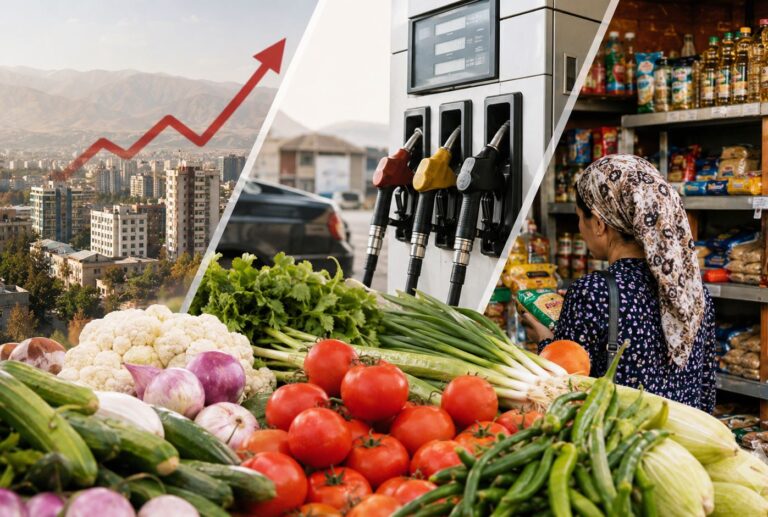
In May 2015, a liter of milk in Dushanbe cost 4 to 6 somonis. By May 2020, prices had risen to 5–8 somonis, and as of May 2025, milk is selling for 8–12 somonis per liter. Similar trends are seen in the regions, where prices have doubled from 3–5 somonis in 2015 to 6–9 somonis this year.
While a 1.7% monthly price drop was recorded in April–May 2025, prices have still increased 6.3% since December 2024 and 10.4% compared to April 2024, according to Tajikistan’s national statistics agency.
Local production growing, but still insufficient
Between January and April 2025, Tajikistan produced over 287,000 tons of milk—5.6% more than during the same period in 2024. Annual milk output reached 1.18 million tons in 2024, up 5.3% from the previous year, according to the Ministry of Agriculture.
Still, supply falls short of demand. The Ministry of Economic Development and Trade recommends 316 grams of milk per person per day. Forecasts are optimistic, projecting total milk production to reach 1.3 million tons by 2027.
Whole milk processing is also on the rise. The Ministry of Industry and New Technologies reports 21,100 tons produced in 2024, with expectations for this to increase to 31,100 tons by 2027—an indicator of growing industrial capacity and diversification of dairy products.
Imports surge to fill the gap
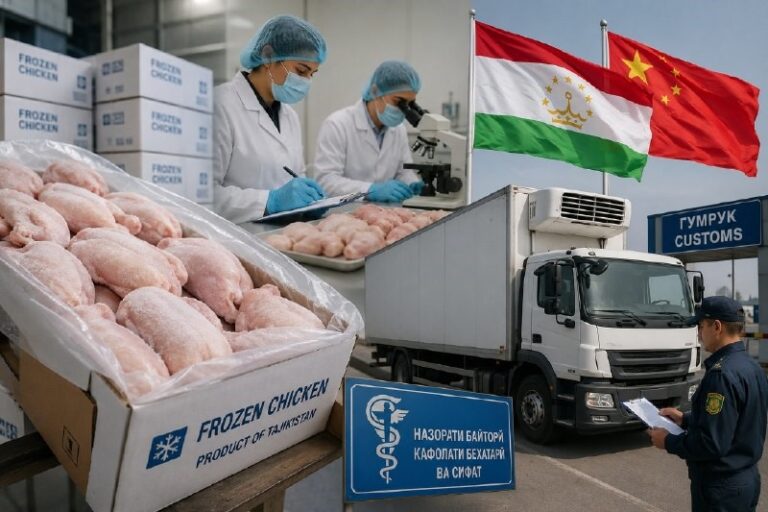
With demand outpacing local supply, milk imports are climbing rapidly. In the first quarter of 2025, Tajikistan imported over 3,000 tons of dairy products worth US$6 million. In 2024, imports totaled 12,000 tons valued at over US$22 million.
Forecasts show further increases: 183,000 tons of dairy products are expected in 2025 (+23.5%), 239,000 tons in 2026 (+30.2%), and 300,000 tons in 2027 (+25.5%). These imports include products difficult to produce domestically—such as powdered milk, baby formula, cheese, and yogurt.
Per capita consumption still below recommended levels
Despite the growth in imports and production, milk consumption remains below the recommended annual intake of 115.3 liters per person. In rural areas, average consumption is about 63.6 liters annually—roughly 55% of the norm—while urban residents consume around 62.8 liters.
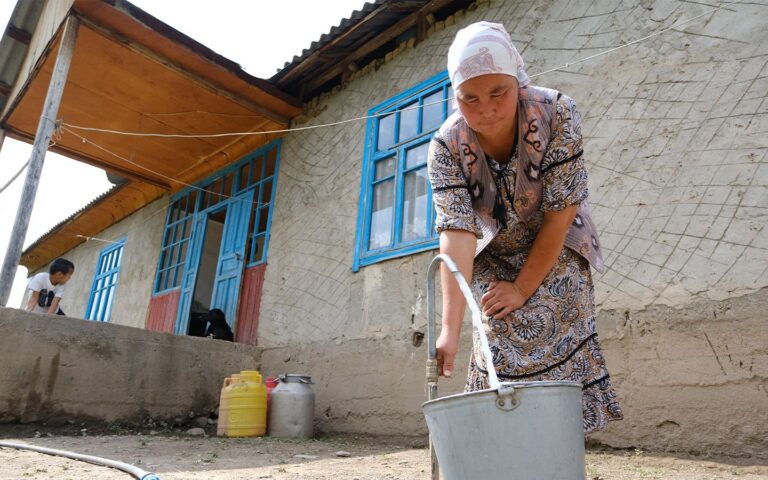
Limited access to dairy products, especially in remote areas, and dietary habits that do not prioritize milk contribute to the low figures. Many rural families own cows but do not consume milk regularly due to cultural and seasonal factors.
Weak infrastructure hampers market development
Experts point to underdeveloped processing and poor infrastructure as major obstacles to a stronger dairy sector. Although production has grown from 950,000 tons in 2017 to over 1 million tons today, less than a third of milk is industrially processed—leading to waste and discouraging farmers from expanding operations.
A lack of refrigeration facilities, modern laboratories, and collection networks undermines milk quality and safety. Most milk is produced by households and small farms with limited profitability and weak ties to processors, hindering large-scale improvements.
Specialists note that seasonal fluctuations (with higher output in spring and summer), rising global dairy prices, and poor logistics contribute to domestic price volatility and growing dependence on foreign imports.