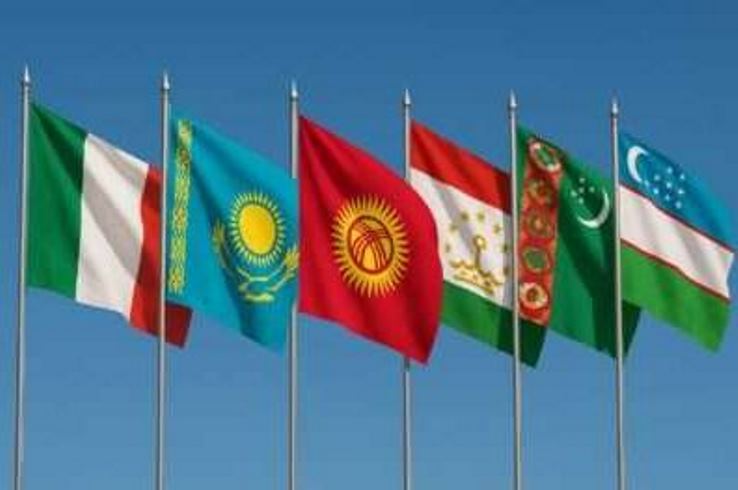
European nations, including Italy, have ramped up their diplomatic and economic outreach to Central Asia throughout 2025, reflecting the region's rising importance in global geopolitics, according to a recent analysis by Giuliano Bifolchi, co-founder and research manager at SpecialEurasia.
Bifolchi’s article, First “Central Asia + Italy” Summit Confirms the Regional “New Great Game”, examines Italian Prime Minister Giorgia Meloni’s late May visit to Kazakhstan and Uzbekistan, as well as her participation in the inaugural “Central Asia + Italy” summit. He argues the summit marks a new phase of engagement between Rome and Central Asian republics, amid intensifying competition from Russia, China, Turkey, and Iran.
Europe eyes Central Asia’s strategic potential
According to Bifolchi, the growing European involvement in the region signals a broader intent to diversify diplomatic and economic ties, especially in the wake of Russia’s war in Ukraine and the shift toward a multipolar world order. Italy, in particular, is positioning itself as a bridge between Central Asia and Europe through trade, infrastructure, and cultural diplomacy.
“Prime Minister Meloni’s visit underlined Rome’s desire to play a key role in Eurasian affairs,” Bifolchi writes. “Italy’s strategic location in the Mediterranean makes it a potential gateway for Central Asian goods to reach European and African markets.”
He notes that through 2025, European nations such as Germany, France, the UK, and Italy have intensified their engagement with Central Asian governments—focusing on investment, diplomatic cooperation, and cultural ties.
Geopolitical challenges remain
Despite these efforts, Bifolchi warns of persistent structural and geopolitical barriers that may hamper future cooperation.
Central Asia’s landlocked geography limits access to global trade routes. The region's reliance on access through Iran, Pakistan, Afghanistan, or potentially India is complicated by sanctions, domestic instability, and unresolved conflicts:
Iran: While Iranian ports are a potential trade route, EU and U.S. sanctions make increased activity politically sensitive.
Pakistan: Ports like Karachi and Gwadar are viable options but are threatened by insurgent activity and political instability.
Afghanistan: Though geographically strategic, security risks—particularly from groups like Islamic State Khorasan Province (ISKP)—remain high.
India-Pakistan: Ongoing tensions between New Delhi and Islamabad hinder the feasibility of overland trade through South Asia.
In this context, many Central Asian countries have increasingly relied on China’s Belt and Road Initiative and have engaged in multilateral structures like the Eurasian Economic Union. Simultaneously, they seek to balance these ties with stronger relations with European partners.
Italy’s unique position
Bifolchi argues that Italy might hold a diplomatic advantage, as it is perceived by Russia and China as a less confrontational player compared to Germany or France. This, combined with Italy’s emphasis on soft power—especially academic and cultural diplomacy—could allow Rome to carve out a distinct role in the region.
Still, Italy’s limited security and economic leverage compared to other EU powers may curb its influence. Moreover, concerns over governance, democracy, and human rights in some Central Asian nations could strain partnerships if European actors push for reforms.
“The EU must proceed cautiously,” Bifolchi notes. “While promoting modernization and engagement, European countries need to avoid direct challenges to domestic power structures—at least in the short term.”
Strategic outlook: opportunities and risks
The expert outlines several scenarios for Italy’s involvement:
Positive Scenario:
Italy could emerge as a strategic link between Central Asia and the Mediterranean, enhancing trade access to Europe, North Africa, and the Middle East.
Stability in the region may attract further European investment in sectors like energy, transport, and infrastructure.
Continued success in cultural diplomacy could significantly boost Italy’s long-term influence.
Negative Scenario:
Rising tensions with Russia, China, or Iran could limit European engagement.
Regional instability—linked to terrorism, water disputes, or domestic unrest—could deter investment.
Friction with EU institutions over democratic standards may complicate long-term cooperation.
As Bifolchi concludes, the first “Central Asia + Italy” summit not only reflects growing ties between Rome and the region but also highlights the complex challenges that lie ahead for all actors involved in Central Asia’s evolving geopolitical landscape.