Russia’s State Duma to review bill on sharing migrant children data with interior ministry

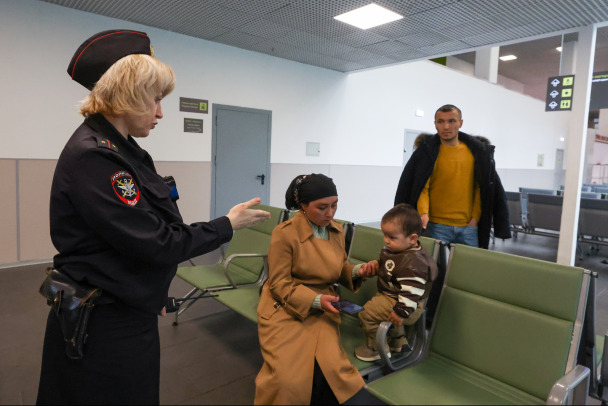
The State Duma (Russia’s lower chamber of parliament) is set to review a bill on June 10 that would mandate the transfer of migrant children’s data from educational authorities to the Interior Ministry.  If passed, the bill could take effect as early as September 1. Under the proposed legislation, educational institutions would be required to […]

Asia-Plus

The State Duma (Russia’s lower chamber of parliament) is set to review a bill on June 10 that would mandate the transfer of migrant children’s data from educational authorities to the Interior Ministry.  If passed, the bill could take effect as early as September 1.

Under the proposed legislation, educational institutions would be required to share personal information about migrant children and their parents with the Interior Ministry.  This would include details such as Russian language test results, school enrollment and expulsion records, and the registration status of foreign nationals in the Interior Ministry's controlled persons registry.

In return, the Interior Ministry would provide educational authorities with information about the children’s registration or migration status, including their placement on migration records, the State Duma Speaker Vyacheslav Volodin said, according to RBC.

"This will allow for swift exchanges of information regarding the legal status of migrant children and their families in Russia, which will influence subsequent decisions. It will also help identify migrant children who have not enrolled in school, preventing their involvement in illegal activities and protecting them from harmful behavior," Volodin explained.

Additionally, the bill proposes that all migrant children undergo mandatory Russian language proficiency testing, with results to be entered into a federal information system.

Earlier in April, RBC reported that the government commission had endorsed the initiative, which involves amendments to several federal laws.  Vice Prime Minister Tatyana Golikova, in an interview with Expert, emphasized that these changes are crucial not only for safeguarding children's right to education but also for enforcing migration laws and ensuring national security.

Since April 1, Russian schools have been prohibited from enrolling migrant children who do not demonstrate proficiency in the Russian language.  To meet the required standard for the school curriculum, migrant children must undergo language testing.  If a child fails, they will be required to attend additional classes, with retesting allowed only after three months.

Volodin noted that the new regulations have already shown effectiveness, with only 4% of applicants having been accepted into schools, highlighting the stringent language proficiency requirements for migrant children.


Join us on social media!

Article translations:

Related Article

Оби зулол
Оби зулол
Tenisi

Most Read

Коммерсбонк Точикистон

Recent Articles

Major global investment companies show interest in Tajikistan’s economy

Among them are J.P. Morgan, Loomis Sayles & Company, Morgan Stanley Investment Management, and Global Evolution.

President Rahmon awarded UN University for Peace Certificate of Recognition

He is awarded for "significant contribution to establishing peace, developing regional cooperation, and strengthening mutual understanding between peoples."

Starlink satellite internet becomes available in Kyrgyzstan

And in Tajikistan, it was launched in February of this year.

In Dushanbe, 30 more new electric buses start operating

Each is designed to carry 100 passengers and can travel up to 300 kilometers without recharging.

Who is the man who “increased the Aryan race” and told the President of Tajikistan about it?

Kozie Koziyev, a folk craftsman, built dozens of houses, participated in the construction of a mosque and a kindergarten in Matcha, raised 11 children, and created a true dynasty of builders.

Tajik leader discusses water, climate, and global security issues with UN Deputy Secretaries-General

The parties paid special attention to the "Dushanbe Water Process," parliamentary diplomacy, and the peaceful resolution of conflicts.

Tajikistan completes the spring military draft target ahead of schedule

There is still a week left until the end of the conscription campaign.

Custodian of non-written languages and builder of academic bridges; philologist Khusrav Shambezoda turns 70

He could have devoted himself exclusively to the study of classical heritage, but he chose the challenging path of preserving the living word — and Tajik-Russian science gained in him a brilliant sociolinguist whose name became synonymous with dedication.

Tajikistan ranks among the top three leading trade reformers in Europe and Central Asia

The country has shown progress in the digitalization of trade procedures, the reduction of paper barriers, and the enhancement of transparency for exporters.

China to send workers to Tajikistan for modernization of the Kulma BCP

This is the only land border crossing point between Tajikistan and China.