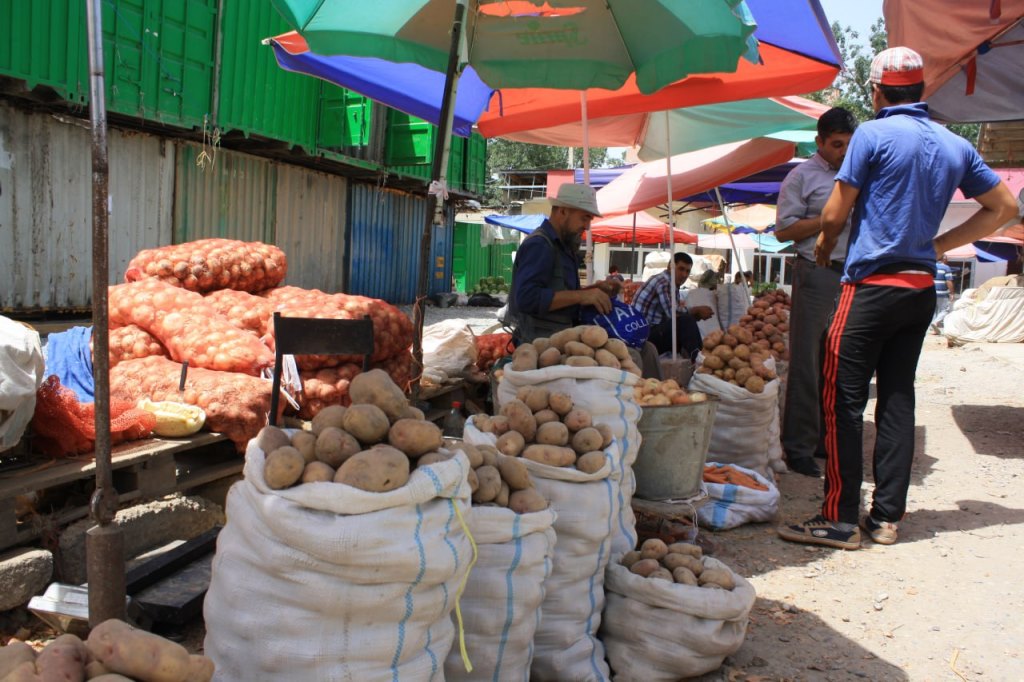
Vegetable prices in Tajikistan have soared over the past year, defying expectations for seasonal declines. According to market monitoring data from June 2024 to June 2025, the cost of key produce such as carrots and garlic has more than doubled, with cabbage and potatoes also experiencing significant hikes.
Record price increases hit carrots and eggplants
Among the most affected items, carrots have tripled in price, rising from 2.5 to 7–8 somonis per kilogram. Garlic prices nearly doubled from 17 to 29 somonis. Cabbage prices jumped from 3 to 6 somonis, while potatoes increased from 5 to 6–7 somonis. Beets rose more moderately, now averaging 6.40 somonis per kilogram.
Particularly steep spikes were recorded for greenhouse and seasonal vegetables. Eggplants saw a dramatic sixfold increase. Tomatoes, which cost 6 somonis in summer 2024, spiked to 19.55 somonis by April 2025 before falling back to 10 somonis. Bell peppers surged from 9.00 somonis to a peak of 35 somonis in March 2025, then dropped to 15 somonis by June. Cucumber prices fluctuated between 4.00 somonis and 18 somonis over the year.
Why are prices rising? Experts point to weather, costs, and imports
Economic analyst and agri-market expert Abdurahmon Saidov told Asia-Plus that several factors are driving the inflation.
“Firstly, adverse weather conditions delayed planting and harvesting, affecting supply,” he said.
Cold and rainy weather in spring 2025 caused crop delays across several regions, leading to temporary shortages during the typical peak market season, pushing prices up.
“Secondly, rising logistics, fuel, and packaging costs have significantly increased production expenses,” Saidov explained.
Higher prices for gasoline and diesel have made transporting vegetables from farms to markets more expensive.
“Lastly, instability in foreign markets has driven up the cost of imported vegetables,” he added.
Global food inflation — driven by geopolitical and climate pressures — has made importing produce from neighboring countries more expensive, further squeezing the domestic market and contributing to overall price inflation.
Supermarkets: premium prices for premium produce
In Dushanbe’s supermarkets, prices in June 2025 varied based on product type, freshness, and origin. Consumers could choose between locally grown staples and higher-priced imports or premium-grade vegetables.
For example:
- White cabbage: 4.50 somonis/kg
- Red cabbage: 7.50 somonis/kg
- Chinese and cauliflower: 12.50 somonis/kg
- Beets: 7.50 somonis/kg
- Carrots: 10.50 somonis/kg
- “Picasso” new potatoes: 8.50 somonis/kg
- Bell peppers: from 17.50 to 32.50 somonis depending on variety
- Garlic: 35.90 somonis/kg (regular), 24.90 somonis/kg (young)
- Tomatoes: 7.50 somonis/kg
- Cucumbers: 4.20 somonis/kg
- Eggplants: 15.90 somonis/kg
Economist Rustam Mirzoyev told Asia-Plus that these prices reflect both quality and logistical considerations.
“Greenhouse and imported produce, as well as top-grade items, are always more expensive. Supermarket operations also involve additional costs — storage, refrigeration, rent — all of which impact final retail prices,” he said.
As a result, prices for the same item can vary significantly across the city. Many residents turn to traditional markets, where seasonal produce tends to be cheaper, in search of savings.