Tajikistan has signaled its intention to join the ambitious China–Kyrgyzstan–Uzbekistan railway project, a key component of the New Silk Road transport initiative. The announcement follows a meeting between Tajik Transport Minister Azim Ibrohim and Chinese Transport Minister Liu Wei, held on the sidelines of the 12th SCO transport ministers’ meeting in north China's Tianjin Municipality on July 2.
According to the Tajik Ministry of Transport (MoT)’s press center, discussions focused on integrating Tajikistan into the planned rail link, as well as expanding the broader multimodal corridor connecting China, Tajikistan, Uzbekistan, Turkmenistan, Iran, Turkiye, and Europe.
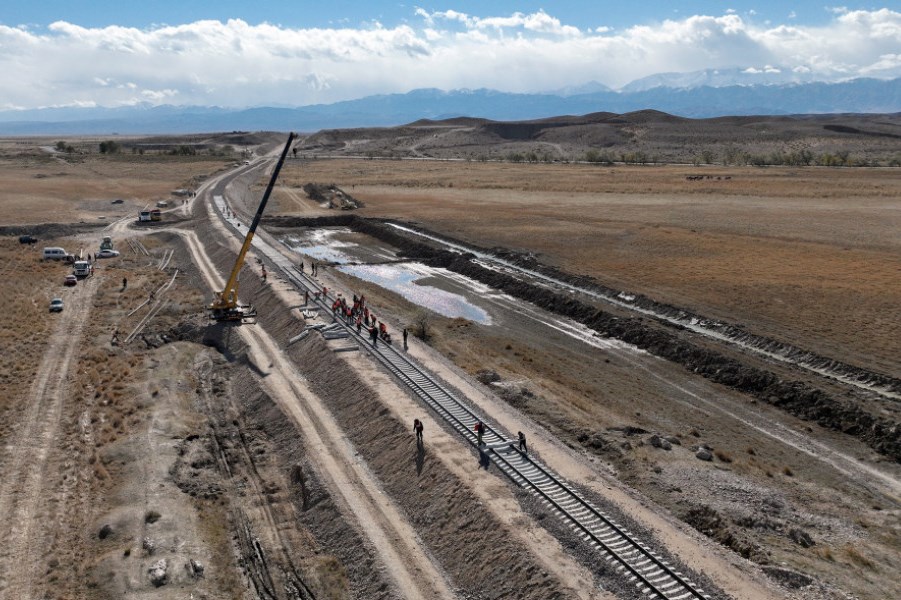
The China–Kyrgyzstan–Uzbekistan railway aims to link the rail networks of these countries and provide a direct route from China to Europe through Central and West Asia. Following extensive negotiations, the northern route through Kyrgyzstan was selected. It will begin in Kashgar (China), pass through the Torugart checkpoint and Arpa Valley, then continue via the villages of Kosh-Debe and Makmal, reaching Jalal-Abad in Kyrgyzstan, before entering Uzbekistan.
Initial plans projected the Kyrgyz segment at 268.4 kilometers and the Chinese section at 165 kilometers, with a total length of 454 kilometers. However, updated figures place the railway's full length at 532.53 kilometers—158.04 km in China and 304.94 km in Kyrgyzstan.
Tajikistan's interest in the project revives earlier efforts to expand regional connectivity through rail. In December 2014, a preliminary agreement was signed in Dushanbe to develop the China–Kyrgyzstan–Tajikistan–Afghanistan–Iran railway, envisioning a line stretching from Kashgar (China) through Kyrgyzstan and Tajikistan to Herat (Afghanistan), ultimately linking with Iran’s railway network.
Iran had previously pledged US$1 million in grant assistance to Tajikistan for feasibility studies on the railway route through Iran, Afghanistan, Tajikistan, Kyrgyzstan, and China. A memorandum of understanding was signed between Tajikistan’s Ministry of Transport and Iran’s Metro Company, and the agreement was ratified by the lower house of Tajikistan’s parliament.
The proposed Tajik segment of the route, approximately 270 kilometers in length, would run from Vahdat Township through the Rasht Valley to the Kyrgyz border near Karamyk.
However, the Iranian government halted funding for the preliminary feasibility study, having released only one installment of US$200,000 in 2013.
Tajikistan’s renewed interest in the China–Kyrgyzstan–Uzbekistan railway underscores its strategic push for enhanced regional integration and greater access to international markets via expanded transport infrastructure.
Meanwhile, China’s Xinhua reports that the 12th meeting of the Shanghai Cooperation Organization (SCO) Ministers of Transport was held in north China's Tianjin Municipality on July 2, with SCO transport ministers agreeing to strengthen regional connectivity.
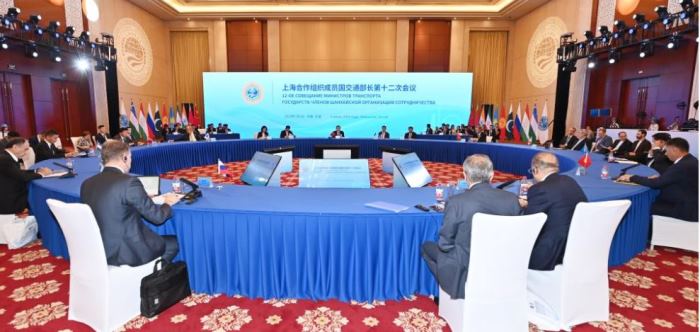
During the meeting, a memorandum of understanding (MoU) on the joint construction of "Silk Road Stations" was signed among the transport sectors of the SCO member states.
China's Minister of Transport Liu Wei reportedly said that the proposed Silk Road Stations will offer essential facilities such as parking, rest areas and hot water for international freight drivers across SCO regions.
The initiative addresses critical infrastructure gaps along rapidly expanding trade corridors, where insufficient rest stops and maintenance facilities have contributed to driver fatigue and logistical inefficiencies amid rising cross-border passenger and cargo flows.
The meeting gathered transport authorities from Pakistan, Mongolia, Belarus, Kyrgyzstan and Tajikistan. Participants reportedly also held in-depth discussions on accelerating cooperation on projects such as advancing the high-quality development of the China-Europe Railway Express and implementing electronic permits for international road transport.