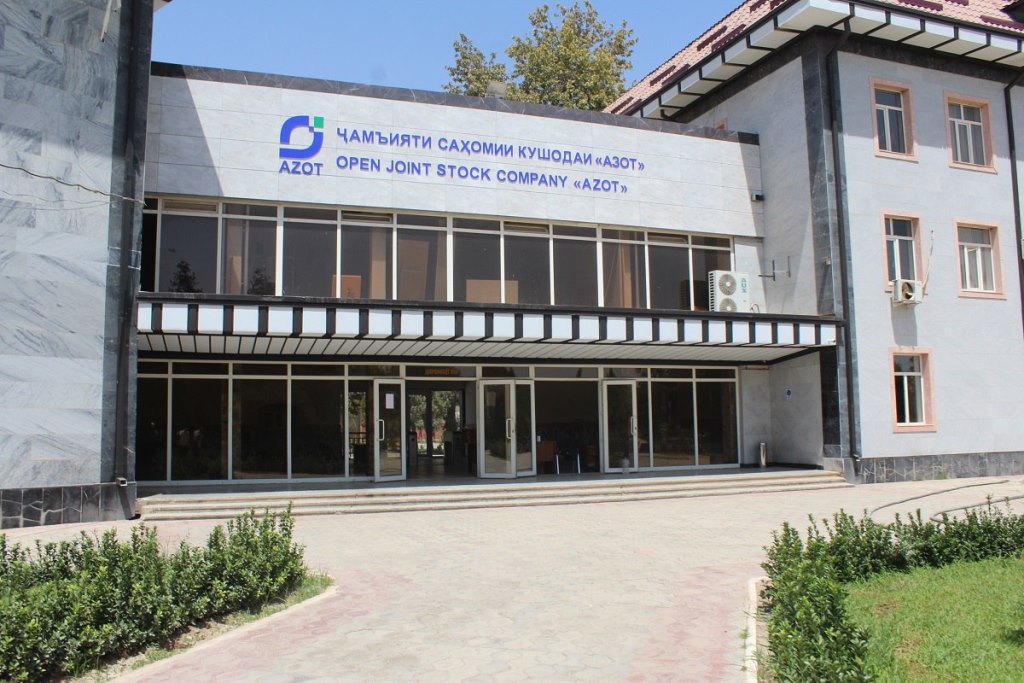
More than 41,000 tons of urea are sitting in warehouses at OJSC Azot (fertilizer plant) in Levakant, ready for sale and agricultural use, but buyers have been slow to place orders, Tajikistan’s Minister of Industry and New Technologies Sherali Kabir told reporters in Dushanbe last week.
Over the first six months of this year, the plant has reportedly produced goods worth about 27.5 million somonis (US$2.5 million), including carbon dioxide, humic and potassium humates, urea, and oxygen — down 7.9 million somonis from the same period last year.
Sales for the period included over 8,600 tons of urea. Officials say reduced domestic purchases and the seasonal nature of demand are the main reasons for the production slowdown.
Farmer confidence growing slowly
Agronomist Bakhtiyor Haitboyev said he tested the Levakant plant’s urea on his rice fields and was satisfied with its quality. “Initially, I was cautious. For many years, Tajik farmers used urea from Uzbekistan, as we didn’t have our own production. The first batches from Levakant were met with hesitation. But now that Uzbek imports have disappeared due to customs duties, farmers are gradually switching to the local product. The quality is on par with foreign analogues. What’s needed is time and a good marketing campaign,” he said.
Revival of a key fertilizer producer
Specialists note that Tajikistan needs at least 500,000 tons of mineral fertilizers in order to obtain optimal crop yields.
OJSC Azot produces mineral fertilizers and their components, including urea, ammonia, nitrogen, etc.
The debt-ridden and loss-making fertilizer plant was not in operation from 2008 to April 2022 due to lack of natural gas supplies.
Until 2008, when neighboring Uzbekistan upped the price of natural gas, a key input for the factory, TojikAzot served as a foreign investment-success story for Tajikistan’s economy.
The new owner of OJSC Azot is Osiyo Chemical Company. Under the management of Osiyo Chemicl, the facility underwent significant restoration and modernization was reintroduced into operation in April 2022. Initially estimated at 200 million somonis, investments reportedly exceeded 400 million somonis.
In 2023, the plant had produced 162.7 million somonis worth of products; in 2024, output totaled 110.9 million somonis. Its main production lines include urea, ammonia, and other mineral fertilizers, with plans to expand the product range and boost output.
If OJSC Azot operates at full capacity, it could produce 123,600 tons of ammonia and 180,000 tons of urea annually.