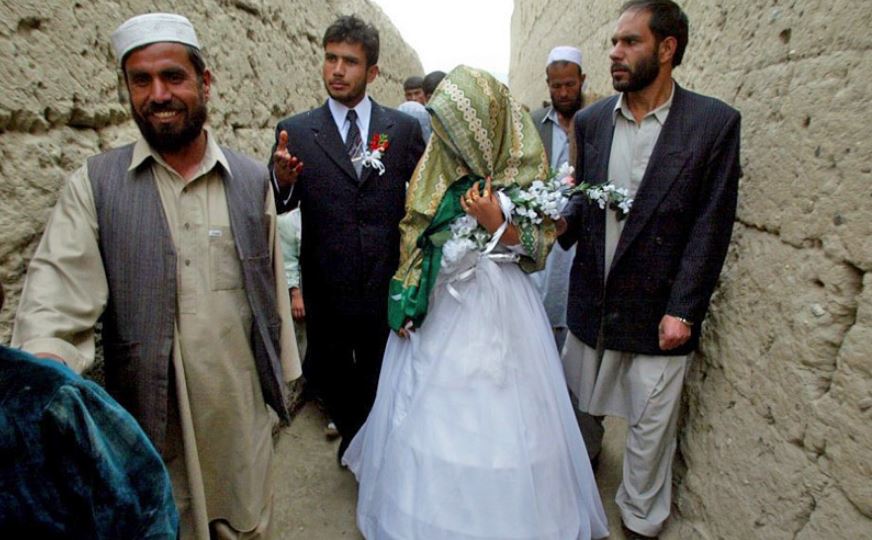
The Taliban have banned a number of wedding customs and the practice of giving expensive gifts.

The leader of the Taliban movement, Hibatullah Akhundzada, issued a decree banning a number of wedding ceremonies, which he called "un-Islamic" and too expensive for families. The document was published by the Ministry of Justice of Afghanistan, Ferghana reports, citing Afghan media. Dowry, payment of "toyana" for wedding expenses, pre- and post-wedding parties, "shirini hori", […]

Asia-Plus

The leader of the Taliban movement, Hibatullah Akhundzada, issued a decree banning a number of wedding ceremonies, which he called "un-Islamic" and too expensive for families. The document was published by the Ministry of Justice of Afghanistan, Ferghana reports, citing Afghan media.

Dowry, payment of "toyana" for wedding expenses, pre- and post-wedding parties, "shirini hori", an engagement ceremony, lavish banquets and the exchange of expensive gifts were banned.

According to the decree, weddings must take place at the groom's place of residence and within his financial means. Contests with valuable prizes, festive shooting and dangerous driving during wedding events are prohibited.

The practice of "badal", the exchange of daughters between families to settle disputes, was also banned.

It is also prohibited to pay "valvara" (the cost of the bride) and similar financial demands from the groom's family.

It is forbidden to use state-owned vehicles at wedding celebrations.

The custom of "ronamai", the exchange of gifts after the wedding, is also recognized as illegal.

The document emphasizes that weddings should take place shortly after the engagement and the conclusion of the prenuptial agreement in order to reduce costs.

The decision is related to the economic crisis in Afghanistan, where high unemployment and poverty levels make marriage unaffordable for many young people.

Residents of the country complain that expensive weddings exacerbate social problems.

Previously, the Taliban had already imposed restrictions on wedding celebrations: they banned live music, alcohol, dancing between men and women and participation in competitions.
Article translations:

Related Articles

Оби зулол

Most Read

Join us on social media!

Recent Articles

Emomali Rahmon accepted the credentials from new ambassadors

Nine countries have sent new diplomats to Tajikistan.

Russia evacuated 27 Tajikistan citizens from Iran

They worked at the Bushehr nuclear power plant, built by the Russian Federation in Iran.

Baku to host WUF13: shaping the future of sustainable urbanization

Baku, the capital of Azerbaijan, is set to host...

How the Energy Industry Began in Tajikistan 100 Years Ago

We have prepared a historical photo series for you.

Tajikistan and Belarus to establish a joint laboratory for radiation monitoring and nuclear safety

An agreement was signed by the Tajikistan Agency for Nuclear and Radiation Safety and the Belarusian National Technical University.

Former Press Secretary of Emomali Rahmon Sent a Letter to the President Requesting Support for Media Workers

Zafar Sayidzoda believes it is necessary to establish a Media Support Fund, which should operate in the interests of all media — both state and private.

Neither War nor Peace: What Will Be the Next Step for Iran and the US After the Failure of Negotiations?

Tajik experts say that Iran has another leverage that could pose a serious threat to the Trump administration.

In Dushanbe, a criminal group issuing SIM cards and bank cards to fictitious persons was exposed

Through illegally issued plastic cards, the suspects were withdrawing money from an online casino game.

The eKhonish program, an analogue of eDonish, launched in Bokhtar

Now parents and education representatives will be able to remotely monitor students' attendance and academic performance.

#AP30/Experts. Rashid Ghani Abdullo: “Asia-Plus” has become a brand of Tajikistan

A well-known Tajik political scientist expressed his opinion on the role of our media in the informational space of the country and the region.