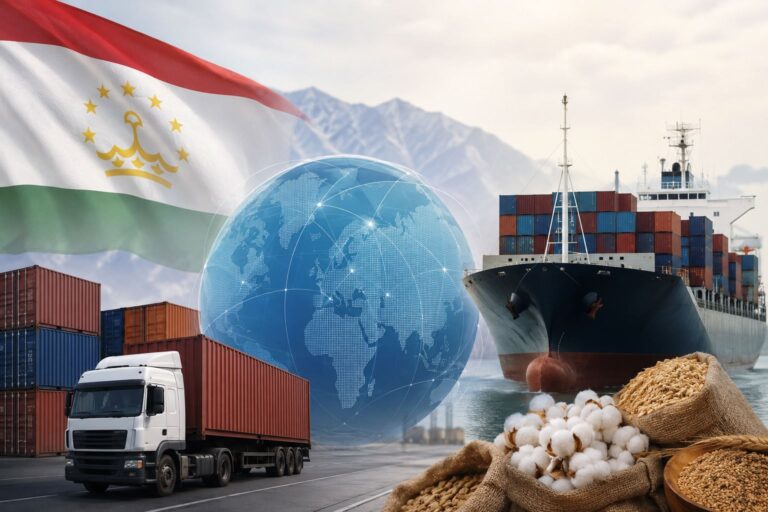
As Tajikistan navigates the next phase of its economic development, a critical question is emerging: how can the country train a new generation of leaders capable not just of adapting, but of driving the economy forward? At the center of this conversation is the growing call for a “Unified Business Education Standard.”
However, experts warn that before such a framework is implemented, the country must first define what it truly means. Without a clear understanding, Tajikistan risks turning a crucial initiative into a set of disjointed efforts. Enter a new concept: the “business standard.”
Business standard ≠ academic standard
Unlike traditional educational standards, which are set and regulated by the Ministry of Education and Science of Tajikistan and dictate rigid academic structures, a business standard operates differently. It is not an attempt to control academia, but rather a complementary framework shaped by economic demands, practical experience, and business realities.
A business standard does not impose new requirements on universities. Instead, it creates a common ground where educators, employers, and entrepreneurs can align on the competencies and values needed for the country’s sustainable growth.
What is a business standard?
A business standard is an open intellectual framework built on collaboration. Within this framework, key elements are aligned:
- Core competencies for managers, entrepreneurs, and marketers
- Shared terminology and conceptual understanding
- A connected educational pipeline — from school-level programs to MBA and DBA levels
- Ethical principles guiding the relationship between educators, employers, and students
- Mechanisms for recognizing knowledge, transferring skills, and investing in lifelong learning
It’s not a bureaucratic regulation, but a platform of trust that bridges the gap between business, education, and the state — one focused on outcomes, innovation, and national strategy.
Why now?
Because Tajikistan is entering a new institutional phase of economic maturity. Until now, business education in the country has evolved in a fragmented way — with each university, course, and company operating independently, often following Russian, Western, or improvised models.
But without a unified framework and shared vocabulary, there can be no system-wide progress, no stable talent pipeline, and no trust between key stakeholders. The business standard aims to transform this chaos into a coherent ecosystem.

A job for the scientific community
Developing a national business standard is not merely an administrative task — it is a scientific one. Academics are best positioned to turn fragmented practices into a functional system.
The research community must:
- Define key terms and concepts
- Establish benchmarks for organizational maturity
- Propose a flexible structure that different players can join voluntarily, but within a shared strategic direction
A business standard isn’t a replacement for state education standards (GOS); it’s a bridge between market reality and academic logic, enabling reform without dismantling existing institutions.
Building Tajikistan’s own model
Tajikistan is not duplicating foreign educational systems — it is building an intellectual infrastructure that connects education with the real economy. That infrastructure is the business standard.
If embraced by all stakeholders — government, academia, and the private sector — this initiative could give Tajikistan a powerful advantage: the ability to build a homegrown, competitive, and resilient model of business education, uniquely suited to its national identity and economic goals.