While Uzbekistan is rolling out sweeping reforms to support small businesses and self-employed citizens, individual entrepreneurs (IEs) in Tajikistan continue to operate under a more complex and burdensome tax system.
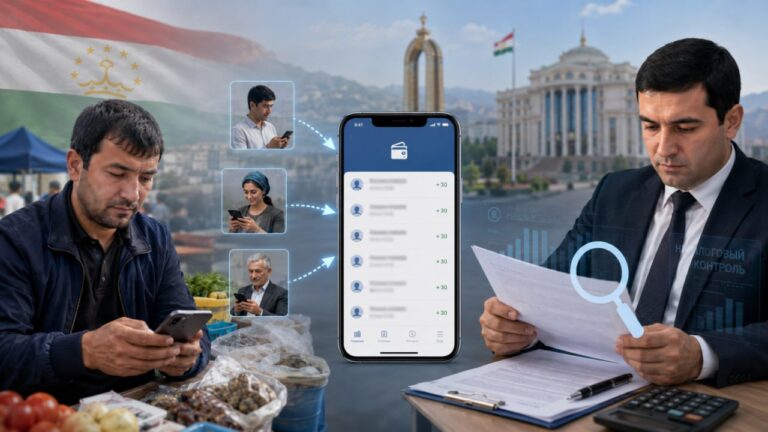
Starting January 1, 2026, Uzbekistan will introduce a reduced turnover tax of just 1% for IEs and self-employed individuals earning up to 1 billion soums annually — down from the current rate of 4%. According to the official website of the Uzbek president, this move aims to legalize income, encourage entrepreneurship, and simplify administrative procedures. The reforms are part of a broader initiative to digitize public services and promote cashless payments.
Self-employed citizens in Uzbekistan — such as tutors, hairdressers, and freelancers — can register within minutes using the Soliq tax app and pay a flat social tax of 108,000 soums (about $8.70) per month. They are exempt from income and turnover taxes until their annual earnings exceed 100 million soums ($8,100). Meanwhile, IEs pay a 4% turnover tax and the same social tax, with additional levies depending on business type, including ecological and tourism-related fees.
From November 2025, new technologies like QR payments, tap-to-pay, and biometric signatures will become standard for Uzbek entrepreneurs. Daily salary payments through e-wallets and mandatory QR codes for retailers will further modernize the business environment. Crucially, having a bank account will no longer be mandatory — digital wallets will suffice for all transactions.
Tajikistan’s tax system: more traditional and tiered
In contrast, Tajikistan has no legal category for self-employed individuals. All business activities must be registered either via a patent or a certificate, and a third category — “special conditions” certificates — was introduced in April 2024. Activities such as photography, tutoring, or performance art require this more regulated form, regardless of income level.
Taxation is split into two main regimes:
- Patent-based entrepreneurs pay a fixed monthly fee that includes income and social tax, calculated using regional coefficients. These vary significantly: transporters with trucks over 40 tons pay 830 somonis per month, while those using tractors or scooters pay just 80 somonis.
- Certificate-based entrepreneurs pay a 13–20% income tax, plus a 20% employer social tax (2% for employees). If they opt for simplified taxation, they pay 6% of gross income — or 13% of net income — plus a 1% social tax.
Foreign citizens and stateless persons (except recognized refugees) pay double the tax rate applied to locals.
Different paths, different futures
The contrast between Uzbekistan and Tajikistan reflects two very different approaches to small business policy. Uzbekistan is aggressively simplifying regulations, lowering taxes, and embracing digital transformation to expand its entrepreneurial base. In comparison, Tajikistan maintains a more traditional, layered system that imposes relatively high tax burdens and lacks streamlined registration for freelancers or self-employed workers.
Experts say that to unlock the full potential of small business in Tajikistan, reforms must focus on reducing bureaucracy, increasing tax transparency, and lowering the cost of entry for new entrepreneurs. Such changes could help fuel economic growth and improve livelihoods across the country.