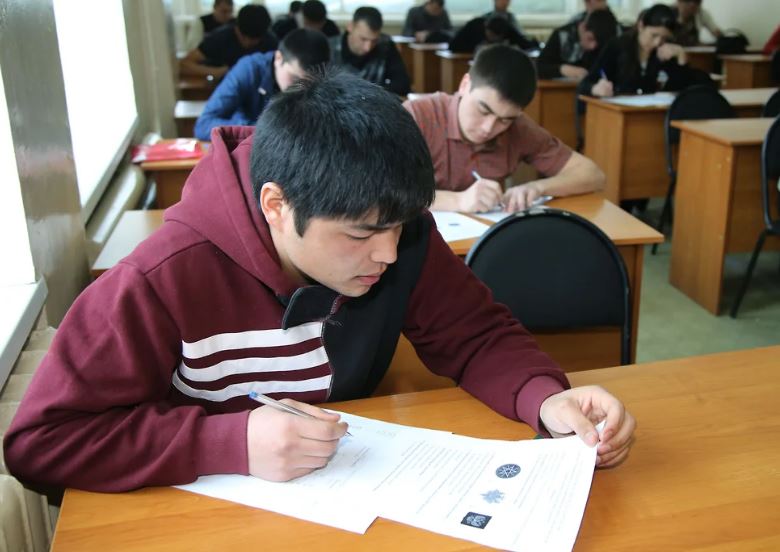
Valery Fadeyev, Chairman of Russia’s Presidential Human Rights Council (HRC), has called for simplifying Russian-language exams for labor migrants from Commonwealth of Independent States (CIS) countries, emphasizing that the tests should focus on practical language skills rather than complex historical or legal questions.
Speaking at a roundtable in Tashkent, Uzbekistan, on migration policy and the creation of a unified labor market within the CIS, Fadeyev agreed that the current format of Russian-language exams requires reform.
“There’s no need to complicate things — no one needs to recall who commanded at Borodino or the details of the 1812 war. The test should be like a driving rules exam: simple constitutional knowledge, minimal questions on history and law. This isn’t a university entrance exam,” Fadeyev said, according to Fergana news agency.
His remarks came in response to criticism from Uzbekistan, where officials have expressed dissatisfaction with the large number of exam questions irrelevant to migrant workers’ practical needs — such as those concerning the War of 1812 or the annexation of Crimea.
Calls for more testing centers in Uzbekistan
Currently, migrants in Uzbekistan can take the Russian-language exam only at the Branch of the Peoples’ Friendship University of Russia (RUDN) in Tashkent. Participants at the discussion proposed opening additional testing centers in Jizzakh and Andijan — the latter serving the densely populated Fergana Valley, home to around 10 million people, or roughly one-third of Uzbekistan’s population.
Officials noted that the newly opened branch of Moscow’s Sakharov Migration Center in Tashkent has been overwhelmed by the influx of applicants, lacking capacity to provide the full range of services required for employment in Russia.
To address these issues, participants proposed establishing a pre-migration preparation center in Tashkent, where citizens heading abroad for work could complete all necessary procedures in advance — including fingerprinting, photographing, background checks, and insurance registration.
Concerns over treatment of migrants in Russia
The Uzbek Migration Agency drew attention to ongoing concerns about lengthy security checks at Moscow airports, unlawful phone inspections, and police raids on hostels, which migrants say often involve physical and psychological pressure. Officials also highlighted a rise in anti-migrant rhetoric on social media and in Russian media outlets.
Uzbekistan’s Foreign Ministry proposed launching a joint monitoring mechanism to investigate any reported human rights violations during such operations, saying it would align with the Declaration on Comprehensive Strategic Partnership signed between Uzbekistan and Russia in 2022.
“A legal assessment must be conducted, and those responsible for disproportionate use of force or actions that humiliate citizens’ dignity must be held accountable,” said Deputy Foreign Minister Olimjon Abdullayev.
In response, Fadeyev explained that the long lines at airports and border crossings are linked to enhanced security measures within Russia, but assured that new technologies are being introduced to speed up document processing.
Toward a more predictable migration policy
Participants of the Tashkent roundtable agreed that none of the CIS countries is interested in uncontrolled migration flows, stressing the need for transparent, predictable, and humane approaches to labor migration management.