Tajikistan ranks lowest in GDP per capita among post-Soviet nations

Tajikistan has the lowest nominal GDP per capita among all post-Soviet countries, according to newly released data from the International Monetary Fund (IMF). With a GDP per capita of just $1,430, Tajikistan ranks 167th out of 195 countries and territories worldwide—positioned between Nepal and Uganda. At the top of the post-Soviet rankings are the Baltic […]

Asia-Plus

Tajikistan has the lowest nominal GDP per capita among all post-Soviet countries, according to newly released data from the International Monetary Fund (IMF). With a GDP per capita of just $1,430, Tajikistan ranks 167th out of 195 countries and territories worldwide—positioned between Nepal and Uganda.

At the top of the post-Soviet rankings are the Baltic states, with Estonia leading at $32,760, followed by Lithuania at $30,840 and Latvia at $24,370.

The IMF report also highlights that the highest GDP per capita growth since 1995 among former Soviet republics has been observed in the South Caucasus region: Armenia has increased its GDP per capita 19.4 times, Azerbaijan 19.1 times, and Georgia 16.3 times.

By comparison, Tajikistan’s growth has been more modest—rising 6.7 times over the same period, a figure on par with war-torn Ukraine.

The lowest growth among post-Soviet countries was recorded in Uzbekistan and Russia, each with a 5.3-fold increase.

Analysts note a wide disparity in economic performance across the former Soviet Union, reflecting profound differences in development paths and policy effectiveness.


What does GDP per capita indicate?

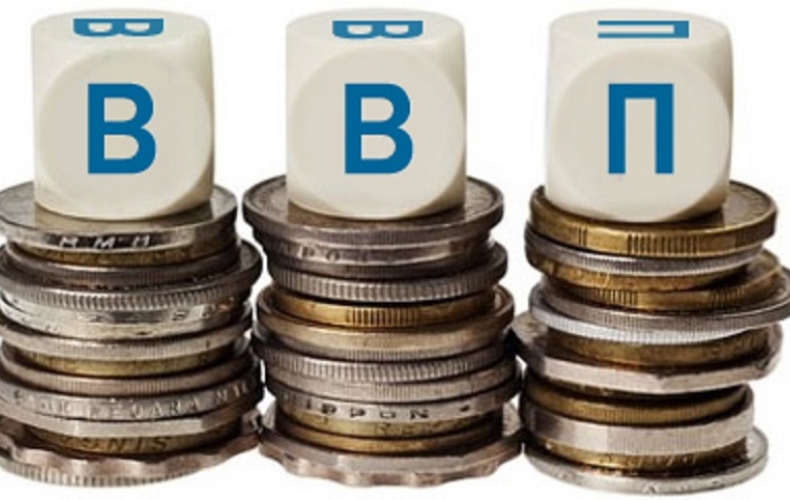
Gross Domestic Product (GDP) per capita is a key indicator of a country’s economic activity and general standard of living. It represents the average value of goods and services produced in a country within a year, divided by its population.

In simpler terms, GDP per capita functions as a rough estimate of the average income per person in a country. It allows for quick comparisons of living standards between nations. A higher GDP per capita generally implies a wealthier population—though the distribution of income can vary widely within countries.

While the figure does not account for income inequality, it remains a useful benchmark for assessing a country's prosperity and its impact on everyday citizens.

Join us on social media!

Article translations:

Related Article

Оби зулол
Оби зулол

Most Read

Recent Articles

The only GPW veteran in Dushanbe allocated more than 80,000 somoni

The mayor's office of Dushanbe allocated him 25,000 somoni.

GITEX AI Kazakhstan 2026: how Almaty became the main AI hub of Central Asia

More than 300 companies and startups, over 200 speakers and 100 investors from 50 countries — the region is entering the global stage.

A trade and economic park to be built at the border junction of Tajikistan, Kyrgyzstan, and Uzbekistan

President of the Kyrgyz Republic Sadyr Japarov familiarized himself with the project.

A project to protect soil from degradation to be developed in Central Asia

The initiative is of great significance for the mountainous countries of the region, including Tajikistan.

Mudslide, death, and destroyed homes: hundreds of families in Tajikistan left homeless

A correspondent from "Asia-Plus" visited Kulob and spoke with the families of those who died and were affected by the disaster.

Spring 2026 bright event: new issue of VIPzone now on sale

This issue is about people and ideas that change everything: from business and investments to fashion, food, and urban environment.

Godfrey Sullivan: “Tajikistan is a promising market for Visa to develop digital payments”

The Vice President of Visa explained why Tajikistan is becoming a promising market for digital payments and how artificial intelligence is influencing the future of finance.

Seven students in Dushanbe were threatened with expulsion for arriving at universities in personal cars

The materials for each case have been sent to the Ministry of Education and Science for appropriate actions.

India’s blockchain push and lessons for the global south

The Indian Government has started pushing aggressively its agenda...

India’s blockchain push and lessons for the global south

The Indian Government has started pushing aggressively its agenda...