Despite a steady increase in the production of meat, milk, and eggs, Tajikistan remains heavily dependent on imports of animal products.
According to the Agency for Statistics under the President of Tajikistan, as of October 1, 2025, the country's livestock population has grown significantly: cattle numbers rose by 4.5%, sheep and goats by 5.1%, and poultry by 1.5%.
This growth has led to increased production volumes: nearly 199,000 tons of meat were produced over the first nine months of the year (up 10.6% compared to the same period last year), along with 739,000 tons of milk and over 1 billion eggs.
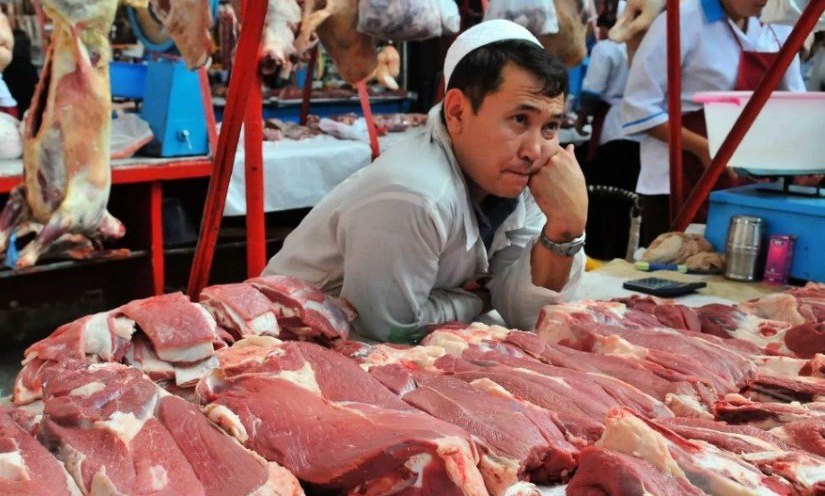
Nevertheless, prices continue to rise — meat prices increased by 4.2%, fish by 3.1%, and dairy products and eggs by 2.6%.
Experts attribute this to seasonal factors, rising feed costs, and transport expenses.
Small farmers at the core of food security
Most livestock production in Tajikistan comes from dehqon (peasant) and family farms, which account for nearly 94% of cattle and over 82% of sheep and goats. Livestock growth has been recorded in all regions — from the Gorno-Badakhshan region (GBAO) to Khatlon province.
Currently, the country has 2.87 million head of cattle, 7.47 million sheep and goats, and 12.9 million poultry.
Honey production drops amid sector growth
Amid overall growth, beekeeping stands out as an exception. Honey production declined by 12% to just 3,700 tons. Experts cite unfavorable weather and a decrease in nectar-producing crops as the main reasons.
High import levels persist
Despite moderate price growth, Tajikistan remains reliant on external supplies. In the first nine months of 2025, the country imported over $52 million worth of meat, $19 million in fish, and nearly $35 million in dairy products and eggs.
In contrast, livestock exports remain minimal — under $1 million. Only about 20 tons of meat and just over 100 tons of dairy products and eggs were exported during this period.
Domestic market becomes top priority
The government expects production to continue growing, while exports will decline slightly. This is due to a rising population and growing domestic demand. Forecasts suggest that by 2027, meat production will reach 510,000 tons, milk 1.3 million tons, and egg production 1.8 billion units.
Meanwhile, imports of dairy products are expected to rise only slightly — from 433,000 tons of dairy products in 2025 to 465,000 tons in 2027. Authorities link this to the expansion of the food processing industry and increasing urban consumption.