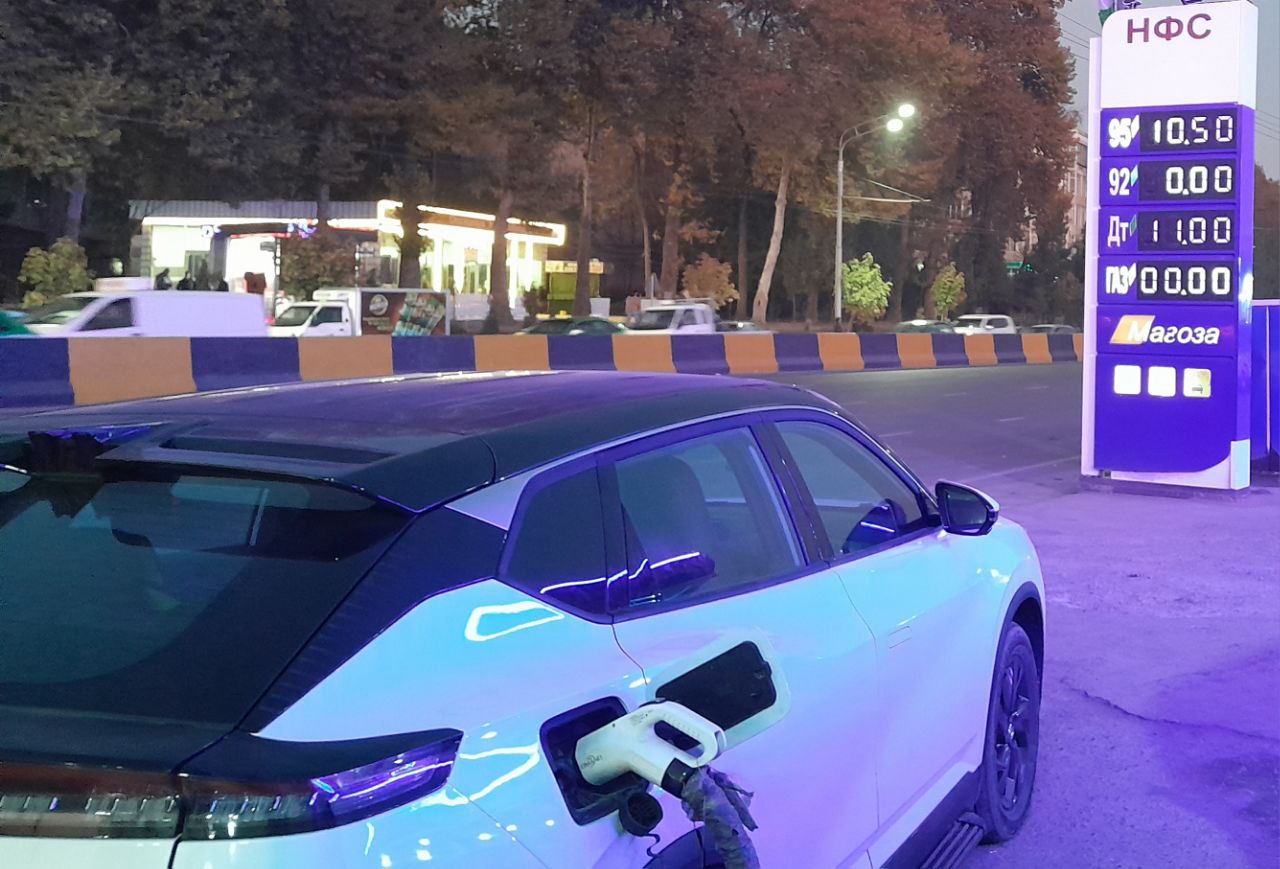
Liquefied petroleum gas (LPG) prices in Dushanbe have surged in recent days due to a sharp decline in imports from Kazakhstan. While a liter of LPG was selling for 4.2 somonis late last week, current prices have jumped to between 5.8 somonis and 6.5 somonis — an increase of 38% to nearly 55% in just a few days, with similar price rises in other parts of the country.
Some fuel stations in the capital have run out of LPG altogether.
According to Tajikistan’s Ministry of Energy and Water Resources (MoEWR), the primary reason for the shortage is Kazakhstan’s decision to impose a six-month ban on LPG exports by road and rail, which took effect on November 14 under an order from Kazakhstan’s Ministry of Energy.
Additional constraints stem from ongoing repair work on Kazakhstan’s railway infrastructure, which has limited LPG rail shipments to a maximum of 30 wagons per day.
An official source within the Antimonopoly Agency under the Government of Tajikistan told Asia-Plus that such price hikes typically occur when there is a supply shortage. The agency is currently investigating the situation and plans to issue official comments after its review.
Gas to electric: a changing fuel landscape?
For over a decade, LPG has remained the dominant type of vehicle fuel in Tajikistan due to its affordability. In the early 2010s, as petrol and diesel prices rose, many drivers switched to gas. By the mid-2010s, more than 60% of vehicles in the country were running on LPG, according to official data.
However, in recent years — particularly in Dushanbe — there has been a noticeable shift toward electric vehicles. According to the Ministry of Transport, about 18,000 electric vehicles were imported in 2024, and nearly 13,000 more arrived in just the first five months of 2025. As of June 1, 2025, the total number of registered EVs in Tajikistan surpassed 34,000.
Meanwhile, Tajikistan imported 176,900 tons of LPG in the first half of 2025, down by 18,500 tons compared to the same period in 2024, according to the Antimonopoly Service. Of this volume, 53% came from Russia and 47% from Kazakhstan.
Over the same six-month period, a total of 15 companies were involved in importing liquefied petroleum gas into the country. The largest shares of LPG imports were handled by:
· Temur Oil LLC — 27.8%);
· Allat — 15.1%;
· Gazpromneft-Tajikistan — 9.6%;
· Iris LLC — 7.8%;
· Bahor LLC — 7.2%.