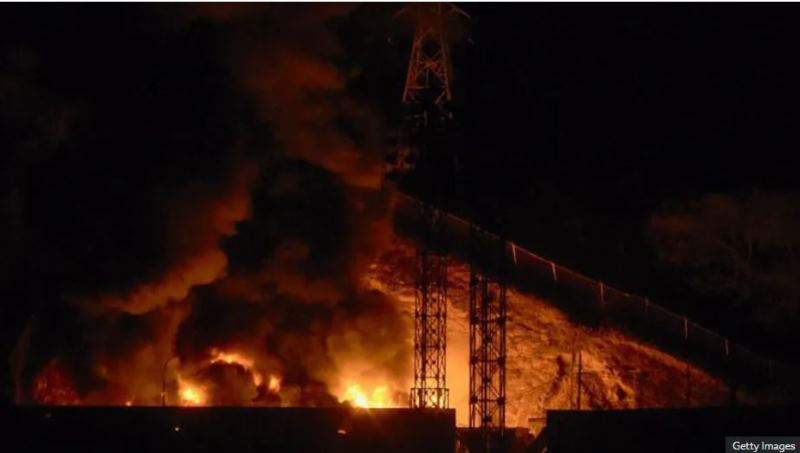
Multiple explosions were reported in Venezuela’s capital, Caracas, on the morning of January 3, following U.S. airstrikes on military targets. Citing U.S. officials, international media outlets say the strikes were ordered by President Donald Trump, marking a sharp escalation in already tense U.S.-Venezuela relations.
According to the BBC, Eyewitnesses reported plumes of smoke rising from several areas of Caracas, including La Carlota airbase and the Fuerte Tiuna military complex, the country’s largest military installation. The Venezuelan government confirmed that surrounding states — Miranda, Aragua, and La Guaira — were also targeted.
In a televised statement, the Venezuelan government denounced the attacks as “U.S. military aggression” and declared a national emergency. Several neighborhoods have reportedly been left without power, and fears of further escalation are rising.
The White House and the Pentagon have yet to issue official statements, but President Trump, speaking to The New York Times, called the operation “brilliant” and praised U.S. troops for their execution. He later confirmed via social media that a "large-scale strike against Venezuela" had been launched, with more details to be shared at a press conference from his Mar-a-Lago residence.
CBS News reported that members of the elite U.S. Delta Force captured Venezuelan President Nicolás Maduro during the operation. The same unit was responsible for the 2019 raid that killed Islamic State leader Abu Bakr al-Baghdadi.
Tensions between Washington and Caracas have been escalating for months. In late December, the U.S. carried out airstrikes on suspected Venezuelan drug-smuggling boats in the Caribbean, which President Trump claimed caused a "major explosion." Venezuela’s government maintains that these actions are part of a broader strategy to seize control of the country’s vast oil and mineral resources.
President Maduro has long accused the U.S. of attempting to orchestrate regime change, citing Washington's seizure of Venezuelan oil tankers and its rejection of the 2025 presidential election results, which were widely condemned as illegitimate by the international community.
Al Jazeera reports that Maduro’s government has declared a state of emergency in response to what it describes as an act of war.
The situation remains fluid, with international observers closely monitoring potential fallout from the U.S. military action in the region.