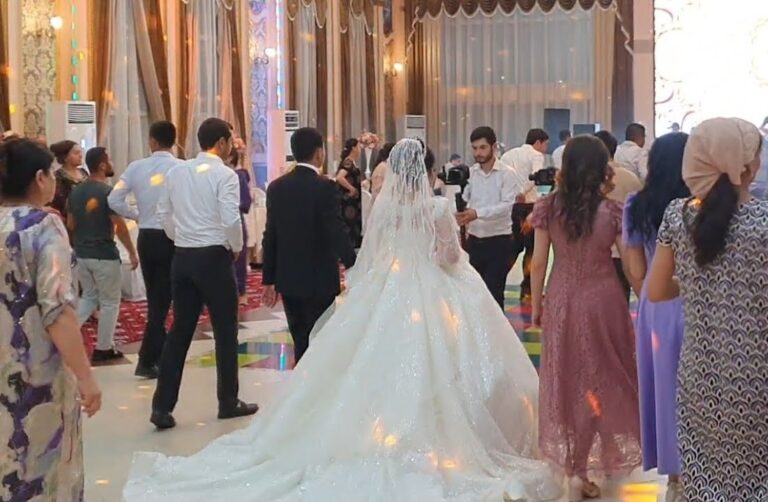
The city of Panjakent, long known as a center of traditional crafts, is witnessing a revival of one of its most iconic art forms — suzani embroidery. Increasingly, local brides are choosing richly embroidered traditional dresses for their weddings instead of European-style white gowns. For many, this choice is not only about beauty, but also about honoring ancestral heritage and long-standing traditions.
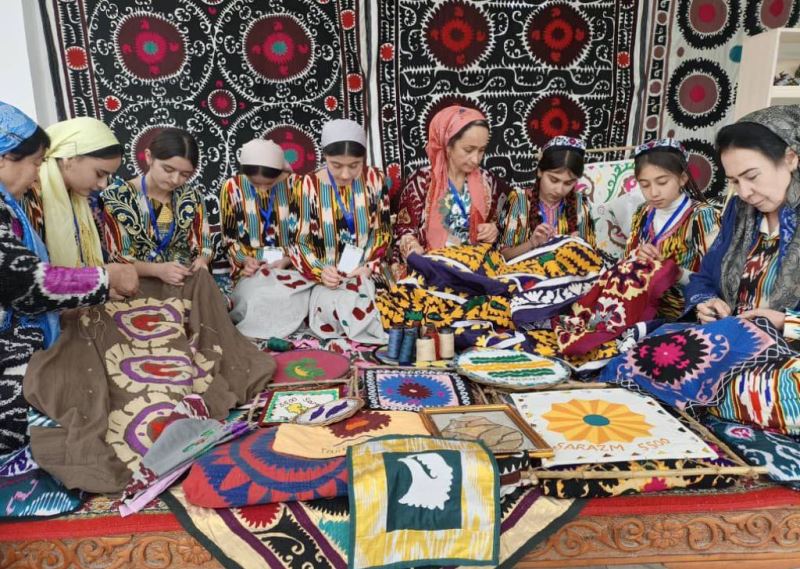
One of the guardians of this craft is Mavzouna Jalolova, an artisan with more than 30 years of experience. For her, embroidery is more than a skill — it is a family legacy. Five generations of her family have practiced this art, and today Jalolova continues the tradition by passing her knowledge on to her daughters.
Since 2014, she has led an embroidery workshop at the Panjakent Palace of Culture. Most of her students are schoolgirls and housewives.
Jalolova says her goal is not only to preserve traditional craftsmanship, but also to help women gain a source of income.
“It is hard to imagine a home in Panjakent without suzani,” she says.
According to Jalolova, interest in embroidery declined for a time, but in recent years the art form has experienced a strong revival. Traditional embroidered dresses are once again becoming popular, particularly for wedding ceremonies.
Jalolova creates embroidered dresses, vests, bedspreads, and prayer mats, and also skillfully depicts national symbols and historical scenes using needle and thread.
Thanks in large part to the work of artisans like her, Panjakent was officially designated a World Crafts City in October 2025.
Over three decades, Mavzouna Jalolova has trained dozens of skilled embroiderers. Her greatest hope is that this national art will never disappear and will continue to be passed down from generation to generation.
Suzani (or Suzane) is a famous, large, hand-embroidered textile traditionally made in Tajikistan and other Central Asian countries, known for its vibrant patterns representing nature and cultural symbols, historically created by brides as part of their dowry for weddings, and is a significant part of Tajik heritage.