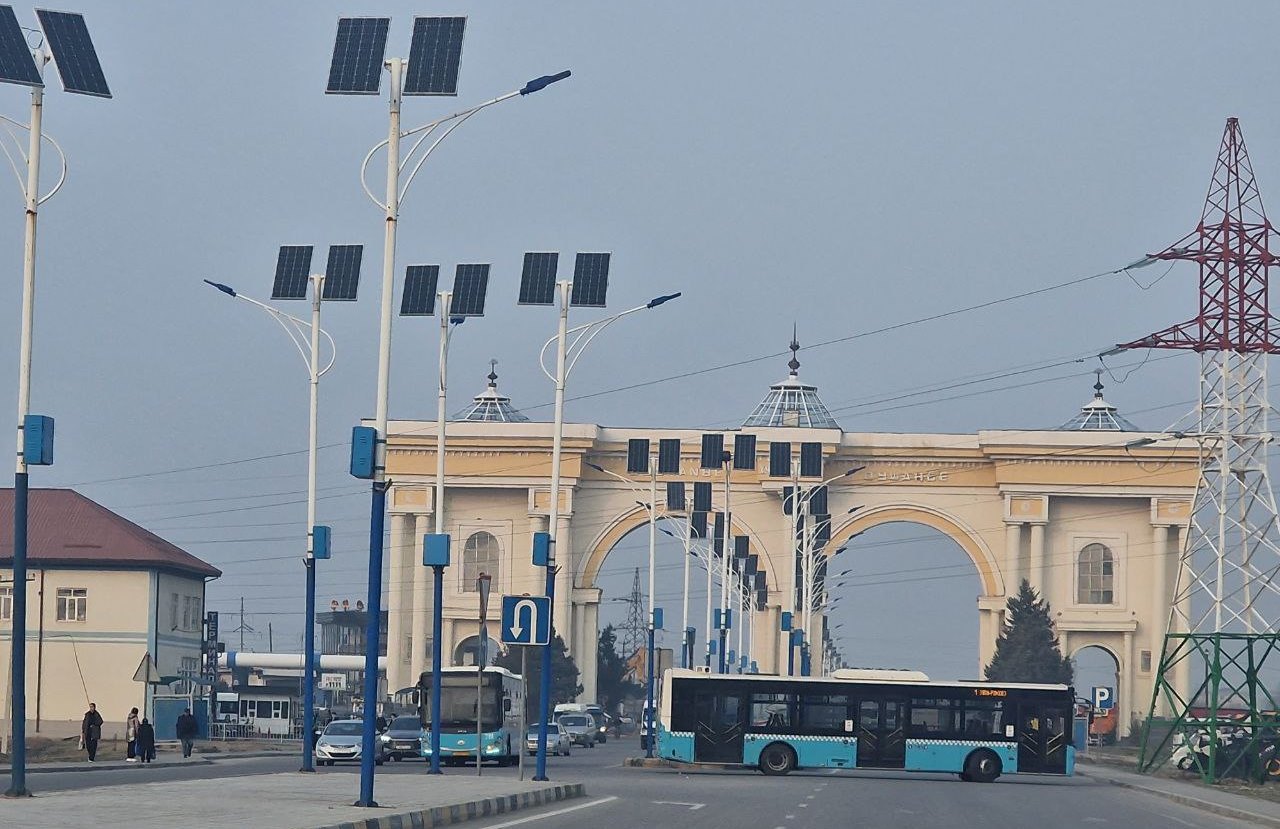
The installation of solar panels has begun in the capital of Tajikistan, Dushanbe, including on roadways. This initiative reportedly aims to save electricity and ensure sustainable energy supply.
One of these solar panels was installed on the railway bridge near the city's Textile Combine. During a news conference on January 29, the Committee for Architecture and Construction under the Government of Tajikistan revealed that the primary goal of the project is not only to save electricity but also to utilize solar panels in the future for small industrial enterprises, children's institutions, and residential buildings.
“The installation of solar panels and the examination of related objects were approved by the order, which was signed on April 1, 2024, and since then, 1,530 projects have passed examination, all of which will include the installation of solar panels with capacities ranging from 250 to 500 watts,” said the chairman of the Committee for Architecture and Construction, Nizom Mirzozoda.
He explained that solar panels will provide energy during daylight hours when power grids are functioning, thus significantly reducing the use of energy from the main grid. Additionally, this will ensure energy supply in case of power outages.
The chairman also added that elevators and video surveillance systems will operate on solar panels, which will help reduce the load on centralized power grids.
The installation of solar panels is planned on 558 objects from April 1, 2024. These include 381 residential buildings, 23 industrial enterprises, 61 public schools, 13 preschools, 42 hospitals and medical centers, and 38 administrative buildings.
In November last year, during a government meeting chaired by President Emomali Rahmon, the Minister of Energy and Water Resources, Daler Juma, stated that the implementation of the Power Sector Development Program for 2026–2030 would achieve key goals. These include the introduction of 2,680 MW of new capacity through the construction of hydropower plants, an increase in capacity by 253 MW through the reconstruction of existing plants, the restoration of 440 MW through equipment upgrades, and the generation of 1,500 MW through solar energy.
Furthermore, President Emomali Rahmon instructed the installation of solar panels on residential buildings and their integration into the national power grid, which also contributes to achieving the program's goals.