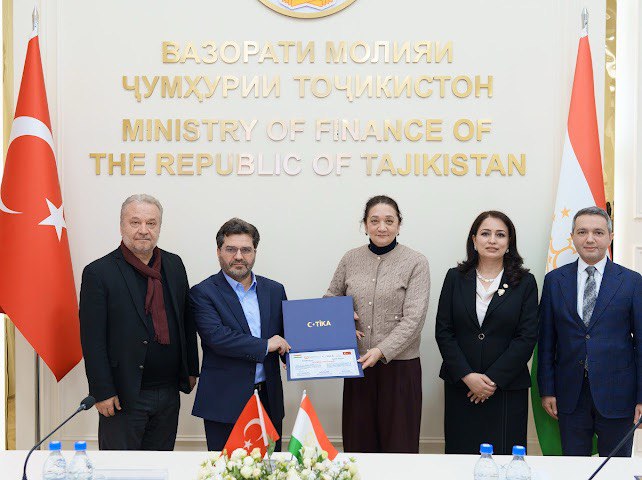
A five-day international training seminar titled “Joint Cooperation between Tajikistan and Turkiye: Islamic Finance and the Capital Markets of the Future” concluded in Dushanbe on February 6.
The event was organized by the Ministry of Finance of Tajikistan in cooperation with the Turkish Cooperation and Coordination Agency (TİKA) and was held as part of the implementation of instructions issued by President of Tajikistan Emomali Rahmon in his address to a meeting of both chambers of the Parliament on “The Main Directions of the Republic’s Domestic and Foreign Policy” dated December 16, 2025.
The Address emphasizes the need to expand the market for government and corporate securities, issue “green” financial instruments, develop an active and transparent secondary market, and draft and adopt a Capital Market Development Strategy.
Speaking at the closing ceremony, Ms. Nigina Abdurahmonzoda, Director of the Securities and Special Registration Agency under the Ministry of Finance of Tajikistan, noted that the seminar marked an important stage in the institutional development of the capital market and in enhancing the professional capacity of specialists.
According to her, the development of the capital market and the introduction of Islamic financial instruments are part of the country’s long-term strategy to modernize its financial system. She stressed that the goal is not only to study international experience, but also to adapt it to national conditions and to form a sustainable, transparent, and competitive securities market.
“Islamic financial instruments can become a source of long-term financing for the country’s economy,” Abdurahmonzoda said.
TİKA Program Coordinator in Tajikistan İbrahim Ethem Ünal highlighted that the seminar represented an important step in strengthening bilateral cooperation and building a professional foundation for the implementation of sustainable financial instruments.
The seminar brought together 72 representatives from government agencies, the National Bank of Tajikistan, the banking and insurance sectors, professional participants in the securities market, joint-stock companies, and chambers of commerce and industry.
The training seminar covered the fundamentals of Islamic economics and finance, Islamic banking and insurance (takaful), capital markets and Islamic financial instruments, including sukuk, institutional and legal conditions for capital market development, as well as prospects for introducing Islamic financial instruments in Tajikistan.
Presentations were delivered by Turkish experts — professors and doctors of sciences Ibrahim Guran Yumusak, Yusuf Dinc, and Servet Bayindir from Istanbul Sabahattin Zaim University — who shared the experience of Turkiye and other countries in these areas.
According to the organizers, the seminar confirms the systematic efforts of relevant agencies and the Securities Agency to implement the President’s instructions aimed at developing the capital market, attracting investment, and introducing modern financial instruments.
The event is seen as laying the groundwork for the further development of Islamic finance and the securities market, as well as for strengthening cooperation between Tajikistan and Turkiye.