Home Blog Page 14

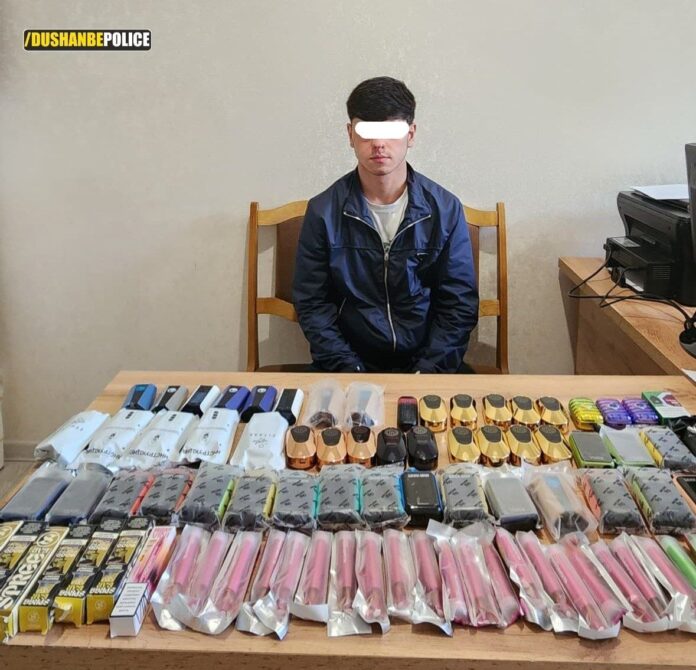
A seller of electronic hookahs was detained in Dushanbe for selling to minors.

0
фото: УМВД Душанбе

In Dushanbe, police officers detained a 21-year-old local resident on suspicion of selling electronic hookahs to minors.

As reported by the capital’s police, Yusuf Abdirukhimov was detained while selling the products. “It has been established that he deliberately sold electronic hookahs to teenagers for profit,” the Ministry of Internal Affairs stated.

During the search, 87 electronic hookahs were confiscated from him.

An administrative protocol has been drawn up against the detainee under Article 463 (part 3) of the Code of Administrative Offenses of the Republic of Tajikistan, and he has been fined.

We recall that earlier, the speaker of the upper house of the Parliament of Tajikistan Rustam Emomali had previously instructed to develop a legislative ban on the use, production, and circulation of electronic cigarettes (vapes) in the country. This instruction was given at the fourth session of the Majlisi milli of the Majlisi Oli RT.

It was noted that the decision was made to protect the gene pool of the nation and the health of the population, primarily teenagers and youth. The active use of electronic cigarettes (vapes) can lead to serious diseases of the respiratory tract, cardiovascular system, and lungs, including oncological diseases, as evidenced by the conclusions of medical specialists.

The chairman of the upper house of parliament emphasized the need for prompt legislative measures to limit the spread of electronic cigarettes and reduce health risks for citizens.

Vapes and IQOS represent different alternatives to smoking cigarettes: a vape vaporizes nicotine-containing liquid with flavorings and can be used with or without nicotine, while IQOS heats tobacco in sticks without burning it, mimicking the taste of traditional tobacco. The main difference is that a vape works with liquids, whereas IQOS works with tobacco.

How to obtain a permit for car window tinting?

0
Фото kaktus.media

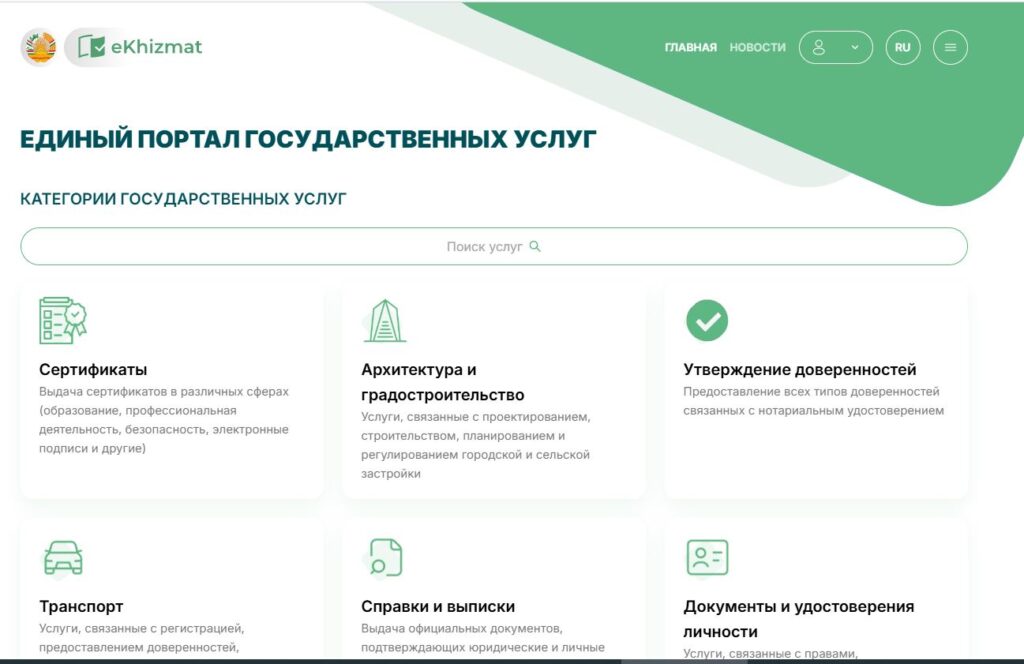
Starting from 2026, obtaining a “Permit for the Use of a Vehicle with Tinted and Darkened Windows” in Tajikistan can only be done electronically – through the Unified State Services Portal – ekhizmat.tj. This was reported by the Agency for Innovations and New Technologies.

How the new system works and how to apply for a tinting permit now – we explain in simple terms.

How to obtain a tinting permit now?

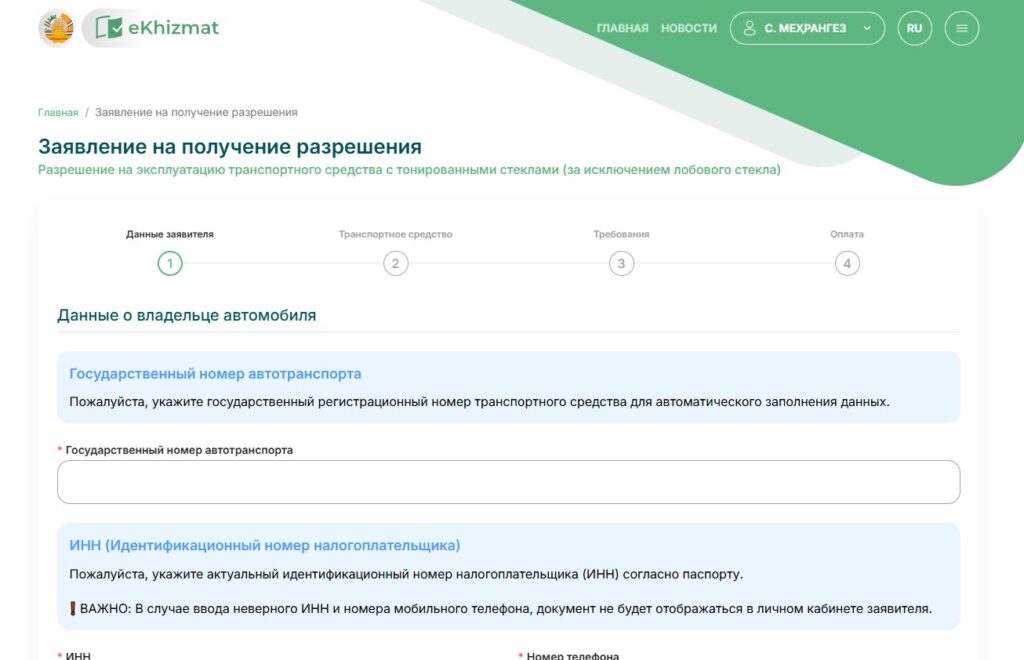
Now the permit can only be obtained online – through the Unified State Services Portal ekhizmat.tj. To do this, you need to register on the portal, go through identification, select the service, enter the vehicle details, and pay for it.

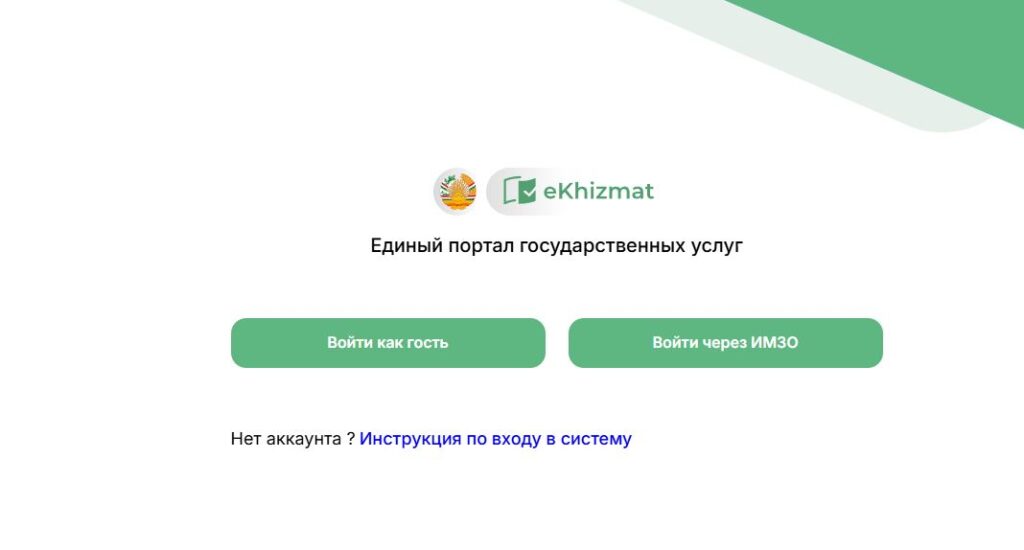
The Unified State Services Portal – ekhizmat.tj. Screenshot from the website.

Is it not possible to obtain a permit offline?

No. From this year, the permit for the use of a vehicle with tinted or darkened windows is issued only electronically through the portal ekhizmat.tj. It can no longer be obtained offline at the offices.

How to register on the portal?

To use the Unified State Services Portal and process documents online, two stages must be completed – identification and registration.

First, you need to go through personal identification at the Public Services Center. In Dushanbe, it is located at: Beхzod Street, 47A. You will need the original passport and a phone number. The procedure takes about 5–10 minutes.

After that, you need to download the IMZO app from Google Play or the App Store and register in it. It is important that the phone number provided during identification matches the number used for registration in the app.

Then you can go to the portal ekhizmat.tj, choose to log in “via IMZO”, enter your phone number, and input the one-time code from the SMS. After this, you gain access to your personal account and can process state services online – from home, work, or at the Public Services Center itself.

How is the permit for tinting processed on the portal?

After registering on the Unified State Services Portal ekhizmat.tj, the process of obtaining a permit takes several steps.

First, you need to log in to your personal account on the portal. Then, from the list of services, select the permit for the use of a vehicle with tinted and darkened windows.

Next, the user enters the vehicle details, after which the system automatically calculates the cost of the service. You just need to pay for the permit online.

After payment, the permit is issued electronically, and it can be saved or presented when necessary.

Can I obtain a permit if I do not have an account on the state services portal?

Yes. The tinting permit can also be obtained without registration on the portal through the “Log in as Guest” option.

In this case, the user needs to provide a phone number, receive a one-time code via SMS, and confirm the login. After that, you can fill in the vehicle details, pay for the service, and obtain the permit following the same procedure as with a regular login to the system.

The tinting permit is the only service on the portal that can be obtained without full registration in the system.

How much does a tinting permit cost?

The cost depends on the year of manufacture of the vehicle. The exact amount will be shown by the system on the portal during the service application.

How long does it take to process the permit?

According to the Agency for Innovations and New Technologies, the entire procedure takes up to one minute.

What should I do if I previously obtained a permit from the traffic police – is it still valid or do I need to get a new one?

No. If you already have a permit, it will remain valid until it expires. After that, a new permit will need to be obtained online.

Armenia threatened to withdraw from the CSTO and the EAEU if Russia raises the gas price.

0
Флаги Армении и России

The Speaker of the Armenian Parliament, Alen Simonyan, stated that Yerevan will initiate the procedure to withdraw from the CSTO and the Eurasian Economic Union if Moscow decides to raise the price of gas supplied to the republic.

According to him, if such a decision is made, Yerevan will respond with its own measures and will finally leave both organizations, Simonyan told reporters on April 4, Interfax reports.

Simonyan effectively indicated that in the current relations with Russia, the price of gas no longer appears to be just a commercial issue. 

At the same time, he noted that he does not expect such a development, as there had previously been a “good and effective conversation” between the Prime Minister of Armenia, Nikol Pashinyan, and the President of Russia, Vladimir Putin.

Earlier, during a meeting with Pashinyan, Putin emphasized that Armenia receives Russian gas at a preferential price—about $177.5 per thousand cubic meters. For comparison, he stated that the cost of gas in Europe exceeds $600 for the same volume.

Armenia’s relations with the CSTO are effectively frozen: starting in 2024, Armenia suspended its participation in the CSTO and stopped paying contributions, but formally did not withdraw from the organization. In December 2024, Pashinyan stated that the country “essentially already considers itself outside the CSTO,” iznanka.news notes.

The situation with the EAEU is more complex: the union remains an important economic channel, but at the same time, Armenia is increasingly building ties with the EU and the USA. Against this backdrop, any increase in the price of Russian gas could indeed be interpreted as a political signal, rather than a mere revision of commercial terms.

A Health and Human Rights Week will be held in Tajikistan

0

In Tajikistan, from April 6 to April 10, a republican campaign “Health and Human Rights Week” will take place, dedicated to World Health Day.

The campaign will start on April 6 in Dushanbe. From 8:00 AM, residents of the capital will be able to undergo medical examinations for free and receive consultations from specialists at the Scientific Research Institute of Gastroenterology of Tajikistan, the Ministry of Health and Social Protection of the Population of Tajikistan reported.

From April 7, the campaign will continue in all healthcare facilities in Dushanbe, as well as in the Sughd and Khatlon regions, and in cities and districts under republican jurisdiction.

On April 8, the campaign will take place in healthcare institutions of the Gorno-Badakhshan Autonomous Region.

As part of the “Health and Human Rights Week,” residents will be able to undergo diagnostics, medical examinations, and receive consultations from doctors using modern equipment for free.

China’s “Green Wall” is Changing the Desert Climate

0
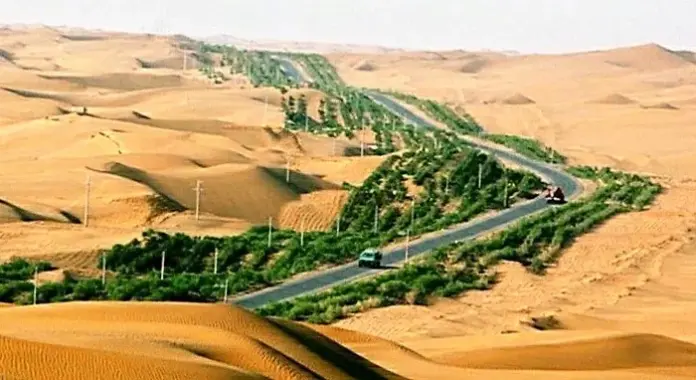
фото с сайта pikabu.ru

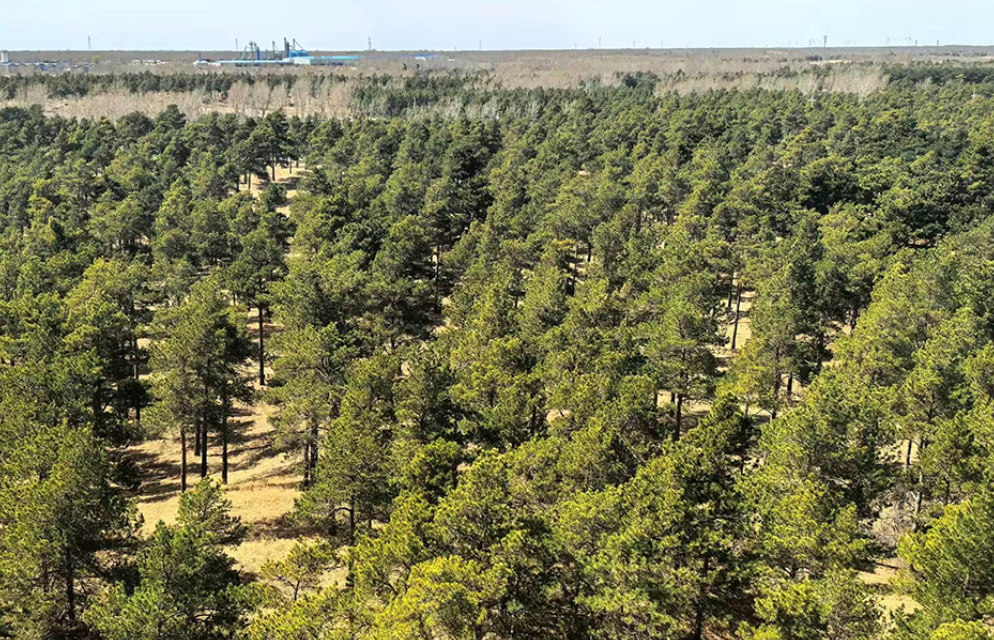
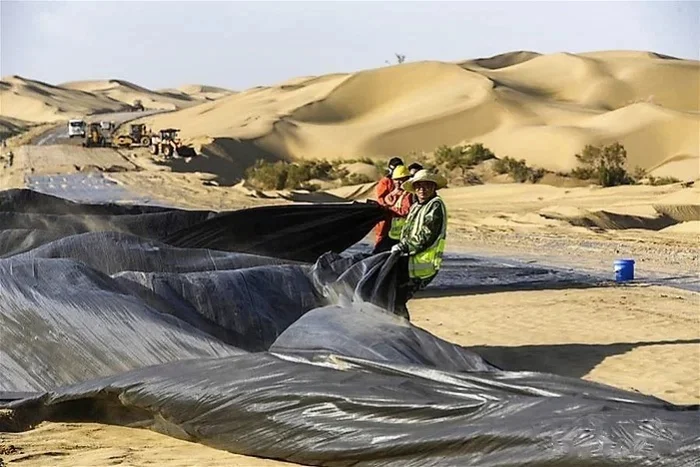
One of the driest regions on the planet, the Taklamakan Desert in the Xinjiang Uyghur Autonomous Region of China, under the influence of a targeted Chinese greening program, is gradually turning into a significant absorber of carbon dioxide from the atmosphere.

This is not about transforming the “sea of sand” into a continuous forest, but the perimeter of the desert—a strip of trees and shrubs planted here since the late 1970s—already absorbs more CO₂ from the atmosphere than it emits, and this effect has been confirmed by satellite measurements, writes Fergana.

The key to this transformation is the long-term Chinese project “Protective Forest Belt,” also known as China’s “Green Wall.” Started in 1978, it covers the northeast, north, and northwest of the country and has become the largest reforestation program in the world, aimed at combating desertification and sandstorms.

As part of this program, a continuous green belt around the Taklamakan is expected to be formed by the end of 2024, stretching about 3,000 kilometers. By the way, the total forest cover of China, according to official data from Beijing and specialized studies, has increased from about 10% in the mid-20th century to more than a quarter of the country’s area.

New work by an international group of researchers published in the journal Proceedings of the National Academy of Sciences shows that this artificially created plant belt around the desert has become a stable biospheric area—a zone where carbon absorption by plants and soils exceeds emissions, especially during the rainy season from July to September when precipitation around the Taklamakan reaches its peak.

Importantly, the main contribution to carbon absorption comes from relatively low trees and drought-resistant shrubs planted in strips to protect against sand and wind.

Decades ago, these plantings were primarily intended to protect pastures, fields, and infrastructure from advancing sands. It is now becoming clear that these same protective plantings also sequester carbon in biomass and soil, reduce wind erosion, and likely indirectly decrease dust emissions into the atmosphere.

Moreover, the success around the Taklamakan is largely attributed to geography: the desert is surrounded by mountain systems that provide runoff of melt and rainwater, creating the minimally necessary water supply for trees and shrubs. In other desert regions of the world, lacking such moisture sources, replicating this experience would be much more challenging and perhaps ecologically or economically questionable.

That is why the authors themselves and many experts emphasize the need for cautious transfer of China’s “green wall” to other contexts: before scaling such an approach, it is essential to carefully analyze water balance and soil salinization risks.

Against the backdrop of many traditional natural carbon sinks—such as certain forests or peatlands—partially losing their ability to sequester carbon and, in some places, turning into sources of CO₂ under warming and degradation, the example of the Taklamakan appears paradoxical and thus particularly illustrative.

It demonstrates that with long-term policy, serious investments, and careful selection of plant species, even the driest desert can become part of the climate solution equation—though not its main component. For Central Asia, suffering from desertification for decades, this experience is very important and indicative.

“Tuesday, 8:00 PM”. Trump threatens strikes on Iran’s bridges and power plants

0

U.S. President Donald Trump published a sharp post on his social network Truth Social, threatening to destroy Iranian bridges and power stations if the Strait of Hormuz is not opened to shipping.

In the post, Trump wrote that Tuesday could become a “day of power stations and bridges” for Iran. He demanded the immediate opening of the strait, accompanying his statement with coarse expressions and stating that otherwise, the country would face “hellish consequences,” BBC reports.

At the same time, in an interview with Fox News on Sunday, Trump stated that he still hopes for a diplomatic solution. According to him, the parties are negotiating, and “there are good chances” to reach an agreement by Monday. He also warned that if an agreement is not reached quickly, Washington might “blow everything up and take control of the oil.”

Later, Trump published another short message, writing: “Tuesday, 8:00 PM Eastern Time!” without specifying what exactly would happen at that moment.

In response to Trump’s statements, Iran’s parliamentary speaker Mohammad Bagher-Ghalibaf commented in a message on social network X.

“Your reckless actions are dragging the United States into a real HELL for every family, and our entire region will be in flames because you insist on following Netanyahu’s instructions,” he wrote.

Ghalibaf added that “the only real solution is to respect the rights of the Iranian people and stop this dangerous game.”

Earlier over the weekend, Trump issued an ultimatum to Tehran, demanding that it stop blocking the Strait of Hormuz within two days. On Saturday, he stated that Iran had 48 hours before “hell would break loose” on the country.

Prior to this, the American leader had already postponed the deadline for a possible strike several times. On March 21, he warned of the readiness to destroy the largest Iranian power stations if the strait was not opened within 48 hours. Two days later, Trump reported “very good and productive negotiations” and delayed the strike by five days. On March 27, he stated that he was extending the deadline by another ten days — until April 6 — allegedly at the request of the Iranian side.

The blocking of the Strait of Hormuz by Iran — one of the key global maritime routes — has already led to a sharp rise in energy prices and increased pressure on the global economy.

Dushanbe fully completed the spring conscription plan in the army in 4 days

0
фото: Мэрия Душанбе

The Dushanbe City Hall reported that as of April 4, the spring conscription plan for the Armed Forces has been completed by 100%.

In other regions of the country, the campaign continues. In Sughd, on the first day of the conscription, 46% of the established plan was fulfilled, reported the press service of the regional governor.

According to official data, the plans have also been fully completed in GBAO, the Rasht district, as well as in several cities and districts of the Khatlon region, including Bokhtar, Kulob, Norak, Dusti, Yavan, Vakhsh, Mujinobod, and Farkhor.

Previously, the Ministry of Defense of Tajikistan reported that overall in the country, the fulfillment rate on the first day of conscription was 54.3%.

It is still unclear what percentage of the plan has been achieved in the other districts of the Khatlon region and in the districts directly subordinate to the republic.

The conscription campaign will last until May 31. This year, young people aged 18 to 27 (born between 1999 and 2008) will be drafted into the army.

Local authorities attribute the successful fulfillment of the plan in the early days to an increase in the number of volunteers, the offering of various benefits for conscripts, and well-organized informational work. Experts, however, note that under the new law on military obligations, authorities have been granted the right to draft youth throughout the year, which helps to fulfill the plan in the early stages of the campaign.

Every year, questions arise regarding the conditions of service in the army, including cases of mistreatment of soldiers, their living conditions, and even instances of death in military units.

The Emergencies Committee of Tajikistan reported damage to 22 houses as a result of the earthquake.

0

In Tajikistan, on April 3 two earthquakes were recorded, according to the Committee for Emergency Situations and Civil Defense of the Republic of Tajikistan.

According to the agency, the first occurred at 15:26, and the second at 21:12.

The strength of the shocks at the epicenters (the first 15 km south of Tajikabad, the second on the territory of Afghanistan) was 5–6 points.

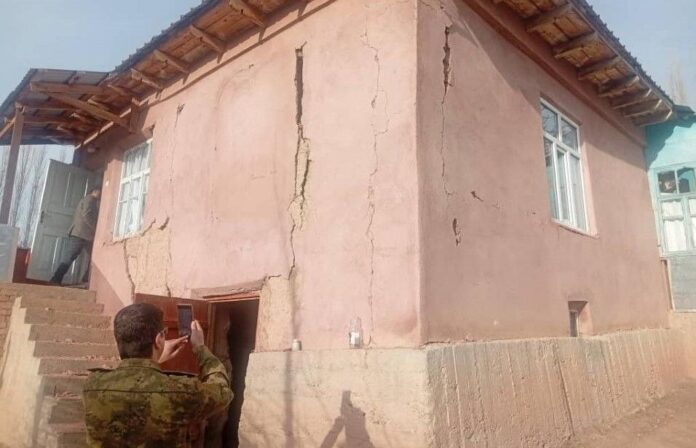
The Emergency Situations Committee of Tajikistan specified that as a result of the first earthquake, which occurred in the afternoon of April 3 in the Tajikabad district, damage to houses was recorded.

In the villages of Sarinai, Shirinchashma, and Polezak of the Shirinchashma jamoat, 16 residential houses sustained minor damage, and one outbuilding was completely destroyed.

Additionally, in the village of Darai Nushor of the Nushor jamoat, minor damage was recorded in 6 houses.

“There are no casualties as a result of the disaster,” the Committee for Emergency Situations added.

A government emergency commission in the Tajikabad district is currently assessing the exact extent of the damage.

Earlier, it was reported about an earthquake with a magnitude of 5.8 that occurred on April 3 at 21:12 Dushanbe time. The epicenter was located in Afghanistan, 290 km southeast of Dushanbe, at a depth of 186 kilometers in the northeastern province of Badakhshan.

The tremors were felt not only in Afghanistan but also in Tajikistan, Uzbekistan, Kazakhstan, India, and Pakistan.

In Afghanistan, eight people died as a result of this earthquake: an entire family was buried under the rubble of a house that collapsed due to seismic activity.

Only a child about two years old survived from the whole family.

In Tajikistan, it did not cause destruction or casualties.

Bonoor launches AI agent for digital transformation of business and public sector in Tajikistan

Bonoor Company announces the launch of the Agentum platform — an innovative autonomous AI agent designed to automate routine processes in the public and corporate sectors. The solution has already been adapted to the digital infrastructure of Tajikistan and is available for B2G, B2B, and B2C segments.

According to research by Bonoor Group, up to 70% of employees’ working time in government institutions and companies is spent on routine tasks: document processing, approvals, information search, report preparation, and communication. These processes can take hours, and sometimes even days.

Agentum addresses this issue by reducing the time required to perform such tasks from hours to minutes. The platform utilizes advanced Bonoor LLM language models and integrates with existing systems, including the electronic document management system (EDMS) of Tajikistan.

Key Features of Agentum

  • Document management automation: integration with the government EDMS for processing incoming documents, preparing responses, approvals, and signing
  • Intelligent search and analysis: quick information retrieval from databases, documents, and the internet with analysis and structuring of results
  • Content generation: creation of reports, presentations, contracts, letters, and other documents based on specified parameters
  • Data processing: analysis of tables, financial reports, statistical data to identify patterns and trends
  • Multilingual support: operation in Tajik, Russian, English, and other languages, taking into account the cultural specifics of the region
  • Integration with external systems: connection to CRM, ERP, accounting software, and over 160 other business applications
  • Free creation of smart chatbots for any purpose within the Agentum platform.
  • Security and confidentiality: local data processing, compliance with information security requirements

Technological Foundation and Advantages

Agentum is built on proprietary Bonoor LLM language models, specifically fine-tuned for understanding the context of business and government activities in Central Asia. The platform utilizes:

  • Agent architecture: the ability to perform complex multi-step tasks without constant human supervision
  • Contextual memory: retaining the history of interactions and user preferences
  • Real-world toolkit: access to the browser, file system, APIs, and other resources
  • Adaptive learning: continuous improvement based on feedback and new data

“Agentum is not just a chatbot, but a full-fledged digital employee capable of taking on routine tasks and freeing up specialists’ time for strategic decisions. We are proud to have created a solution tailored specifically to the needs of Tajikistan, taking into account the features of local document management and business processes,” says Sharif Abdullaev, founder and CEO of Bonoor.

The platform schedules meetings, automatically creates minutes, and turns agreements into tasks — nothing is lost, and everything is under control. Management occurs directly in Telegram: set tasks, track progress, and receive results without unnecessary systems and switches.

HR processes are also automated: resume analysis, initial interviews, and recommendations for employee development. As a result, the business achieves the main goal — order, transparency, and control without unnecessary complexity.

AGENTUM is a simple way to bring order to the company and accelerate growth.

Areas of Application

SectorExamples of Use
Government sector (B2G)Processing citizens’ appeals, preparation of regulatory documents,       analysis of statistical data, automation of reporting
Corporate sector (B2B)Automation of document management, contract analysis, preparation of commercial proposals, market research  
Consumer sector (B2C)  Personal assistants for entrepreneurs, assistance in drafting business plans, consultations on legal issues

Parallel Developments by Bonoor Group: Medex in Healthcare

Alongside Agentum, the developers at Bonoor Group are developing a multi-agent system called Medex in the field of X-ray diagnostics. According to independent benchmarking results, the system outperforms all existing global analogs.

In clinical trials involving the Synergy Corporation and the European Medical Center, diagnostic accuracy reached 98.2% and fully matched the opinions of expert physicians.

About Bonoor Group

Bonoor Group is a technology company specializing in the development of AI solutions. The company’s developers hold:

  • 5 patents in the field of artificial intelligence, data processing, and software for computers
  • Membership in the AI Alliance — a leading industry association
  • Inclusion in the registry of technology companies in Russia
  • A team of experts with experience in machine learning, data science, and enterprise development

Bonoor Group creates innovative AI solutions for the digital transformation of business and public administration. The company combines deep knowledge of the local market with advanced artificial intelligence technologies.

Bonoor Group’s upcoming plans include:

  • Expanding Agentum’s functionality for new industries
  • Integration with additional government systems in Tajikistan
  • Launching pilot projects in government institutions
  • Developing a partner network for implementing solutions in business
  • International expansion into Central Asian countries

Contacts

Guo Zhijun: “Asia-Plus reports serve as an information bridge for the audience in Tajikistan and Central Asia”

The media holding Asia-Plus celebrates the 30th anniversary of its founding. On April 2, 1996, the first issue of the information and analytical bulletin of our news agency was published — this date is considered the birthday of Asia-Plus.

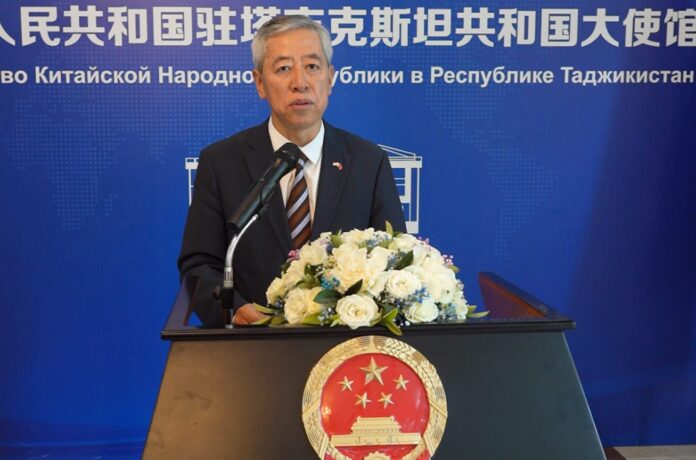
On the occasion of the anniversary, the director of Asia-Plus, Umed Babakhanov, received a congratulatory message from the Extraordinary and Plenipotentiary Ambassador of the People’s Republic of China in Tajikistan, Guo Zhijun:

“On behalf of the Embassy of the People’s Republic of China in the Republic of Tajikistan, allow me to sincerely congratulate you and all the employees of your agency on the 30th anniversary of the founding of ‘Asia-Plus’.

Thirty years is a journey filled with achievements and tireless work. As an important force in the field of information dissemination in the Republic of Tajikistan, your agency always adheres to the principles of professionalism and promptness, delivering truthful, comprehensive, and in-depth information to every corner of Tajikistan. The reports of your agency serve as a broad informational bridge for the audience in Tajikistan and Central Asia, making a significant contribution to the chronicle of the era and promoting social progress.

Thirty years is not only an important milestone but also a new starting point. Over these more than 30 years, the China-Tajikistan relationship has steadily developed. Especially in recent years, under the strategic leadership of the heads of our states, the relationship between China and Tajikistan has reached the level of comprehensive strategic cooperation and partnership in a new era.

Sincere, friendly, and mutually beneficial relations between China and Tajikistan bring real benefits to the peoples of both countries, paving the way for good-neighborly relations based on mutual respect, equality, and mutual benefit, and serve as a model for the development of interstate relations.

For many years, the Embassy of China in Tajikistan and the news agency ‘Asia-Plus’ have maintained productive partnership relations, which we highly value. We hope for further deepening of cooperation and joint efforts to promote information exchange, mutual understanding between peoples, and the building of an even closer China-Tajikistan community of shared destiny.

Once again, I congratulate your agency on its 30th anniversary! I wish it prosperity and new successes!”