Home Blog Page 26

Iran’s intelligence minister killed in air strike

0

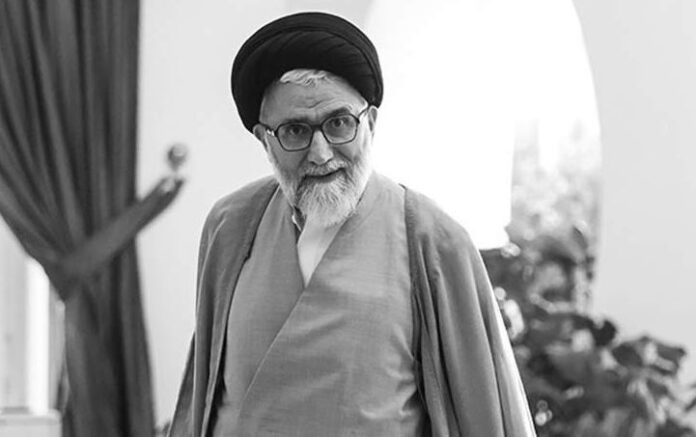
Iranian President Masoud Pezeshkian confirmed the death of intelligence chief Esmail Khatib, following an Israeli airstrike in Tehran on March 18. The Israeli military had earlier reported Khatib’s death as a result of the attack, as noted by the BBC’s Russian Service.

Pezeshkian expressed his grief on social media, saying, "The cowardly killing of my dear colleagues Esmail Khatib, Ali Larijani, Aziz Nasirzadeh, as well as some of their family members and accompanying team members, has plunged us into mourning." He extended his condolences to the people of the Islamic Republic of Iran.

Esmail Khatib (1961 – 18 March 2026) had served as Iran's Minister of Intelligence since August 2021.  He was the eighth official to hold the prestigious post. 

Born in Qaen, South Khorasan, Khatib studied Islamic jurisprudence in Qom, a major center of religious scholarship in Iran. Over the years, he became a trusted ally of Iran's Supreme Leader, Ayatollah Ali Khamenei, and a strong supporter of the Islamic Republic's founder, Ayatollah Ruhollah Khomeini. Khatib was deeply connected to influential religious figures, particularly his teachers, which helped cement his position in Iran's political and religious spheres.

Khatib held the title of Hujjat al-Islam, a high-ranking religious status in Iran that translates to "proof of Islam" or "authority on Islam."

Before his appointment as Minister of Intelligence, he held several key positions, including head of the Information Protection Center of the Judiciary and head of Astan Quds Razavi Security. Additionally, Khatib worked in the Office of the Supreme Leader as the chief warden, and served in both the Islamic Revolutionary Guard Corps (IRGC) intelligence division and Iran's Ministry of Intelligence.

Israeli Prime Minister Benjamin Netanyahu and Defense Minister Yoav Gallant confirmed the death of Khatib in an Israeli airstrike on the night of March 18. Gallant authorized actions by the Israeli Defense Forces (IDF) that allow for the elimination of senior Iranian officials without additional approvals, according to DW.

Gallant also warned of potential escalation in the coming days. He emphasized that the Israeli military's operation could result in "significant surprises" and usher in a new phase in the ongoing confrontation with Iran and its allied Lebanese group, Hezbollah. He stated that the intensity of strikes on Iranian targets would increase.

Since the onset of tensions between Israel, the United States, and Iran, numerous high-ranking Iranian officials have been killed, including Iran's Supreme Leader Ayatollah Ali Khamenei. On March 18, funerals were held in Tehran for former Supreme National Security Council Secretary Ali Larijani and the leader of the Basij militia, Gholamreza Suleimani, both killed in the airstrikes. Also commemorated were 84 sailors from the IRIS Dena ship, which was sunk by a torpedo in the Indian Ocean.

Alongside Larijani, his son Morteza, his bodyguard deputy Alireza Beyat, and Gholamreza Suleimani were killed in the attacks.

On March 18, the Iranian Revolutionary Guard Corps (IRGC) issued an “urgent warning” about planned strikes on five energy facilities in the Persian Gulf. According to Iran’s Tasnim news agency, the IRGC warned civilians living near these facilities to evacuate immediately. These include the Samref oil refinery, the Al-Jubail petrochemical complex, the Mosaid holding company, the Al-Hosn gas field, and the Ras Laffan refinery.

The statement urged: "These facilities have become direct and legitimate targets and will be subjected to attacks in the coming hours. Therefore, all citizens, residents, and workers are strongly advised to leave these areas and move to a safe distance without delay."

In retaliation for the Israeli airstrike on Iran’s largest gas field in the Persian Gulf, Iran threatened to bomb oil and gas facilities. U.S. President Donald Trump took to his Truth Social platform to warn that the U.S. would "destroy" the South Pars gas field if Iran attacks Qatar. Trump asserted that the United States had not been informed in advance of Israel’s strike on the field, which he said affected only a small part of the reserve, and was carried out "out of anger."

Trump also criticized Iran for its response to the Israeli attack, which he described as "unjustified and unfair." He emphasized that Israel would not strike South Pars again, as the field is "extremely important and valuable."

However, Trump warned that if Iran attacked Qatar again, the United States could strike the South Pars field with unprecedented force. He clarified that he was not seeking further escalation due to the potential long-term consequences for Iran, but underscored that any future attack on Qatari LNG infrastructure would prompt an immediate response from the U.S.
Russian parliament tightens immigration rules for migrant children and patent holders

0

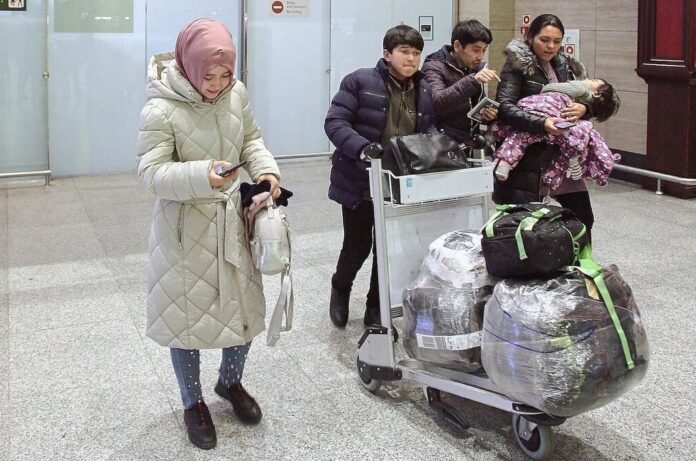
On March 18, the State Duma (Russia’s lower chamber of parliament) passed two significant bills concerning labor migration in their first reading.

The State Duma’s official website says that under the new regulations, migrant children who reach the age of 18 will be required to leave Russia within 30 days unless they obtain their own patent (work permit). Additionally, labor migrants will now be required to pay a fixed advance tax not only for themselves, as is currently the case, but also for all family members who depend on them and are residing in Russia.

The patents or work permits of migrants will be revoked if there is no information about their income or if their income is below a threshold, calculated by multiplying the regional living wage by the number of family members dependent on the migrant.

The new measures also propose stricter conditions for foreigners who have received temporary residence permits or residence permits. These permits will either not be issued or will be annulled if the migrant worked for less than ten months in the preceding year.

During the session, State Duma Speaker Vyacheslav Volodin noted that "in addition to the two bills discussed in the area of migration, four more are under review."

Tajikistan joins UN Convention against Cybercrime

0

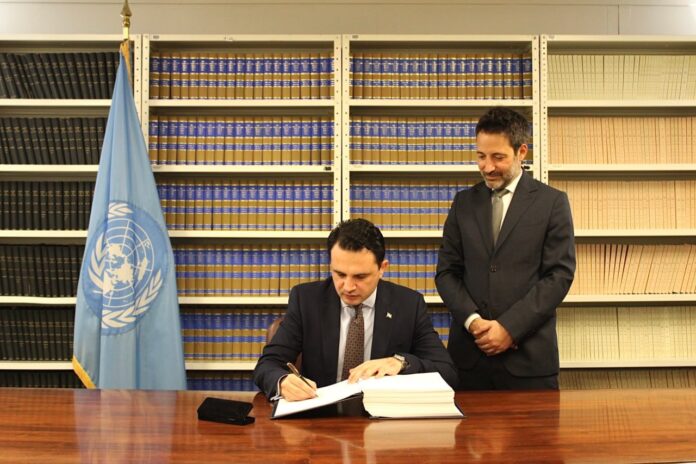
On March 17, Tajikistan officially joined the international effort to combat cybercrime by signing the United Nations Convention against Cybercrime. The signing ceremony took place at the UN Headquarters in New York, according to the Ministry of Foreign Affairs of the Republic of Tajikistan.

The document was signed on behalf of Tajikistan by the country’s Permanent Representative to the UN, Jonibek Hikmat.

The Convention reportedly aims to strengthen international cooperation in addressing crimes committed using information and communication technologies. It also establishes mechanisms for the exchange of electronic evidence in serious criminal investigations.

As internet-enabled devices continue to proliferate worldwide, the rise of transnational cybercrime has posed significant challenges for national law enforcement and security agencies. Countries vary widely in their approach to investigating, enforcing, and legislating against cybercrime, creating a complex global landscape for tackling digital threats.

In response to these challenges, the Council of Europe took a pioneering step in the early 2000s by establishing the Budapest Convention, the first international treaty aimed at addressing internet and computer crime. The convention, which came into force in July 2004, harmonized national laws, enhanced investigative techniques, and promoted cooperation between nations. By 2025, the treaty had been ratified by 81 countries, including several outside of Europe.

Despite the Budapest Convention's success, some countries, notably Russia, have raised concerns about its implications for national sovereignty. In 2017, Russia proposed an alternative framework through the United Nations (UN), arguing that the Budapest Convention posed a threat to its internet control. The proposal gained traction, and in 2019, Russia introduced the UN cybercrime convention to the General Assembly. The resolution, which passed with 88 votes in favor, 58 against, and 34 abstaining, was officially adopted in December 2024.

The full title is United Nations Convention against Cybercrime: Strengthening International Cooperation for Combating Certain Crimes Committed by Means of Information and Communications Technology Systems and for the Sharing of Evidence in Electronic Form of Serious Crimes.  

As of March 2025, 75 countries have joined the agreement, with the convention remaining open for signature at the UN Headquarters until December 31, 2026.  


The online HIV test delivery service has become available across all regions of Tajikistan.

0

Residents of the country can now order an express HIV test online and receive it free of charge and anonymously—at home or at any specified address. The hivtest.tj service aims to address the issue of limited access to testing, especially in remote areas, according to the Republican Center for AIDS Prevention and Control.

The hivtest.tj platform was developed by the Center with support from ICAP at Columbia University. The project is currently fully funded by the Global Fund to Fight AIDS, Tuberculosis and Malaria.

The human immunodeficiency virus (HIV) attacks white blood cells, weakening the immune system. This increases the risk of developing tuberculosis, infectious diseases, and certain types of cancer. At an advanced stage, HIV infection progresses to acquired immunodeficiency syndrome (AIDS).

The service was initially launched in Dushanbe and districts of republican subordination, later expanding to Sughd Region, Khatlon, and GBAO. Today, tests can be ordered from any part of the country, with free delivery nationwide.

To order a test, users need to fill out a short form on hivtest.tj: provide an address, choose a convenient delivery time, and leave a contact phone number. All information remains confidential and is not shared with third parties.

Delivery is available in two time slots: from 9:00 to 12:00 and from 13:00 to 19:00. The package includes the rapid test, detailed instructions in Russian and Tajik, informational materials on HIV prevention, and contact details of specialists for consultation.

The testing process takes 15–20 minutes. The rapid test detects HIV antibodies using saliva, applying technology similar to that used in medical facilities with capillary blood samples.

According to UNAIDS, some people living with HIV are unaware of their status. This is due to various factors, including fear of stigma, lack of time, remoteness of healthcare facilities, and limited awareness of testing options.

The online service is designed to eliminate these barriers. It ensures anonymity by allowing individuals to test without visiting a clinic; accessibility regardless of location; awareness through reliable information; and convenience with flexible ordering times.

The World Health Organization recommends regular HIV testing. It is particularly important for those planning to start a family, preparing for surgery, who have not been tested for a long time, or who have experienced situations with a risk of infection.

Modern therapy allows people living with HIV to lead full lives and start families. However, early diagnosis remains crucial, as it significantly improves treatment effectiveness.

According to the Republican Center for AIDS Prevention and Control, the number of orders through hivtest.tj has been increasing every month. The service is especially popular in regions where access to testing was previously limited.

The support service operates daily: specialists provide consultations, help interpret test results, and guide users to medical care when necessary.

In 2025, a total of 2,770 tests were delivered nationwide through the online service. Experts note that improved access to testing encourages more people to monitor their health and plays a key role in preventing the spread of HIV. 

Blind workers’ factory in Hisor falls into ruin as residents appeal for president’s intervention

0

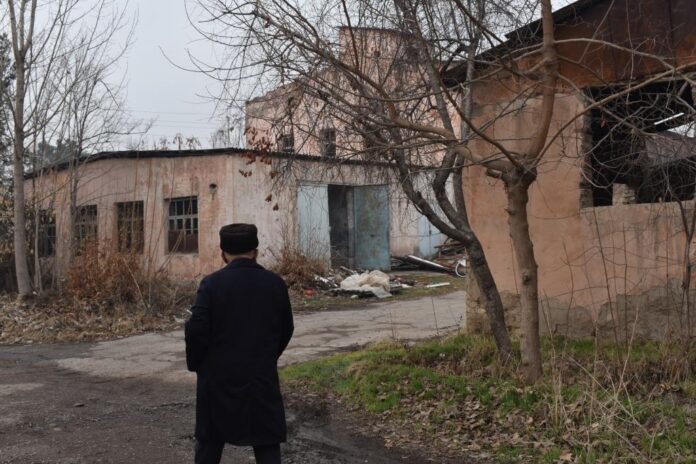
The Hisor Training and Production Facility for the Blind, once a key employer for people with visual impairments, has fallen into severe disrepair. The enterprise, around which the “Hayoti Nav” settlement was built, has effectively ceased operations, while its property and infrastructure have deteriorated.

ИЗОБРАЖЕНИЕ

The facility was established in the 1970s and operated under the Soviet social welfare system, employing between 170 and 400 people. After the collapse of the Soviet Union, it was shifted to a self-financing model. Supplies of raw materials stopped, and production gradually came to a halt.

Local residents claim that in the years that followed, the facility’s assets were looted, while parts of its land and buildings were leased out. As a result, workshops have been destroyed, equipment has disappeared, and the overall территории has significantly shrunk.

ИЗОБРАЖЕНИЕ

The facility’s director, Isrofil Sodiqov, denies these allegations, stating that by the time he returned to his post in 2020, the enterprise had already been devastated.

Today, the former production site consists of abandoned buildings and ruined infrastructure. Residents say that many visually impaired people, having lost their jobs, now face severe social hardship and are forced to survive on minimal benefits.

ИЗОБРАЖЕНИЕ

Residents of the settlement have repeatedly appealed to various government bodies, but, according to them, no effective response has followed. Authorities cite the enterprise’s independent status as the reason for inaction.

“We want the president to come here and see the situation with his own eyes,” residents say, expressing hope for intervention at the highest level.

ИЗОБРАЖЕНИЕ

The facility’s management, in turn, points to a lack of funds even to maintain basic staff, emphasizing that restoring production is impossible without external support. Attracting investors and benefactors is seen as a potential solution.

The story of the Hisor facility reflects a broader issue: after losing state support, an enterprise that once played a vital social role has been unable to adapt to new economic realities. Its former workers continue to hope that the facility will resume operations, allowing them to regain employment and a sense of purpose.

Tajikistan publishes first-ever practical guide to the stock market

0

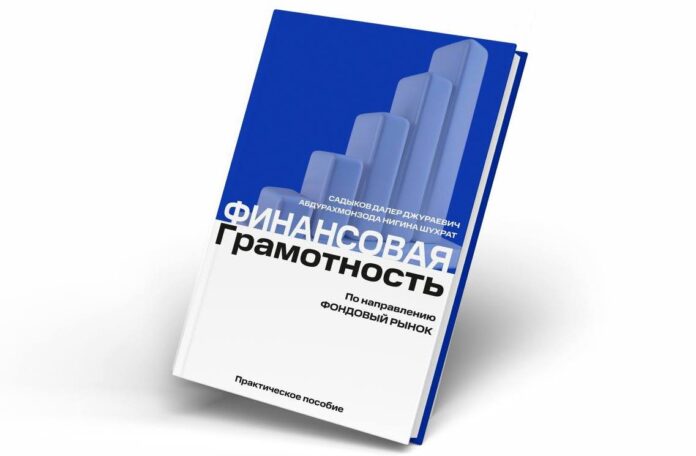
Tajikistan has released its first-ever practical guide to the stock market, marking a milestone in the country’s financial education efforts. The publication was authored by Nigina Abdurahmonzoda, Director of the Securities and Special Registration Agency under the Ministry of Finance, and Daler Sodiqov, Deputy Head of the Financial Department and Head of International Relations at Eskhata Bank.

“The publication is an important step toward improving financial literacy and developing an investment culture in the country. It has been prepared as an accessible practical guide for students, young professionals, beginner investors, and anyone interested in gaining a deeper understanding of how modern financial markets operate,” Ms. Abdurahmonzoda told Asia-Plus.

A stock market is a system where securities—such as stocks, bonds, and other financial instruments—are bought and sold. In simple terms, it is a platform where companies raise funds from investors, while investors seek to earn returns through price growth or income such as dividends and interest.

Abdurahmonzoda emphasized that the book is the first to systematically present fundamental knowledge about the stock market with consideration of Tajikistan’s national specifics. “This makes it not only an educational resource but also a contribution to the development of the country’s capital market infrastructure,” she said.

According to her, the guide was prepared as part of implementing directives issued by President Emomali Rahmon.

Co-author Daler Sodiqov noted that the guide is also available in electronic format in three languages—Tajik, Russian, and English—allowing users to study the basics of investing at their convenience.

“We are confident that this publication will become a significant contribution to the formation of a new generation of investors and the development of financial education in Tajikistan,” he said.

Sodiqov added that achieving these goals opens new opportunities for cooperation with international financial organizations, adoption of best practices, and strengthening Tajikistan’s position in the global investment market.

Tajikistan to require $2 billion for transport development over the next five years

0

The government of Tajikistan has ordered the approval of a State Program for the Development of the Transport Complex for 2026–2030. The program is considered one of the key strategic documents aimed at transforming the country into a fully-fledged regional transit hub.

The total funding volume is estimated at around 19.2 billion somoni (approximately $2 billion), with the main financial burden expected to fall on international partners and the private sector.


Where will the money come from?

According to the document, funding sources are distributed as follows: (i) state budget — 189.5 million somoni; (ii) development partners (international investors) — 16.51 billion somoni; and (iii) private sector — 2.48 billion somoni.

Thus, the government will assume only a small share of direct financing, focusing instead on attracting external investment and developing public-private partnerships.

Part of the state’s contribution will also be implemented through tax and customs incentives.


Where will the funds be spent?

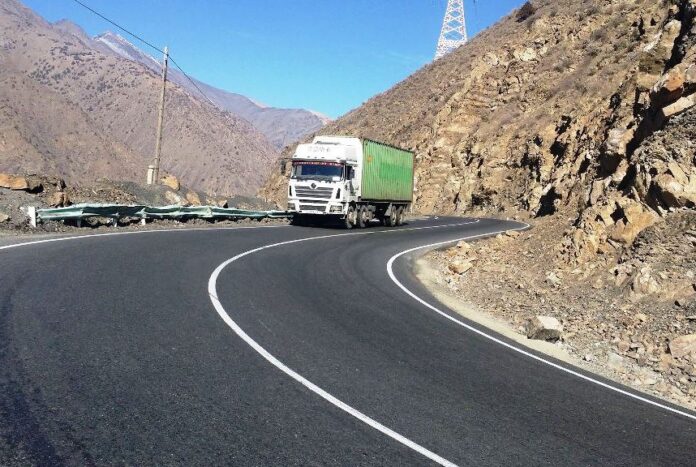
The program provides for large-scale modernization of the country’s transport infrastructure. Key areas include: 1) construction and reconstruction of up to 700 kilometers of roads; 2) development of the railway network; 3) creation of modern logistics centers; and 4) implementation of digital solutions.


Key challenges

Despite progress achieved, the program’s authors note that the transport sector faces a number of systemic challenges:

·         weak railway connections with China, Kyrgyzstan, and Afghanistan;

·         lack of modern logistics centers;

·         low level of digitalization of customs procedures;

·         insufficient infrastructure at border checkpoints;

·         deterioration of rolling stock and road surfaces;

·         high transportation costs;

·         shortage of specialists in IT and digitalization;

·         underdevelopment of public and electric transport.


Expected outcomes

By 2030, authorities expect significant growth in key indicators:

·         argo transportation — up to 126.8%;

·         cargo turnover — up to 128.5%;

·         passenger transportation — up to 128.5%;

·         development of electric transport — up to 124.7%.

In addition, the program aims to reduce transportation costs, improve service quality, and digitalize the sector, including the introduction of electronic customs data exchange with trade partners.

The development of transport infrastructure is seen as a key factor in overcoming Tajikistan’s “communication deadlock” and turning the country into a transit bridge between regions.


Digitalization as a key element

Special attention in the program is given to the sector’s digital transformation. A unified platform for managing transport systems is already being introduced, along with GPS-based transport monitoring systems.

Further digitalization is expected to:

·         increase service transparency;

·         reduce the shadow economy;

·         accelerate logistics processes;

·         lower corruption risks.

The program’s authors also highlight key risks related to financing: 1) delays in funding allocation may slow project implementation; and 2) untimely execution of measures could affect the achievement of target indicators.

Overall, the document is aimed at the systemic modernization of the transport sector, which could turn Tajikistan into an important transit player in Central Asia. However, its success will largely depend on the country’s ability to attract investment, accelerate digitalization, and address accumulated infrastructure challenges.

According to the Ministry of Transport, during the years of independence up to 2025, 2,407.8 kilometers of roads, 274 bridges, two three-level and two two-level interchanges, and seven transport tunnels were reconstructed and repaired. In total, 58 projects worth more than $2.2 billion have been implemented in the country’s transport sector during this period. 

Who sets meat price limits in Tajikistan?

0

Following the introduction of temporary profit caps, meat prices in Dushanbe have stabilized. However, imported products now dominate market stalls, while locally produced meat is virtually absent due to its high production cost. A report from the “Sakhovat” market shows how beef prices are formed, what penalties vendors may face, and why regulation does not always solve the problem of expensive meat.


Where is local meat? What is being sold in the capital’s bazaars

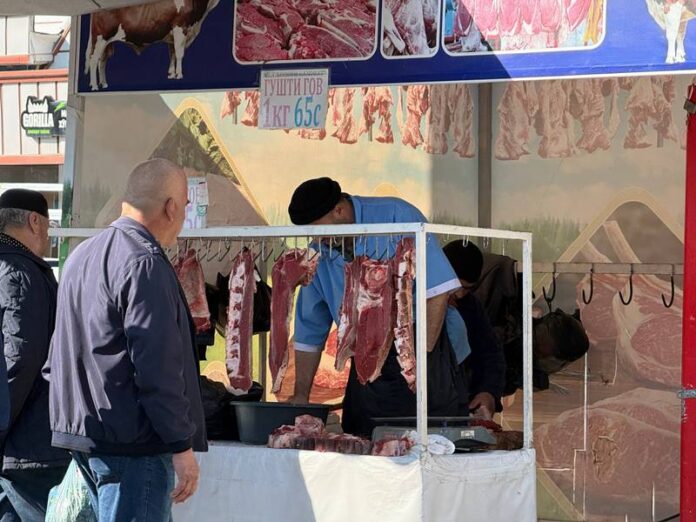
A week after the start of the month of Ramadan, we visited Dushanbe’s “Sakhovat” bazaar to find out whether meat prices had changed. At the very first stall, we saw that beef was selling for 65 somoni per kilogram, while lamb cost 75 somoni. Nearby stalls displayed the same prices. Vendors уточняют: the meat is imported from Belarus.

In the adjacent row, the situation is similar. Price differences are minimal: in some places beef costs 65 somoni, in others 67. Lamb averages 75 somoni per kilogram. At least at the time of our visit, there had been no sharp increase.

Traders say that Belarusian beef comes in several grades. The meat priced at 65 somoni is the cheaper option.

“This meat is not as tasty as that from our local cattle,” one vendor admits.

According to him, after defrosting it is harder to fry: it loses some of its juices and becomes less succulent, making it less suitable for steaks. However, it works well for minced meat—used for sambusa, manty, cutlets, and meatballs.

The seller compares the difference to chicken: “Have you tried store-bought drumsticks and meat from a домашняя chicken? The difference is about the same.”

Beef priced at 75 somoni, vendors say, is noticeably better in quality. This is also Belarusian meat, but of a different grade.

“The cattle were slaughtered there in Belarus by our entrepreneurs,” the trader explains.

The difference is visible in appearance: the cheaper meat is bright red, while the 75-somoni beef is darker and denser in structure, closer in color to local beef.

We visited around ten stalls at the “Sakhovat” market, and the same pattern repeated everywhere: prices were identical.

One grade of beef sells for 65 somoni, while the higher-quality option costs 75.

At the same time, we did not find any local meat on display—neither beef nor lamb. Vendors explain this in economic terms: the production cost of domestic beef exceeds 80 somoni. Selling it for less would mean operating at a loss, while charging more, they say, risks fines.

One trader adds that the price is made up of the purchase cost, transportation expenses, rent, electricity, and losses during butchering.

“We cannot simply lower the price,” he says. According to his estimate, the profit amounts to 5–10 somoni per kilogram.


Buying imports, waiting for local supply

Customers approach the stalls, внимательно inspecting the meat: some bargain, others silently take out their money. A small queue forms at one pavilion. A woman in a dark headscarf chooses a cut with less fat and says that during Ramadan, meat is purchased more often—especially for iftar.

“For now, the price is holding,” she notes, “but it usually rises before the holidays.”

Nearby, a middle-aged man asks for two kilograms of beef at 65 somoni. He admits that he prefers local meat, but it is currently unavailable in the market and is also more expensive.

“Of course, local is better and fresher. But if it’s not supplied and the price is high, we have to buy Belarusian,” he says.

Buyers note that this year they are watching prices especially closely. Demand traditionally rises during Ramadan, and people fear price increases. Some admit they have started buying less meat to stay within budget. Others say that current prices are still acceptable: whereas previously a kilogram cost 90–100 somoni, now it can be purchased for 65–75 somoni.


State regulation: what restrictions were in place

According to the Antimonopoly Service, which spoke to Asia-Plus, temporary limits on profitability for socially significant goods were introduced by Order No. 53 from November 14, 2025, to February 14, 2026.

The maximum profit margin was set at up to 10% for domestically produced goods and up to 8% for imported products. The measure was anti-crisis in nature and aimed at curbing price increases.

The agency clarified that the regulation applied not only to beef and lamb, but also to poultry meat, chicken eggs, flour (grades 1 and 2), pasta, wheat, rice, sugar, vegetable oils (cottonseed, sunflower, and butter), dairy products, as well as mineral, organic, and chemical fertilizers for agriculture.

Entrepreneurs involved in the production, processing, import, and sale of these goods were required to align their cost calculations with the law and adhere to the установленный profit limits.

Before changing prices, importers and producers were required to notify the Antimonopoly Service and provide supporting documents along with cost calculations. Violations were subject to liability under Article 553 of the Code of Administrative Offenses.

During the period the order was in force, oversight was intensified: businesses were asked to provide invoices and cost breakdowns. When supporting documents were available, issues generally did not arise; however, their absence could result in fines.

At the same time, the government did not set a fixed price per kilogram of goods—it only limited the profit component within the price structure.

After February 14, 2026, the restriction expired, and prices are now formed according to market principles.

According to the Antimonopoly Service, in Dushanbe these measures helped prevent a sharp rise in meat prices: sellers were able to account for their costs but were not allowed to exceed the установленный profit margin. Competition and the emergence of imported products also played an additional role.

At the same time, in the regions the price of beef and lamb exceeded 90 somoni per kilogram, and in some cities reached 120 somoni. These price levels persist today.


How prices are formed

As explained by the Antimonopoly Service, the procedure for forming free prices is defined by Government Resolution No. 257 dated May 30, 2018. The retail price consists of the wholesale price and a trade markup.

The structure includes the purchase cost, transportation and operating expenses, taxes, and profit. For locally produced meat, costs include feed, veterinary services, farm maintenance, and labor. For imported meat, they include the contract price based on the National Bank exchange rate, transportation, customs payments, and domestic expenses.

According to the Antimonopoly Service, the high cost of domestic meat is linked to a limited number of livestock of meat breeds, expensive feed, low levels of breeding stock imports, and a shortage of specialists.

In addition, a significant share of livestock is kept in private households. Meat yield there составляет 45–50% of live weight, whereas on industrial farms it can exceed 60%. This directly affects production costs.

The only solution, experts note, is the development of industrial-scale livestock farming for meat production.


Why is meat more expensive in supermarkets?

In supermarkets, meat often costs more than 100 somoni per kilogram. Sellers explain that the difference is due not only to markups but also to the business model.

Retail chains face higher expenses for rent, equipment, staff, and storage. Meat is usually cut, packaged, and labeled. In addition, supermarkets work with official suppliers, undergo veterinary control, and bear the risk of product write-offs. All these factors increase the cost price.

At traditional markets, operating costs are lower. Supplies often come directly from farms or intermediaries, and products are sold without additional packaging. As a result, prices there can be lower.


Grounds for fines

Liability may arise if the установленный level of profitability is exceeded (during the period when such restrictions are in force; currently, they are not in place), if unjustified markups are applied, if cost calculations are not provided upon request of the Antimonopoly Service, or if its directives are not followed.

At the same time, imposing a fine requires proof of the actual cost price, real profit, and the fact that the allowable level has been exceeded. A high price tag alone does not constitute a violation.

For example, if after slaughter and taking into account all expenses a kilogram of meat costs an entrepreneur 70 somoni, then with a profitability cap of 10%, the maximum selling price would be 77 somoni per kilogram.

The calculation takes into account the full cost price, not just the purchase price of livestock.

However, sellers say that most livestock is raised by private households, and no documentation is provided at the point of purchase. Therefore, it is difficult to present a detailed cost calculation to regulatory authorities.

Economists note that administrative pressure on retail sellers does not eliminate the key drivers of price increases—namely rising feed costs, logistics expenses, and dependence on imports.

At present, there is no fixed profit cap. If a seller can document the price structure, they cannot be fined solely for selling “expensive” beef. 

Tajikistan to draw global bloggers and media attention during Navrouz

0

Tajikistan is set to host a major international delegation of tourism officials, media representatives, and travel influencers during the Navrouz celebrations, as part of efforts to promote the country’s tourism potential, according to the Committee for Tourism Development under the Government of Tajikistan.

The delegation includes representatives of tourism authorities from Russia and China, executives from leading travel companies, as well as prominent international bloggers and journalists.

The visit is organized by the Committee for Tourism Development with support from the country’s diplomatic missions abroad.

According to the Committee, the initiative aims to promote the global brand of Navrouz, showcase Tajikistan’s cultural heritage and traditions, and strengthen cooperation with foreign media and digital content creators.

Among the expected visitors is Yuji Beleza, an international travel and lifestyle content creator with around 15 million followers, whose videos can reach up to 100 million views.

ИЗОБРАЖЕНИЕ

Also attending is travel blogger Tom, known for cultural and tourism content, with more than 3.2 million followers.

ИЗОБРАЖЕНИЕ

A film crew from the popular Russian TV program Neputevye zametki (“Travel Notes”), broadcast on Channel One, is also expected to produce a feature on Tajikistan, including coverage of Navrouz celebrations.

ИЗОБРАЖЕНИЕ

Journalists from China’s CGTN (China Global Television Network) will prepare reports on the country’s tourism potential and cultural traditions.

ИЗОБРАЖЕНИЕ

Representatives of Azerbaijan’s AzTV will cover the events for international audiences.

ИЗОБРАЖЕНИЕ

Officials expect that media coverage and social media content generated during the visit will reach millions of viewers worldwide and boost interest in Tajikistan as an emerging travel destination.

Tajikistan sends humanitarian aid to Iran

0

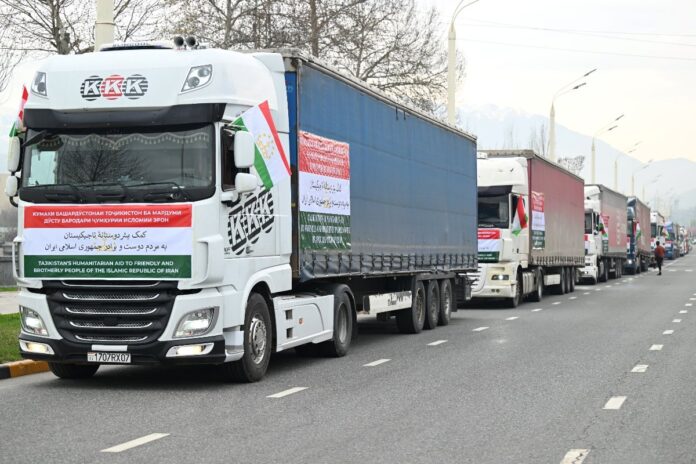
The government of Tajikistan has dispatched humanitarian aid to Iran on the orders of President Emomali Rahmon, the Tajik president’s press service reported.

A convoy of 110 trucks departed from Dushanbe on March 18 and is expected to arrive in Iran in the coming days.

The total volume of aid amounts to 3,610 tons, including 45 tons of medical supplies, sanitary and hygiene products, children’s clothing, food, essential goods, bedding, tents, and construction materials.

The United States and Israel began carrying out strikes on Iran on February 28. On the first day of the conflict, Iran’s Supreme Leader Ali Khamenei and dozens of senior military officials were killed.

In response, Tehran launched attacks on Israel and countries it considers U.S. allies, including the UAE, Bahrain, Kuwait, and Qatar.

Israel and Iran continue to exchange airstrikes.

According to Iranian sources, hundreds of civilians have been killed in missile attacks, and at least 15,000 people have been injured.