Home Blog Page 28

Arvand mobile app: security, convenience, and full financial control

0

As digital technologies continue to evolve rapidly, an increasing number of banking services are moving online, driving demand for secure and user-friendly financial solutions. One such service is the Arvand mobile application, designed to provide safe and efficient financial management.

Security as a priority

The developers have placed strong emphasis on protecting users’ data and funds. The Arvand app uses advanced encryption technologies and a multi-layered security system to safeguard financial transactions and personal information.

The application is linked to a specific mobile device, preventing unauthorized access from other devices unless approved by the user. In addition, the system requires periodic re-authentication, prompting users to log in again and confirm access with a password every few months.

Ease of ese and accessibility

One of the app’s key advantages is its intuitive interface. Users can manage their finances quickly and conveniently from their smartphones without visiting a bank branch.

Core functions are accessible in just a few clicks, and the navigation is designed to be simple even for first-time users.

Wide range of financial services

The Arvand mobile app offers access to a broad range of banking services online. Users can:

·         apply for loans remotely;

·         open and manage deposits;

·         monitor accounts and bank cards;

·         convert currencies at current exchange rates;

·         make money transfers;

·         pay for utilities and government services;

·         top up mobile balances and pay for various services.

As a result, the app serves as a comprehensive financial tool, enabling users to handle most banking tasks anytime and anywhere.

A bank in your smartphone

The Arvand mobile app provides 24/7 access to banking services without queues or delays. The bank continues to expand its digital services, making them more accessible, convenient, and secure.

More information and the download link are available at: www.my.arvand.tj

Tajik nationals convicted in Crocus City Hall attack case appeal verdict

0

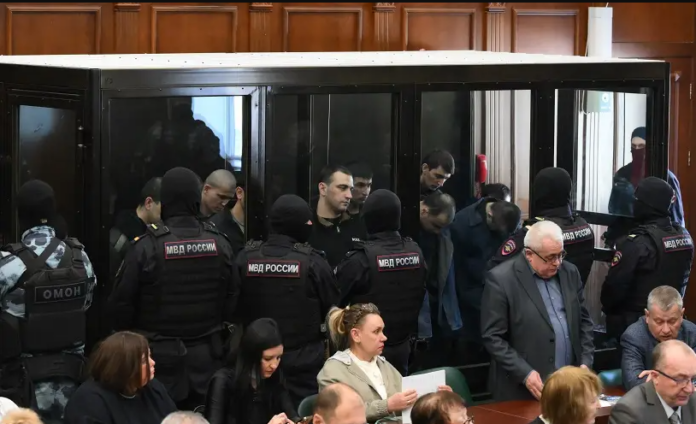
Lawyers representing four Tajik nationals convicted as perpetrators of the Crocus City Hall attack, along with their alleged accomplices, have filed appeals against the court verdict, TASS reported, citing defense attorneys.

The individuals — Faridoun Shamsiddin, Dalerjon Mirzoyev, Muhammadsobir Fayzov, and Saidakram Rajabalizoda — have been designated as terrorists in Russia and sentenced to life imprisonment.

According to their lawyers, brief appeal complaints have been submitted, with the defense arguing that the sentences are excessively harsh.

“We have filed brief appeals against the verdict for our clients,” one of the attorneys told the agency.

Lawyers for other convicted individuals have also submitted similar appeals to the appellate court.

On March 12, a Moscow court delivered its verdict in the case of the Crocus City Hall attack, sentencing 15 of the 19 defendants to life imprisonment.

The court identified the four Tajik nationals as the direct perpetrators of the attack.

The terrorist attack took place at the Crocus City Hall concert venue in Krasnogorsk , outside Moscow on March 22, 2024. Armed assailants stormed the building, opened fire, and set the venue on fire. The attack left 149 people dead and more than 550 injured.

Responsibility for the attack was claimed by the Islamic State – Khorasan Province (IS-K), with its affiliated Amaq news agency describing it as an “act of revenge” against “infidels.”

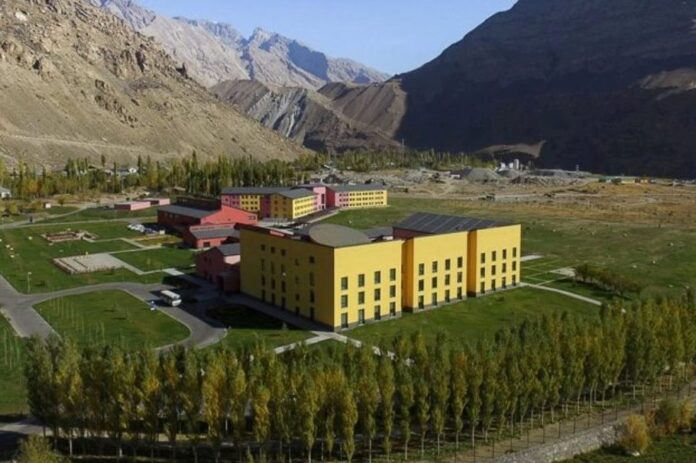
UCA-SPCE has to suspend the programs of its learning centers in Tajikistan

0

The University of Central Asia (UCA) has denied reports circulating on social media about the closure of its School of Professional and Continuing Education (SPCE) in Tajikistan, stating that its programs have been temporarily suspended rather than shut down.

In a statement to Asia-Plus, citing UCA Rector Professor Christopher J. Gerry, the University said the decision is related to licensing issues.

According to University, it has received notification from the Agency for Supervision in the Field of Education and Science under the President of the Republic of Tajikistan regarding the outcome of the review of UCA’s periodic application for renewal of the educational licenses of its School of Professional and Continuing Education (SPCE).

In line with the outcome of this review, UCA-SPCE reportedly had to suspend the academic programs of its learning centers in Tajikistan. Learners enrolled in these programs have been informed that classes will be paused until further notice. This decision does not affect the non-academic day-to-day operations of the SPCE learning centers.

The University is currently reviewing the implications of this outcome and remains engaged in constructive dialogue with the relevant authorities to seek clarification on the legal and administrative aspects of this matter, including SPCE’s future licensing options. The University is working to address the situation responsibly, with due consideration for the large number of part-time learners enrolled in SPCE programs as well as the educators and staff who support these programs.

It is also important to note that all academic programs of UCA’s School of Arts and Sciences, as well as UCA’s research programs, remain unaffected and continue to operate normally.

Tajikistan’s Agency for Supervision in the Field of Education and Science has not yet commented on the situation.

For more than two decades, UCA-SPCE has provided professional and continuing education opportunities to communities across Tajikistan alongside similar programs in Kazakhstan, the Kyrgyz Republic, and Afghanistan. Over this period, in Tajikistan alone more than 61,000 learners have participated in SPCE programs, gaining practical skills in areas such as professional development, entrepreneurship, science, languages, digital skills, and vocational education.

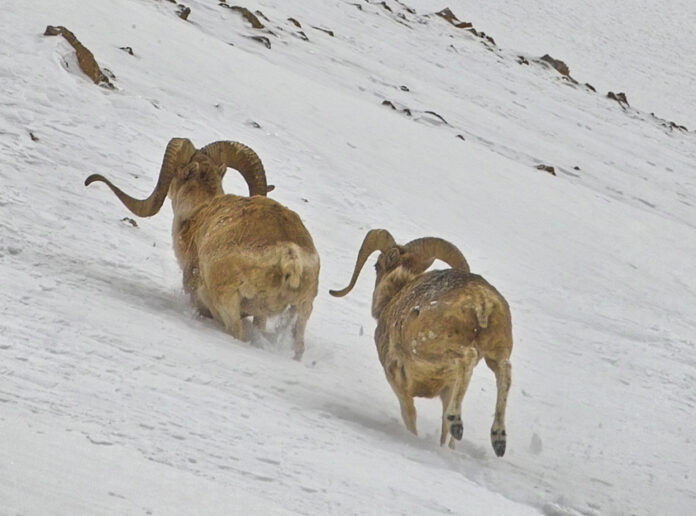
Tajikistan sets hunting quotas for Red Book species for 2026–2027

0

The Government of Tajikistan has approved quotas for regulated hunting of certain species listed in the country’s Red Book for the 2026–2027 period.

The decision was published on the legal information portal of the Ministry of Justice.

According to the document, the following quotas have been established:

·         Marco Polo sheep (Ovis ammon polii) — 132 individuals;

·         Markhor (Capra falconeri) — 24 individuals;

·         Bukhara urial (Ovis aries bochariensis) — 18 individuals;

·         Tien Shan brown bear (Ursus arctos isabellinus) — up to 10 individuals (in cases where they pose a threat to people or cause damage).

The hunting period for Marco Polo sheep, markhor, and urial is set from September 1, 2026, to March 1, 2027.

For the Tien Shan brown bear, the quota applies from September 1, 2026, to August 31, 2027.

Licensing and oversight will be carried out by the Committee for Environmental Protection under the Government of Tajikistan.

The Customs Service has been tasked with monitoring the import and export of wildlife specimens, ensuring proper permits are in place.

The document also calls for coordination among state institutions, including the Ministry of Economic Development and Trade, the State Committee for National Security, the Forestry Agency, the National Academy of Sciences, and local authorities, to ensure proper implementation of the quotas.

In Tajikistan, limited trophy hunting of rare species is permitted under special licenses, with proceeds directed toward environmental protection and the support of protected natural areas.

This year, Eid al-Fitr to be celebrated in Tajikistan on March 20

0

This year, the holy month of Ramadan in Tajikistan will last 29 days, and Eid al-Fitr will be celebrated on March 20, according to the Committee on Religion, Regulation of Traditions, Celebrations, and Ceremonies under the Government of Tajikistan

The decision was reportedly adopted by the Council of Ulema (Shuroi Ulamo — Tajikistan’s highest Islamic institution) during a meeting held on March 17.

According to the Council, Eid al-Fitr prayers will begin at 7:30 a.m. in all mosques across the country. The day has been declared a public holiday.

Imam-khatibs have been instructed to emphasize charity, support for those in need, and the importance of avoiding excessive spending during holiday sermons.

They are also tasked with conveying the official congratulatory message of the Council of Ulema to the public.

In recent years, Ramadan in Tajikistan has consistently been observed as a 29-day month, including in 2025.


Charitable contributions set for 2026

According to the Council of Ulema, the amounts for Sadaqa al-Fitr and Fidyah have decreased compared to last year, while the nisab threshold for Zakat has increased.

·         Sadaqa al-Fitr (also known as Zakat al-Fitr) is charity given to the poor at the end of the fasting in the Islamic holy month of Ramadan.  The Arabic word Fitr means the same as iftar, breaking a fast, and it comes from the same root word as Futoor which means breakfast. Sadaqa al-Fitr is a duty which is wajib (required) of every Muslim, whether male or female, minor or adult as long as he/she has the means to do so. This amount is reportedly based on an average price for two kilograms of wheat. This year, each Muslim must pay 7.00 somoni as sadaqa al-fitr, which is 1.00 somoni less than in 2025 (8.00 somoni).

·         Fidyah or fidya is religious donation made in Islam when a religious obligation (such as fast for Ramadan) has been missed or broken. Fidyah serves as compensation for when a Muslim was unable to fulfill the obligation for reasons beyond their control. This year, for those unable to fast for valid reasons, the fidya for 30 days is 420.00 somoni (14 somoni per day), which is 60.00 somoni less compared to 2025 (480.00 somoni for 30 days).  

·         Zakat is a form of alms-giving treated in Islam as a religious obligation or tax,] which, by Quranic ranking, is next after prayer (salat) in importance. As one of the Five Pillars of Islam, zakat is a religious obligation for all Muslims who meet the necessary criteria of wealth. It is a mandatory charitable contribution, often considered to be a tax. Zakat is based on income and the value of all of one's possessions.  It is customarily 2.5% (or 1/40) of a Muslim's total savings and wealth above a minimum amount known as nisab, but Islamic scholars differ on how much nisab is and other aspects of zakat.  According to Islamic doctrine, the collected amount should be paid to the poor, the needy. Today, in most Muslim-majority countries, zakat contributions are voluntary, while in a handful (Libya, Malaysia, Saudi Arabia, Sudan, and Yemen), zakat is mandated and collected by the state. This year, those with savings of 64,000 somoni or more must pay zakat of 1,600.00 somoni. Last year, the savings threshold was 36,900 somoni, and the zakat was 880.00 somoni. Thus, zakat has nearly doubled this year. 


Call to support those in need

In its message, the Council of Ulema emphasized the importance of helping those in need and cited a traditional greeting of the Prophet’s companions: “Taqabbalallahu minna wa minkum” (“May Allah accept from us and from you”).

It also noted that one of the Sunnah practices is to delay the Eid prayer slightly to allow time for sadaqa al-fitr reach the poor.

On the day of Eid, people traditionally prepare festive meals and visit one another to exchange greetings.

However, since 2024, the tradition of “idgardak” has been officially prohibited during Eid al-Fitr and Eid al-Adha in Tajikistan.

The law banning “alien garments” and “idgardak” (children's celebrations for two major Islamic holidays — Eid al-Fitr and Eid Al-Adha) was signed by President Emomali Rahmon on June 20, 2024. 

Eid al-Fitr is a Muslim holiday that marks the end of Ramadan, the Islamic holy month of fasting.  Eid is an Arabic word meaning “festivity”, while Fitr means “to purify”; and so the holiday symbolizes the purification after completing the fasting month, which is after the end of the Islamic month of Ramadan, on the first day of Shawwal.

Eid al-Fitr is one of the major religious holidays that followers of Islam have been observing for centuries.  By closing the holy month of Ramadan, it carries a deep moral meaning, encapsulates the joy of renewal, commitment to self-improvement, readiness to do good and help the needy.

Eid al-Fitr lasts for one day of celebrations and is sometimes also known as the “Smaller Eid": as compared to the Eid al-Adha that lasts three days following the Hajj and is casually referred to as the “Greater Eid.”

On this day, Muslims attend the special Eid prayer (salah).  An obligatory charity is paid to the poor and the needy before performing the ‘Eid prayer by all those adult Muslims who are required to pay Zakat.  Eid prayer is performed in congregation in open areas like fields, squares or at mosques.

After the prayers, people visit their relatives, friends and acquaintances. Gifts are frequently given; it is common for children to be given small sums of money by adult relatives or friends.  It is also common for children to salam parents and adult relatives; they usually get sweeties or money from the adult relatives or friends.

Asia-Plus launches chatbot on digital safety

0

Asia-Plus Media Group has launched a chatbot focused on digital safety as part of its “Zireh” information campaign, aimed at helping users navigate crisis situations in the online environment.

The tool is designed for a wide audience, including teenagers, parents, and teachers.

Amid the rapid development of digital technologies and artificial intelligence, online threats — ranging from cyberbullying to fraud — are becoming more widespread. In this context, knowing how to respond correctly is increasingly important.

The newly launched chatbot is intended to guide users through such situations. It is currently available in Russian, with a Tajik-language version expected soon. The service operates via Telegram.


A support and guidance tool

The “Zireh” chatbot is a multi-level system providing both digital and psychological support on issues of safety, personal boundaries, and online behavior.

Rather than offering simple answers, the chatbot provides structured guidance through real-life crisis scenarios faced by families and schools in Tajikistan.

It includes tailored content for three main groups:

·         teenagers

·         parents

·         teachers

Each topic is presented through a series of 4–5 cards, gradually guiding users from emotional response to practical action and awareness of their rights. In total, the chatbot includes more than 150 thematic modules developed with input from a psychologist.


How it works

Users can select their role — teenager, parent, or teacher — and describe their situation, for example: “I am being blackmailed online.”

The chatbot then provides step-by-step recommendations on what actions to take, how to protect oneself, and where to seek help.


Practical and psychological support

According to the developers, the chatbot offers several key advantages. It:

·         provides clear, actionable guidance;

·         addresses users’ emotional state and helps reduce panic;

·         is based on real cases from Tajikistan, including media reports and official statistics;

·         explains legal aspects without intimidation;

·         improves digital literacy by explaining how online platforms and security tools work;

·         serves a preventive function by helping users avoid crisis situations.


Useful for teenagers, parents, and schools

For teenagers, the chatbot offers support, helping them feel less isolated, understand their rights, and seek help in time.

For parents, it serves as a practical guide, helping them recognize signs of bullying, aggression, and blackmail, and communicate effectively with their children.

The chatbot can also be used in schools as a preventive tool, helping educators respond to crises, promote a safe learning environment, and reduce the risk of repeated conflicts.

Two children removed from their parents in Dushanbe over begging

0

Two 12-year-old children have been removed from their parents in Dushanbe’s Sino district by court order and placed in Boarding School No. 1, the city’s Police Department reported.

According to police, the children had repeatedly been taken into custody for vagrancy and begging.

“Despite strict warnings, the parents continued to show negligence and involved the children in begging, using the money obtained for personal purposes,” the statement said.

ИЗОБРАЖЕНИЕ Photo: Dushanbe police

Measures provided for Article 73 of Tajikistan’s Family Code were applied to the parents. The children are currently in a boarding school, where they are provided with conditions for education, upbringing, and further development.

Earlier, police in Dushanbe’s Shohmansour district also detained a 16-year-old подросток engaged in vagrancy and suspected of theft.

Authorities said the situation resulted from a lack of proper parental supervision and responsibility. Similar measures under Article 73 — which allows for the removal of a child without termination of parental rights — were applied.

The teenager has been sent to a specialized vocational lyceum in Dushanbe, where he is now participating in educational and rehabilitation programs. 

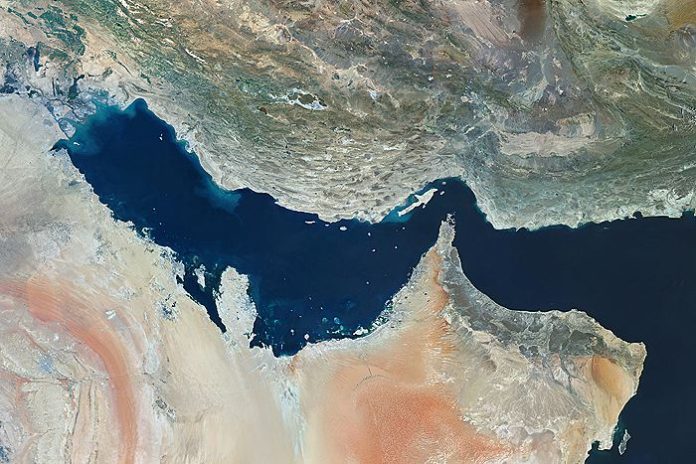
US allies decline Trump’s call to send warships to the Strait of Hormuz

0

Several US allies have declined President Donald Trump’s call to deploy warships to escort tankers through the Strait of Hormuz, Reuters reported.

Countries that did not support the initiative include the United Kingdom, France, Germany, South Korea, Japan, and Australia.

UK Prime Minister Keir Starmer rejected the proposal to create an international naval coalition to protect commercial shipping in the strait, according to The Telegraph. UK Energy Secretary Ed Miliband said London is “actively considering” various options to ensure safe navigation, without providing further details. British authorities are also considering the use of drones to detect sea mines, the report said.

France, Germany, and South Korea have likewise refrained from committing naval forces, citing concerns that any conflict in the region could become prolonged.

German Defense Minister Boris Pistorius said Berlin would not participate in a military mission in the Strait of Hormuz at Washington’s request.

“This is not our war. We did not start it. We support a diplomatic solution and a swift end to the conflict, but increasing the military presence in the region is unlikely to contribute to that,” he said.

German Foreign Minister Johann Wadephul had earlier also stated that Germany would not take part in a multinational operation to protect shipping.

Australia has also indicated it will not send ships, Reuters reported. Japan initially declined as well, though Prime Minister Sanae Takaichi said Tokyo is still assessing possible actions.

Earlier, Trump said his administration had asked seven countries to assist in securing navigation through the Strait of Hormuz. China was among those approached, but Beijing has not yet announced its position.

The Strait of Hormuz is one of the world’s most critical maritime trade routes, with roughly one-fifth of global oil and gas supplies passing through it.


US and Iran reportedly establish direct contact

According to Axios, US Special Envoy Steve Witkoff and Iranian Foreign Minister Abbas Araghchi have resumed direct contacts in recent days.

Sources say Araghchi sent text messages to Witkoff discussing a possible end to the war involving the United States, Israel, and Iran.

However, Drop Site News previously reported that Witkoff initiated the outreach, which was allegedly ignored by the Iranian side. A US official told Axios that it was Araghchi who attempted to establish contact, stressing that the United States is “not negotiating” with Iran.

The content of the exchanges remains unclear. Nevertheless, media reports describe it as the first known direct contact between the two sides since the conflict began more than two weeks ago.

On March 16, President Trump said Iranian representatives had reached out to the United States, though it remains unclear whether they have the authority to negotiate any agreements.

“We don’t know who they are,” he told reporters, adding that he does not rule out talks with Iran, as “sometimes good things come out of them.”


Average salary in Tajikistan rises by 17.3% year-on-year

0

The average monthly nominal salary in Tajikistan reached 3,114.56 somoni (approximately $325) in January 2026, marking a 17.3% increase compared to the same period in 2025, according to the country’s Agency on Statistics.

The minimum wage remains unchanged at 1,000 somoni.

The highest salaries were recorded in the following sectors:

·         financial intermediation and insurance — 7,647.44 somoni;

·         information and communications — 6,072.79 somoni;

·         mining — 4,819.05 somoni;

·         electricity, gas, steam, and air conditioning supply — 4,713.29 somoni;

·         construction — 3,682.08 somoni;

·         transportation and storage — 3,452.95 somoni;

·         manufacturing — 3,019.20 somoni.

The lowest wages were reported in agriculture, forestry, and fisheries, at 1,463.32 somoni.

Regionally, the highest salaries are observed in Dushanbe, while the lowest are in Khatlon Province and the Gorno-Badakhshan Autonomous Region (GBAO).

 
Average monthly nominal accrued wages by region of the country (in somoni)

Values (January 2025 → January 2026):

·         Republic of Tajikistan: 2,656.29 → 3,114.56

·         Dushanbe: 3,377.78 → 3,984.53

·         Khatlon Province: 2,210.67 → 2,702.91

·         GBAO: 2,436.23 → 2,713.05

·         Districts Subordinate to the Center (RRP): 2,270.53 → 2,772.61

·         Sughd Province: 2,613.27 → 2,959.01


As of the end of January 2026, total wage arrears, including debts from previous years, exceeded 14.5 million somoni (around $1.5 million).

Despite the increase, average wages in Tajikistan remain significantly lower than in other Central Asian countries. In Kazakhstan, the average salary stands at about $1,030, in Uzbekistan at $527, and in Kyrgyzstan at $524.

Data for Turkmenistan are not publicly available.

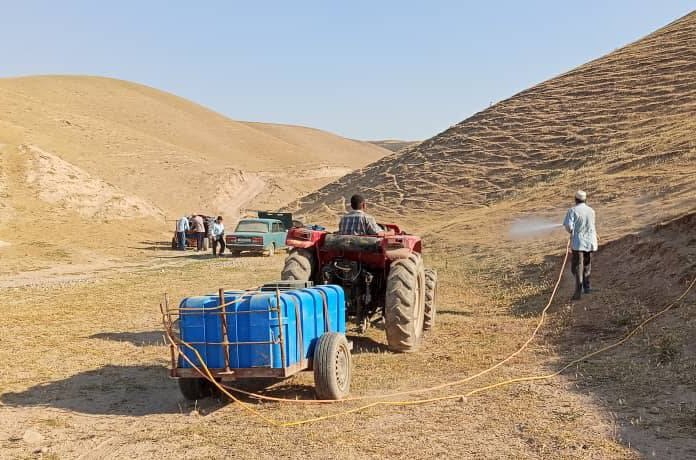
Tajikistan begins implementing CIS agreement on locust control

0

Tajikistan is launching the implementation of a CIS agreement on cooperation in preventing and combating locust infestations ahead of the agricultural season.

The document was approved by a government resolution dated February 26, 2026 (No. 60), signed by President Emomali Rahmon.

The agreement was signed on September 29, 2025, in Minsk during a meeting of the CIS Council of Heads of Government. It provides for cooperation among member states in phytosanitary monitoring, preventing locust migration, and coordinating response measures.

The main objective of the agreement is to prevent large-scale locust outbreaks, reduce risks to agricultural crops, and ensure the safety of the population and the environment during control operations.

The Ministry of Agriculture of Tajikistan, together with relevant agencies, has been tasked with taking the necessary steps to implement the agreement.

The Ministry of Foreign Affairs will notify the CIS Executive Committee upon completion of the domestic procedures required for the agreement to enter into force.

The agreement also involves regular phytosanitary surveys, development of digital monitoring systems, information exchange among CIS countries, forecasting of pest spread, and capacity building for specialists.

Meanwhile, active efforts are already underway in Tajikistan to detect and eliminate locust breeding sites. According to the Ministry of Agriculture, surveys conducted in 2025–2026 identified infestations across more than 120,000 hectares.

To improve efficiency, authorities have begun using unmanned aerial vehicles (drones), which allow for faster monitoring and treatment of hard-to-reach areas.

The Ministry of Agriculture emphasized that timely detection and elimination of locust outbreaks is critical for protecting harvests and ensuring the country’s food security.