Home Blog Page 29

Tajikistan needs about $1 Billion annually to tackle climate change

0

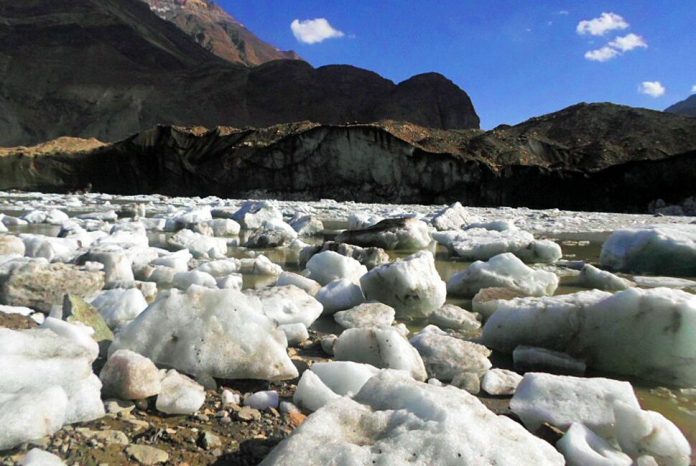
Tajikistan requires approximately $1 billion annually to implement climate adaptation and emissions reduction projects, officials said at a high-level roundtable that took place in Dushanbe yesterday.

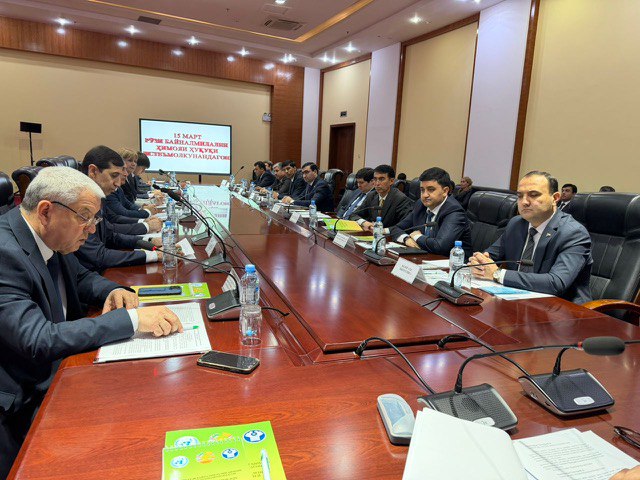
The event focused on the outcomes of the UN Climate Conference COP30 and the preparation of the country’s new national climate plan, NDC 3.0. It was organized by the Committee for Environmental Protection under the Government of Tajikistan in cooperation with the United Nations Development Programme (UNDP).

The roundtable brought together representatives of government agencies, international organizations, the private sector, civil society, youth, and the expert community.

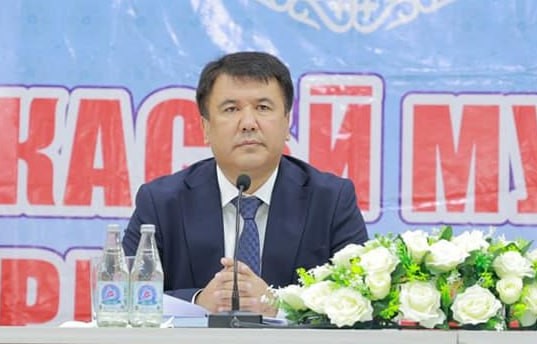
Opening remarks were delivered by Committee Chairman Bahodour Sheralizoda, UK Ambassador to Tajikistan Katherine Smitton, and UNDP Resident Representative Sudipto Mukerjee.

Zebuniso Mouminzoda, Director of the Tajikistan Office of the Regional Environmental Centre for Central Asia (CAREC), presented an overview of key decisions adopted at COP30, held in the Brazilian city of Belém.

According to her, the conference reaffirmed the critical role of financing in addressing climate change. Participating countries agreed to scale up support for adaptation projects and to develop a new global climate finance target.

Under the new agreements, countries are expected to mobilize at least $300 billion in public funding annually for climate projects by 2035. Total climate finance from all sources — including public, international, and private investments — is projected to reach $1.3 trillion per year.

The launch of a Loss and Damage Fund was also announced to support countries most affected by climate change impacts. The fund’s first call for proposals will allocate $250 million in grants.

In addition, COP30 introduced the Tropical Forests Forever Facility, aimed at ensuring long-term financing for the protection of tropical forests, and participants agreed to establish a global climate finance transparency system.

Roundtable participants emphasized that Tajikistan needs around $1 billion annually to meet its climate commitments. Currently, the country attracts approximately $150–300 million per year, making expanded access to international climate finance a key priority.

The meeting also addressed the development of NDC 3.0, Tajikistan’s participation in international climate negotiations, and opportunities to attract green investments.

Participants noted that the roundtable served as an important platform for dialogue and for developing recommendations to strengthen cooperation between government institutions, international organizations, and the private sector in order to enhance the country’s climate resilience.
Nearly 30 Cultural Heritage Protection Projects Launched by the European Union and ALIPH in Central Asia

0

The European Union and the International Alliance for the Protection of Heritage (ALIPH) have launched 29 cultural heritage projects across Central Asia aimed at safeguarding endangered tangible and intangible heritage threatened by climate change.

According to a press release from the European Union Delegation to Tajikistan, the projects were selected following a highly competitive call that attracted 233 applications. The initiative has a total budget of €1.5 million, including €1.1 million provided by the European Union, with the remaining funds contributed by ALIPH.

The projects will be implemented in Kazakhstan, Kyrgyzstan, Tajikistan, Turkmenistan, and Uzbekistan.

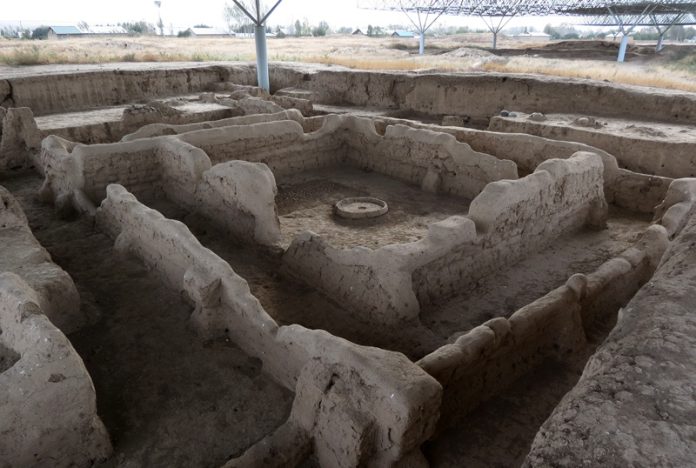
The initiative focuses on both historic sites and living cultural traditions, combining conservation, documentation, skills development, and economic empowerment. Planned interventions include the protection of significant heritage sites such as the UNESCO World Heritage site of Sarazm in Tajikistan, the Ak-Saray Palace and the Kayrit Oasis in Uzbekistan, and the Dandanakan Mosque in Turkmenistan.

Several projects will also support museums through restoration work and professional training. These efforts will involve institutions such as the Kasteyev Museum in Almaty, the National Museum of Antiquities of Tajikistan, and two museums in Karakalpakstan, Uzbekistan — the Savitsky Museum in Nukus and the Ecological Museum in Muynak, which preserves the heritage of the Aral Sea region.

The program will also fund the restoration of paintings from the Romanov Palace collection in Tashkent. In addition, regional initiatives on conservation and climate-resilient restoration practices, along with a museology forum in Astana, will facilitate knowledge exchange among museum professionals across Central Asia.

Beyond physical heritage, several projects will focus on preserving intangible cultural traditions. These include documenting nomadic and mountain cultural practices, preserving epic poetry, and revitalizing traditional games and music in Kyrgyzstan. In Uzbekistan, sustainable silk and ikat production will be supported through the restoration of natural dyeing techniques and the transfer of traditional knowledge.

Creative industries will also receive support through training programs for artisans and entrepreneurs in fields such as felt-making, suzani embroidery, ceramics, wall painting, and the digitization of ornamental traditions. Particular attention will be given to engaging young people and supporting returnee communities.

“The European Union is pleased to expand its partnership with ALIPH. Our cooperation is grounded in concrete action and innovative approaches to safeguarding cultural heritage at risk, recognizing its role as an enabler of peace and security,” said Peter Wagner, Director and Head of the Service for Foreign Policy Instruments (FPI) at the European Commission.

Valéry Freland, Executive Director of ALIPH, said the initiative would strengthen efforts to protect cultural heritage from the impacts of climate change while expanding the organization’s work in Central Asia.

“Thanks to the support of the European Union, we will be able to work with local heritage professionals to help creative industries and traditional crafts adapt to the challenges posed by climate change,” he said.

ALIPH is a global fund dedicated to protecting cultural heritage in conflict, post-conflict, and crisis areas. The organization supports professionals working on the ground to safeguard or restore museums, heritage sites, monuments, and intangible cultural traditions in challenging environments.

Founded in Geneva in 2017, ALIPH has supported around 600 projects in 64 countries. The foundation’s work is funded by nine member states — the United Arab Emirates, Saudi Arabia, Kuwait, Morocco, France, China, Luxembourg, Cyprus, and Uzbekistan — as well as private partners including Dr. Thomas S. Kaplan, the Getty Trust, and the Fondation Gandur pour l’Art, along with several other donors.

Fears of Iranian refugee influx grow in Central Asia as war intensifies

0

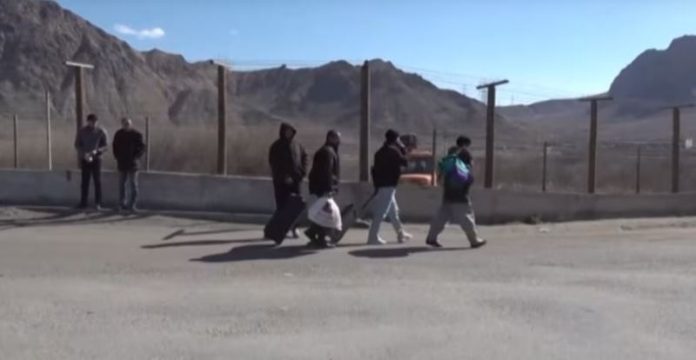
Two weeks of U.S.-Israeli air strikes on Iran have displaced millions of people inside the country, raising concerns among neighboring states about a potential refugee spillover that could develop into a humanitarian crisis, Radio Free Europe/Radio Liberty (RFE/RL) reported on March 15.

RFE/RL says that according to the UN High Commissioner for Refugees (UNHCR), up to 3.2 million people have been temporarily displaced within Iran, most of them fleeing the capital, Tehran. The city experienced one of the heaviest bombardments of the conflict on March 13.

Several neighboring countries reportedly closed their borders when the air strikes began on February 28, allowing only limited crossings—mainly for citizens of third countries transiting home.

With many of Iran’s 90 million residents weighing whether to flee the country, Mahir Safarli, UNHCR’s representative for Central Asia, said the agency is preparing for a possible escalation of the humanitarian situation.

“Across Central Asia, we are coordinating closely with governments to monitor the situation and respond effectively if humanitarian needs expand,” Safarli said.

For now, the UNHCR says the refugee flow remains manageable.  


Humanitarian preparations in Central Asia

Safarli said a key element of the UNHCR’s preparedness is a logistics hub in Termez, southern Uzbekistan, near the Afghan border.

Established in October 2021 during the Afghanistan humanitarian crisis and integrated into UNHCR’s global stockpile network in 2025, the hub stores emergency supplies such as tents, blankets, sleeping mats, kitchen sets, buckets, jerry cans, and solar lamps for potential refugee operations in the region.


Turkmenistan tightens border controls

Although UNHCR has not reported major changes along the Iran–Turkmenistan border, Turkmen officials told RFE/RL that attempts by Iranian Turkmens to cross into Turkmenistan have increased.

Iran shares a 1,148-kilometer border with Turkmenistan. The four main crossings—Sarakhs, Artyk, Howdan, and Altyn Asyr—remain operational but are currently open only for evacuating third-country nationals.

Turkmen officials say people approaching the border mainly come from northern Iranian districts with large Turkmen populations.

However, authorities in Ashgabat have ordered that Iranian citizens not be allowed to enter.

“Our patrols have been reinforced, and drones are monitoring the border,” the official said, adding that Turkmenistan lacks the economic capacity to host refugees.


Internal displacement in Iran

The United Nations says most displaced Iranians are moving northward, away from areas experiencing heavy bombardment. Many families are staying with relatives or in temporary community shelters.

The influx of displaced people has increased demand for food in northern regions, where residents report sharp price rises for staples such as flour, rice, and cooking oil, with some items costing up to ten times more than before the conflict.

For now, most displaced people remain inside Iran. However, Safarli emphasized that neighboring states have obligations if refugees begin arriving.

“In Central Asia, Kazakhstan, the Kyrgyz Republic, Tajikistan, and Turkmenistan all have refugee legislation and asylum systems,” he said. “UNHCR calls on states to allow access to territory for people seeking international protection and to ensure their rights and safety.” 

Former head of Sughd regional health department released after paying fine in bribery case

0

Farrukh Maksoudzoda, the former head of the Sughd regional health department who had been detained on suspicion of bribery, has been released after paying a 300,000 somoni fine, according to Radio Liberty’s Tajik Service, known locally as Radio Ozodi.

According to the report, Maksoudzoda spent about three months in pre-trial detention facility. A representative of the Sughd Regional Court, speaking on condition of anonymity, told the outlet on March 16 that the decision to release him had been made on March 6.

“Taking into account the time he spent in custody, the court imposed a fine of 300,000 somoni. After the damage was compensated, the punishment was limited to a fine and he was released from custody,” the source said.

In a brief phone conversation with journalists, Maksoudzoda confirmed his release, but declined to provide further details. He only noted that he agrees with the court’s decision and plans to begin working at a private clinic in the coming days.

Authorities have not yet officially commented on the release of the former regional health official.

Maksoudzoda’s detention became known in late December 2025, although officials initially declined to comment on the case. Later, Health Minister Jamoliddin Abdullozoda confirmed the arrest, stating that it could be related to the official’s “personal activities.”

The head of the Khujand City Court, Dilovar Mirzohomidzoda, said at a press conference on February 11 that criminal proceedings had been instituted against Maksoudzoda under Article 319 (1) of Tajikistan’s Criminal Code — accepting a bribe.  Mirzohomidzoda did not specify the alleged amount or circumstances.

According to the court, Maksoudzoda was arrested on December 17, 2025.

Under this article, he faced a potential fine ranging from 284,700 to 711,750 somoni or up to five years in prison.

Maksoudzoda was appointed head of the Sughd regional health department in summer 2025. Before that, he served as chief physician of the regional hospital.


How much does school education actually cost in Tajikistan?

0

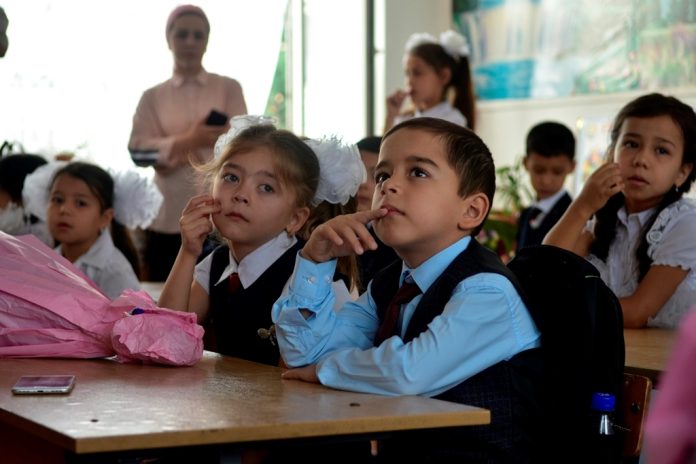
Education in Tajikistan is officially considered free. Public schools do not charge tuition fees, kindergartens receive state support, and universities offer government-funded places. In reality, however, educating children often becomes one of the largest expenses for families. Many parents do not fully realize how much they actually spend on their children’s education.


A family example

In the Homidov family (name changed), both parents work. They have three children: two school students—one attending a regular public school and the other a state lyceum—while the youngest goes to kindergarten.

The family keeps detailed records of their household expenses, allowing them to see the real cost of education.

Kindergarten: the first financial step

When a child starts attending a public kindergarten, parents usually expect moderate costs. However, monthly fees, contributions for supplies, celebrations, and stationery gradually add up.

The youngest child attends a departmental kindergarten where the monthly fee is 400 somoni.

Annual expenses include:

·         400 somoni per month for meals and mandatory payments

·         around 500 somoni per year for clothes, celebrations, and stationery

This totals 400 × 12 = 4,800 somoni

Total: about 5,300 somoni per year.

Private kindergartens are significantly more expensive, costing 1,500–2,000 somoni per month, or 18,000–24,000 somoni annually.


School: “free” does not mean no costs

Although schooling is officially free, the start of each academic year often requires significant spending on uniforms, shoes, backpacks, and school supplies.

Minimum expenses per child amount to around 1,000 somoni per year, but costs increase in higher grades due to additional lessons and preparation for university entrance exams.

In the Homidov family:

First child (regular school):

·         1,500 somoni — uniform and supplies

·         800 somoni — extracurricular activities and school contributions

Total: 2,300 somoni per year.

Second child (state lyceum):

·         2,300 somoni — basic school expenses

·         2,700 somoni — additional lessons

Total: 5,000 somoni per year.

Overall, the family spends about 7,300 somoni per year on schooling for two children.

Including kindergarten expenses, the total annual education cost reaches around 12,200 somoni, excluding private tutoring.


Family income and spending

The Homidov family earns about 8,000 somoni per month. Of this, approximately 2,200 somoni per month goes toward their children’s education.


Family expense categories

·         Clothing and other expenses: 9,600 somoni — 10%

·         Education: 26,672 somoni — 28%

·         Food: 42,000 somoni — 44%

·         Utilities and housing services: 8,400 somoni — 9%

·         Transport: 7,200 somoni — 7%


With an annual income of 96,000 somoni, the family spends about 94,000 somoni, leaving only around 2,000 somoni in savings per year—less than 2% of their budget.

Any increase in prices or unexpected expenses could easily push the family into a budget deficit.


Hidden costs

These figures include only the most basic expenses. In reality, education also involves hidden costs such as:

·         internet for online learning

·         laptops or smartphones

·         medical certificates

·         participation in competitions

·         additional courses and tutoring

Many families do not systematically track these costs, which significantly increases the real price of education.


Why financial planning matters

Experts note that financial literacy is not only about using banking services or loans—it also involves planning household finances.

If families understand in advance that education requires significant investment, they can start saving earlier, better manage their income, and avoid excessive debt.

From kindergarten to university graduation, education represents not only years of study but also years of financial decisions. The more informed those decisions are, the more financially stable a family can become. 

From markets to online platforms: how consumer rights are protected in Tajikistan

0

March 15 is celebrated worldwide as World Consumer Rights Day, a date intended to highlight the importance of product safety and consumers’ right to quality goods and services. In 2026, the day was marked under the theme “Safe Products, Confident Consumers.”

Ahead of the date, on March 13, a thematic event was held at the National Library under the Executive Office of the President of Tajikistan, organized by the country’s Antimonopoly Service.

The discussion brought together representatives of government institutions, financial organizations, regulatory agencies, and civil society groups, including the Consumers’ Union of Tajikistan.

During the event, officials presented information on ongoing efforts to ensure product safety and strengthen consumer protection.

Representatives of the Tajikstandard Agency reported that inspections had resulted in the seizure of more than 1.2 million kilograms of expired and spoiled products. Authorities also carried out awareness campaigns with the help of media outlets and distributed about 5,000 informational leaflets explaining consumer rights.

Officials from the National Bank of Tajikistan outlined measures aimed at protecting consumers of financial services. More than 70 credit institutions currently operate in the country, and in 2025 new regulatory acts were adopted to strengthen mechanisms for protecting clients of financial institutions.

At the same time, Tajikistan continues to expand its cashless payment infrastructure, with more than 8,000 payment terminals and about 21,000 QR codes installed for payments.

The Consumers’ Union of Tajikistan also presented data on complaints received from citizens. Since the beginning of the year, the organization has handled cases related to utility services, purchases of household appliances, internet services, dry cleaning, clothing sales, and other service sectors. In several cases, formal complaints were prepared and consumers received legal assistance in defending their rights in court.

According to Ilhom Obidov, executive director of the Consumers Union of Tajikistan, consumer protection has become especially important as the digital economy grows.

“Today the market is changing rapidly. More and more purchases are made through the internet and social networks. This creates new opportunities for businesses but also new risks for consumers. Therefore, it is important to develop legislation and monitoring mechanisms to ensure the safety of goods and services in the online space as well,” he said.


Regulating E-commerce

According to international research, around 87% of unsafe products continue to be sold on online platforms even after they have been officially recalled.

The rapid growth of e-commerce makes it more difficult to monitor product safety, and consumers often remain unaware that certain goods have been declared unsafe.

Representatives of the Consumers’ Union of Tajikistan therefore stressed the need to further improve e-commerce regulation, including issues related to the responsibility of online platforms, sales through social networks, and mechanisms for removing dangerous products from the internet.

It was also noted that global online dialogues on product safety, organized by Consumers International, will take place on March 16, 2026. The discussions will bring together government representatives, experts, businesses, and consumer protection organizations from around the world.

World Consumer Rights Day remains an important platform for discussing market challenges and developing solutions aimed at creating a safer and fairer environment for consumers.

European investment fund to invest over $200 Million in Tajik new privately-owned airline

0

European investment fund CFC s.r.o. plans to invest more than $200 million in the development of the Tajik privately-owned air carrier Shohin Airlines. The investment agreement is set for a five-year period, the airline said on its Facebook page.

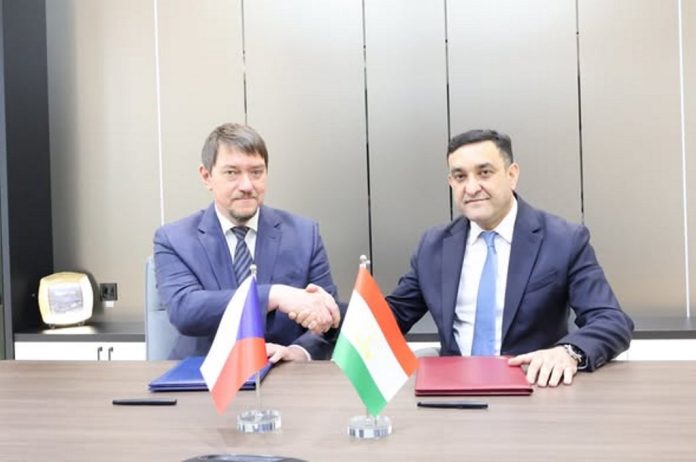
The final round of negotiations took place in Dushanbe at the airline’s office on March 10. The meeting was attended by Shohin Airlines CEO Zafar Ahmadzoda and CFC s.r.o. founder Guntars Selikovs.

During the talks, the parties discussed prospects for strategic partnership and long-term investment in the development of Tajikistan’s civil aviation sector. The company noted that following the recent upgrade of Tajikistan’s credit rating by international agencies Moody’s and S&P Global Ratings, European partners expressed confidence in the country’s economic stability and readiness to expand their investment presence.

ИЗОБРАЖЕНИЕ

As a result of the negotiations, the parties signed an agreement to invest in Shohin Airlines. The funds will be used to expand the airline’s fleet, develop operational activities, and strengthen its infrastructure base.

According to Ahmadzoda, the investment will help accelerate fleet expansion, broaden the airline’s route network, and contribute to the development of Tajikistan’s civil aviation sector.

Selikovs said the negotiations lasted more than six months and included working meetings in Dubai and several European countries. He added that the improved credit rating of Tajikistan also strengthened investor confidence in the country’s economy.

Shohin Airlines is a new private airline registered in Tajikistan. It is based at Dushanbe International Airport, where its headquarters and main office are located.

The company currently operates specialized helicopter flights.

ИЗОБРАЖЕНИЕ

In the coming months, it plans to add a turboprop passenger aircraft L-410 NG, produced by the Czech company Aircraft Industries, to operate regional routes.

Tajikistan civil aviation authorities says Shohin Airlines is actively expanding its presence in Tajikistan's civil aviation market. However, they have not disclosed the company’s ownership details.

Registered in the Czech Republic, the investment fund CFC s.r.o. specializes in investments in infrastructure and technology projects. Its investment capacity is reportedly estimated at around €500 million.

Debt trap: how to take a loan in Tajikistan without regretting it

0

Many people in Tajikistan take out loans without fully understanding their terms and long-term consequences. High interest rates, rising expenses, and limited financial literacy often turn loans—meant to improve living standards—into a source of debt pressure and a risk of losing property. Experts warn that borrowing should be approached carefully and only after thorough financial planning.


A story that could happen to anyone

When Dushanbe is still asleep, 34-year-old Akbar is already behind the wheel. His workday begins before sunrise and often ends well after midnight.

A year ago, he took out a bank loan to buy an electric car, hoping to earn a living as a taxi driver. At the time, the decision seemed reasonable: electric vehicles were becoming popular, electricity was relatively cheap, and many people said taxi drivers could earn good money.

“I thought it was simple: buy a car and start earning,” he says.

However, reality turned out to be different. Akbar admits he did not fully understand how interest rates, fees, and repayment schedules worked when he signed the loan agreement.

Now he works almost every day just to cover basic expenses and support his family.

“I thought working seven or eight hours a day would be enough. But there are many other expenses—vehicle maintenance, company commissions—and electricity costs and taxi service fees have almost doubled over the past year,” he says.

His story is far from unique. Many people take out loans without fully assessing their financial capacity, turning what was supposed to improve their lives into a source of constant financial and psychological stress.


A common situation

Financial analyst Shahboz Rahimbekov, who has years of experience in the country’s banking sector, says such situations are common in Tajikistan.

According to him, many borrowers try to obtain loans quickly without fully evaluating their long-term financial burden.

Most loans in the country are consumer loans, often used to cover everyday expenses rather than to invest in business development. These may include family celebrations, home renovations, or purchases of cars and electronics.

According to the National Bank of Tajikistan, consumer loans accounted for 40.1% of all loans issued in 2025, up 3.9 percentage points from the previous year.

Some borrowers also take multiple loans at once or use new loans to repay previous ones, increasing their debt burden.

Another challenge is high interest rates. In 2025, the average weighted interest rate on loans was 22.6% in national currency and 11.7% in foreign currency.

Financial literacy also remains limited. A study by M-Vector found that the country’s financial literacy index rose from 41% in 2020 to 51% in 2024, meaning many borrowers still struggle to fully understand loan agreements.


Risks for the banking system

According to Rahimbekov, large volumes of non-performing loans can pose risks not only for borrowers but also for the entire banking system.

One of the key causes of Tajikistan’s banking crisis in 2016 was a high share of bad loans, which reached 47.6% of the total loan portfolio.

At the time, rumors about possible bank failures triggered panic among depositors. Banks were unable to quickly return deposits because much of the money had already been issued as loans.

As a result, licenses of several banks—including Agroinvestbank, Tajiksodirotbank, Tajprombank, and Fononbank—were revoked and liquidation procedures began.

Improvements in Recent Years

The National Bank of Tajikistan says that over the past nine years the share of non-performing loans has fallen almost 15-fold, from 47.6% in 2016 to 3.2% by the end of 2025.

The total loan portfolio reached 26.1 billion somoni, up 22.2% compared with 2024.

How to take a loan without regret

Experts recommend approaching borrowing cautiously.

Key recommendations include:

1.     Take a loan only when necessary. If possible, avoid borrowing.

2.     Carefully review the loan agreement. Calculate the total repayment amount.

3.     Assess your income realistically. Loans must be repaid regularly.

4.     Read the contract carefully. Small clauses can have serious consequences.

5.     Avoid multiple loans. This increases financial pressure.

6.     Be cautious with credit cards. They can lead to accumulating debt.

7.     Avoid microloans or borrowing from individuals, where interest rates can be extremely high.


What to do if you cannot repay

If repayment becomes difficult, experts advise borrowers not to ignore the situation.

Possible solutions include:

·         Contact the bank to discuss loan restructuring.

·         Apply for payment holidays if your income has dropped significantly.

·         Consider bankruptcy procedures if debts become unmanageable.


Conclusion

Loans can be a useful financial tool, but only when used responsibly. Before borrowing, it is essential to ensure stable income and fully understand the terms of the agreement.

Financial experts emphasize that loan repayments are fixed obligations. Unlike other expenses, they cannot easily be postponed or reduced. Careful planning can help borrowers avoid falling into a debt trap. 

Tajikistan citizen killed by unknown gunmen in Afghanistan’s Kunduz, afghan media outlets report

0

A Tajik citizen was killed in an attack by unidentified gunmen in the Imam Sahib district of Kunduz province in northern Afghanistan, according to at least two Afghan media outlets — the newspaper Hasht-e Subh and Amu.tv.

The exact date of the incident remains unclear. Hasht-e Subh reported on March 15 that the attack occurred about three days earlier, while Amu.tv said the shooting took place on Saturday, March 14.

The victim was identified as Adolat Hamidi. According to Hasht-e Subh, she was a citizen of Tajikistan who had worked for more than 15 years as a nurse and midwife in the Imam Sahib district.

The newspaper reports that she was married to a local resident and had one daughter. Her body has reportedly been transported to Tajikistan.

“Ms. Adolat provided medical services and assisted with childbirth for rural and low-income women for many years and earned respect among local residents,” Amu.tv reported.

Further details about the attack remain unknown.

Authorities in Tajikistan and representatives of the Taliban government have not yet commented on the incident. 

Kazakhstan approves new Constitution, central election commission says

0

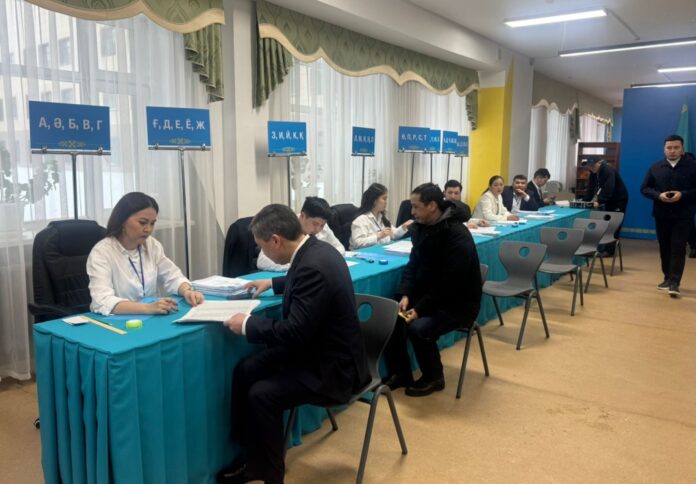
Kazakh citizens have approved the adoption of a new Constitution in a nationwide referendum, Chairman of Kazakhstan’s Central Referendum Commission Nurlan Abdirov said at a briefing on March 16, according to KazTAG.

According to the commission, 7.95 million people, or 87.15% of voters who participated in the referendum, supported the new Constitution.

More than 12.48 million citizens were eligible to vote, and 9.127 million took part in the ballot.

Earlier, President Kassym-Jomart Tokayev reviewed the results of exit polls conducted during the referendum and congratulated citizens on the adoption of the new Constitution.

According to the presidential press service, Tokayev also announced that Kazakhstan’s Constitution Day will now be celebrated on March 15.

“Through this vote, our people have determined the future course of Kazakhstan’s history and destiny. Your expression of will forever remain in world history as a true symbol of patriotism of our citizens. From now on, March 15 will be celebrated annually as one of our main national holidays — Constitution Day. Our citizens have voted for the renewal and modernization of the country. This is our shared achievement,” the president said.

The new Constitution introduces several changes to Kazakhstan’s political system. Among them are the creation of the post of vice president, the transition to a unicameral parliament instead of the current bicameral legislature, the establishment of a People’s Council with the right of legislative initiative, and the priority of national law over international law.

The new Constitution is expected to enter into force on July 1, 2026, while the current parliament will continue working until that date.