Home Blog Page 30

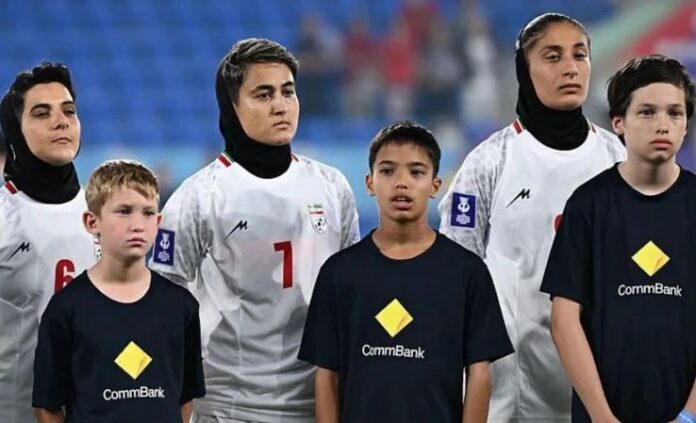
Iranian footballers who sought asylum in Australia decide to return home

0

Five of the seven members of Iran’s women’s football delegation who had previously sought asylum in Australia have withdrawn their requests and decided to return home, the BBC’s Russian Service reports.

According to the Iranian news agency IRNA, Iran women’s national team captain Zahra Ghanbari became the fifth team member to retract her asylum request. She is expected to fly from Australia to Malaysia before returning to Iran.

Iranian state media welcomed the decision, with IRNA saying she was “returning to the embrace of the homeland,” while the Mehr news agency described her move as a “patriotic step.”

Two days earlier, two other players and a member of the team staff made the same decision. They also traveled to Malaysia and are waiting for a flight to Tehran. Another player withdrew her request last week.

Following the captain’s decision, only two members of the team still intend to remain in Australia.

Iran’s first match at the Asian Cup coincided with the start of a U.S.-Israeli military operation against Iran. Before the match, the players did not sing the national anthem of the Islamic Republic, which many interpreted as a sign of solidarity with protest sentiments inside the country and hopes for political change. Iranian media quickly accused the athletes of betrayal.

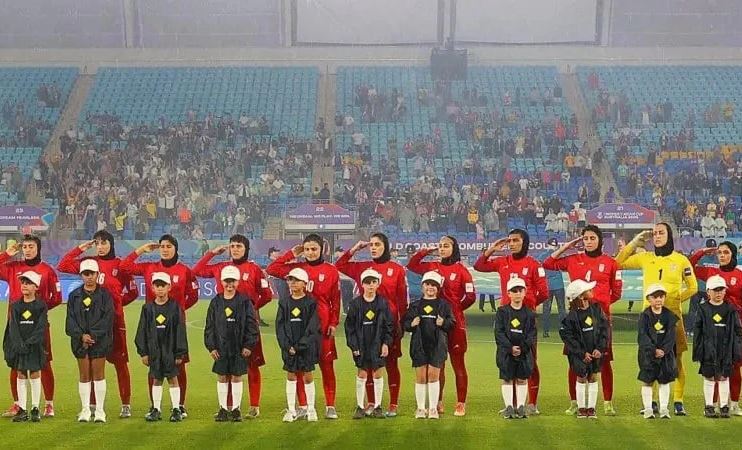
However, in subsequent matches against Australia and the Philippines, the players sang the national anthem and made patriotic gestures, including military salutes.

Human rights advocates say the athletes may have come under pressure after the first match, including possible threats against their relatives in Iran.

U.S. President Donald Trump called on Australian authorities to grant asylum to members of the Iranian team. Initially, five individuals submitted requests, followed later by two more. In total, six players and one staff member sought to remain in Australia. Australian authorities granted humanitarian visas to five footballers, allowing them to stay in the country, but several later withdrew their applications.

Iran’s Ministry of Sports described the developments differently. “The national spirit and patriotism of Iran’s women’s national football team have thwarted the plans of our enemies,” the ministry said in a statement. The ministry also accused the Australian government of “playing into Trump’s hands.”

Radisson Collection to enter Tajikistan

0

A new landmark will appear on Central Asia’s hospitality map in 2026. Radisson Collection Hotel, Dushanbe, the flagship property of Radisson Hotel Group’s premium brand, is set to open in the heart of the Tajik capital.

For Dushanbe, the project represents more than just the opening of a new hotel. It symbolizes the city’s growing role in international hospitality, architecture, and service, further increasing its appeal for investors, diplomats, and travelers from around the world.


Prime location

The hotel will be located on Roudaki Avenue, the main artery of Dushanbe, home to key government institutions, diplomatic missions, and major cultural landmarks.

Guests will be only minutes away from the international airport, the Palace of the Nation, and the National Museum. The hotel will be part of a large mixed-use complex that will also include a luxury shopping center and more than 150 premium apartments. The development is designed as a new urban hub open to both visitors and city residents.


Panoramic views

The 21-story hotel will feature 205 rooms and suites offering panoramic views of Dushanbe and the surrounding mountain ranges.

Accommodation options will include junior suites, presidential suites, and a royal suite designed for high-level guests. Interiors will feature an elegant, understated design using natural materials and warm color tones, blending modern aesthetics with elements of Tajik cultural identity.

The hotel is scheduled to open in the first half of 2026.


Gastronomy and social spaces

The Radisson Collection Hotel, Dushanbe will also focus on a carefully designed culinary concept. The hotel will feature: an all-day dining restaurant; a signature restaurant with indoor and outdoor seating;

a lobby bar for business meetings and informal gatherings; and a rooftop restaurant with a panoramic terrace overlooking the city

These venues are expected to attract both international guests and local residents, from business breakfasts to evening social gatherings.


Events and wellness

The hotel will offer more than 1,200 square meters of event space, including a transformable ballroom, modern conference rooms, and reception areas suitable for international forums, business summits, and diplomatic meetings.

A spa center and fitness facility will be available to hotel guests, while an additional spa complex will also be open to the public.


Company statement

According to David Jenkins, Vice President of Business Development at Radisson Hotel Group, the project marks an important milestone for the company.

“Signing the agreement for Radisson Collection Hotel, Dushanbe is an important step for our group. We are entering a new market with our flagship premium brand. The hotel will become a new destination for discerning travelers, combining the elegance of Radisson Collection with the cultural richness of Tajikistan,” he said.

Once opened, the hotel is expected to become one of the key hubs of business and tourism in the Tajik capital, bringing together diplomats, business travelers, and international visitors.

With the arrival of Radisson Collection, Dushanbe takes another confident step toward becoming a modern international city.

Talbak Nazarov — the patriarch of Tajik diplomacy

0

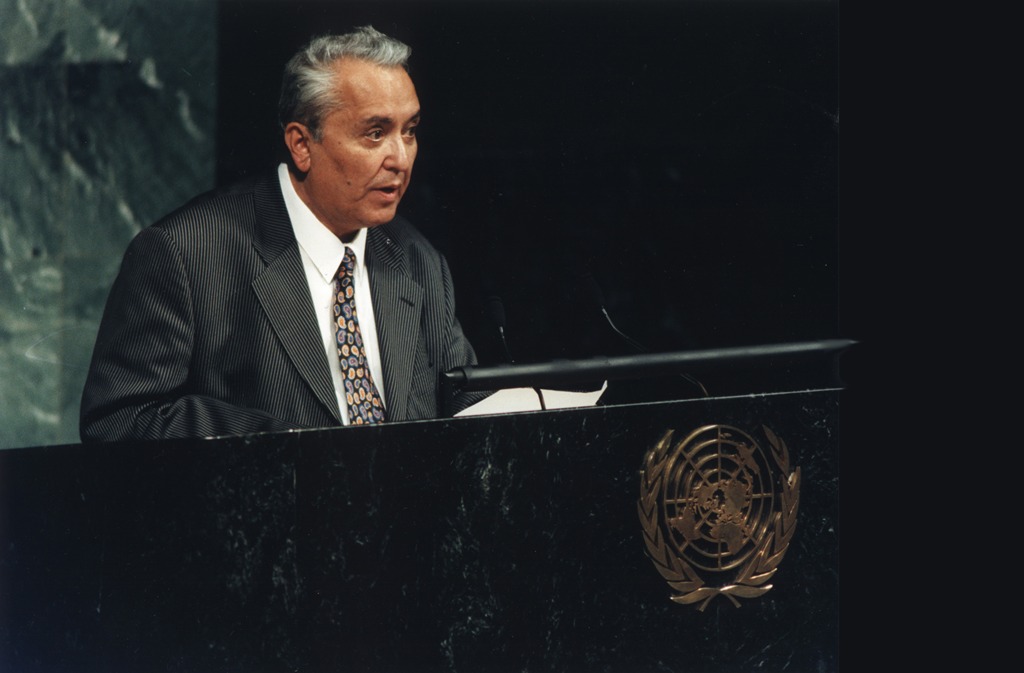
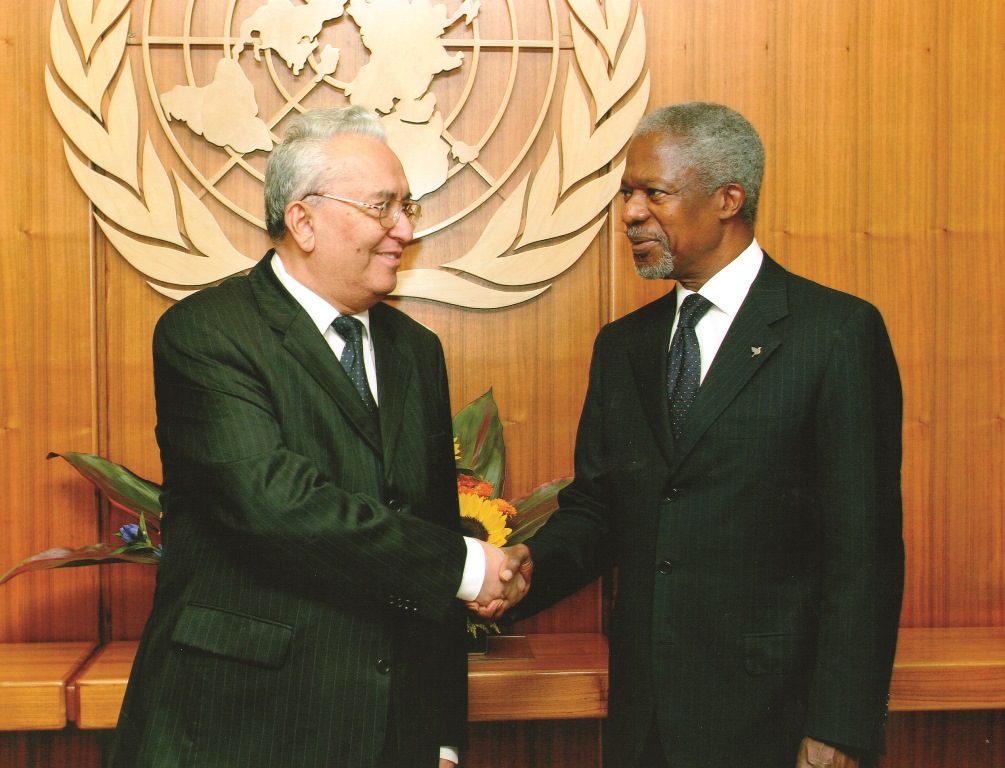
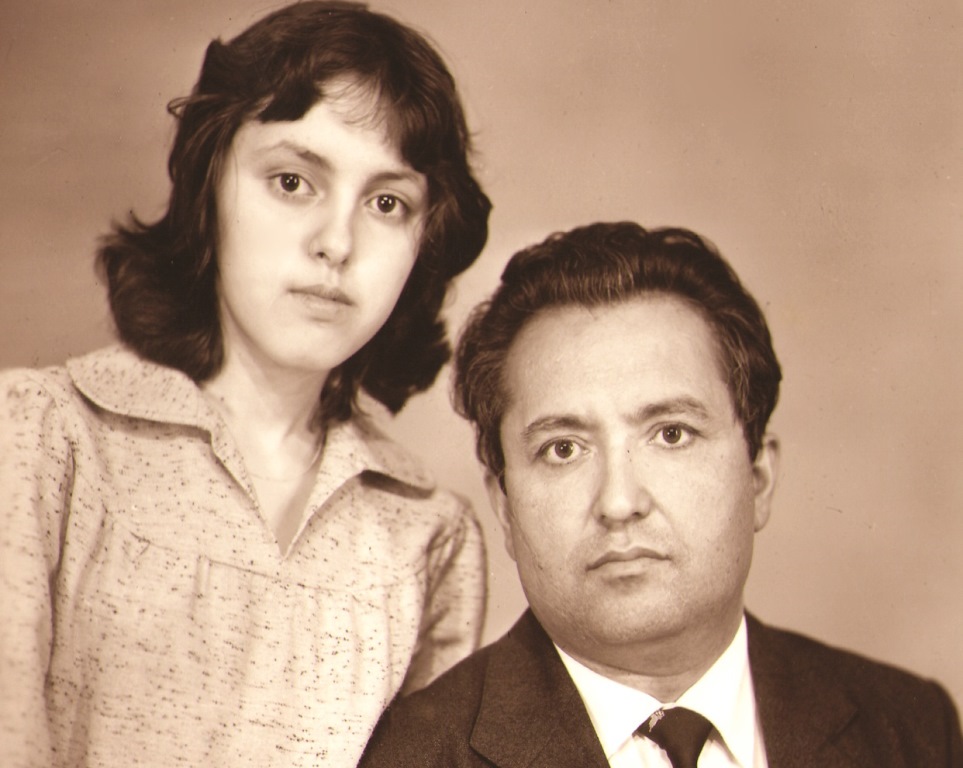
On March 15, renowned Tajik diplomat, former foreign minister, and academician Talbak Nazarov celebrates his birthday. This year he turned 88. On this occasion, we revisit an archival story about the life and career of one of Tajikistan’s most respected yet remarkably modest statesmen.


A difficult childhood

Talbak Nazarov was born in 1938 in a village in the former Kangurt district of the Kulob region. It was a difficult period marked by Stalinist repression, when many prominent representatives of Tajik intellectual life — including Nusratullo Makhsum, Shirinsho Shotemur, Abdurahim Khojibaev, Abdulvokhid Munzim, Munirkhon Muinzoda, Payrav Sulaymoni, and Saidali Valizoda — were persecuted.

Nazarov belonged to a generation that experienced hardship early in life. He lost his mother at the age of three and his father when he was in the sixth grade. These challenges forced him to become independent at a young age.

In 1953, after finishing the seventh grade, he moved to the capital, then called Stalinabad (now Dushanbe). Standing near the Financial and Credit Technical School, he decided to try to enroll.

“A man approached me and asked if I wanted to study. He looked at my documents and saw only top grades. I was admitted. After three years of excellent study, I was offered the opportunity to continue my education — at Tajik State University, in Tashkent, or at the Leningrad Financial and Credit Institute. I chose Leningrad,” Nazarov later recalled.


Study and early hardships

While studying in Leningrad, Nazarov had to rely entirely on himself. His scholarship barely covered basic expenses, so he worked during holidays.

After his first year, he worked at the Admiralty Shipyard in Leningrad, where the Soviet Union’s first nuclear-powered icebreaker, Lenin, was being built. Nazarov helped paint the ship’s hull.

In later years, he traveled to Kazakhstan to participate in the Virgin Lands campaign, repairing agricultural machinery. For this work he received an award from the Central Committee of the Komsomol.

Half a century later, in 2006, Kazakhstan’s former president Nursultan Nazarbayev awarded him the medal “50 Years of the Development of Virgin Lands.”


Scholar and public figure

In 1960, Nazarov returned to Dushanbe and began working as an assistant at the Faculty of Economics of Tajik State University. Three years later he defended his candidate dissertation, and in 1972 he earned a doctorate in economics.

In 1980, while serving as dean of the economics faculty, he was elected a deputy of the Supreme Soviet of the Tajik SSR and later a deputy of the Soviet Union’s parliament.

In 1988, he was appointed Minister of Public Education of Tajikistan. Later he became First Deputy Chairman of the Council of Ministers and head of the State Planning Committee, a position he held until the collapse of the Soviet Union.


Role in the peace process

In 1994, President Emomali Rahmon appointed Talbak Nazarov Minister of Foreign Affairs of Tajikistan, a position he held for 12 years.

During this time, his diplomatic skills became especially evident. Nazarov established contacts with colleagues from both Western and Eastern countries.

One of the most challenging periods of his career was leading the government delegation in negotiations with the United Tajik Opposition during the civil conflict.

“Fortunately, my mission ended with the signing of the peace agreement in 1997,” he later recalled.

During these years, Tajikistan’s key foreign policy principles were shaped: maintaining constructive relations with all countries while firmly defending national interests.


A life without luxury

Despite holding high-ranking positions, Nazarov remained known for his modesty. Science, culture, and service to society were always his top priorities.

In one of his rare interviews, he said he had never been interested in luxury.

“Many officials begin their tenure by renovating their offices. In my case, the furniture in my office at the Foreign Ministry remained the same as before I arrived. I believed the main thing was cleanliness and order — luxury was unnecessary,” he said.

For many years he did not even own a personal car. Only after leaving office did the president present him with a Hyundai.

Nazarov considers the Abu Ali Ibn Sina Prize, worth $2,500, to be the largest monetary award he ever received. He used the money to establish a computer classroom in a boarding school for deaf children.

“At my age, my needs are modest. That money is enough for life. In general, the issue of money has never concerned me much. As long as I live, I am able to support myself,” Nazarov said.


Central Asia’s water crisis in numbers

0

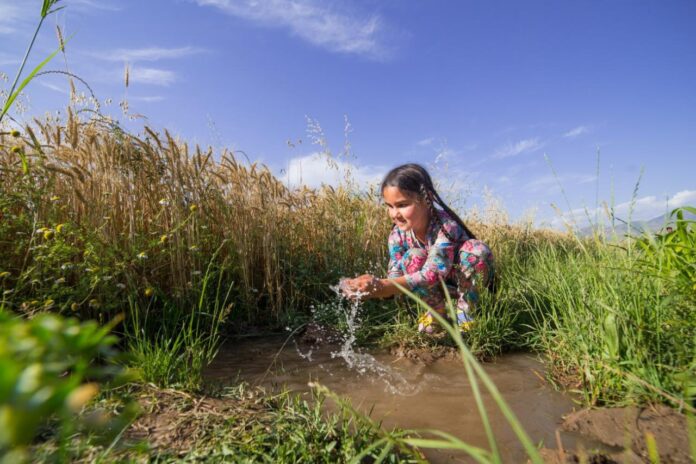
Climate change, rising consumption, and challenges in water management are making Central Asia increasingly vulnerable to a water crisis. Experts warn that without an urgent revision of water policies, the region’s capitals could face a crisis comparable to the situation in Tehran.

Over the past 40 years, per capita water availability in Central Asia has fallen by more than threefold—from 8,400 to 2,500 cubic meters per year. This makes water scarcity one of the main threats to the region’s economic development, according to experts from the international analytical center New Lines Institute.

In a report published in February 2026, the institute warned: “Water scarcity is becoming one of the key threats to economic development and stability in Central Asia.”

Experts stress that current trends could further worsen the situation unless countries in the region revise their approaches to water resource management.

Several key figures illustrate the scale of the emerging crisis.

Central Asia’s water crisis in numbers

·                   80% of all water in Central Asia is used in agriculture

·         40% of water is lost due to outdated irrigation systems

·         +4°C80% of glaciers could disappear if temperatures rise by +4°C

·         8400 → 2500 m³decline in per-capita water availability in Central Asian countries

·         1700 m³level of chronic water scarcity expected by 2030

·         92%loss of water volume in the Aral Sea

·         8–20%possible reduction in the Amu Darya river flow due to the Qosh-Tepa Canal

·         5 million peopleat risk of climate migration in the region over the next 25 years

Tajikistan national team to compete at Asian Judo Championships in China

0

Tajikistan’s national judo team will compete at the Asian Judo Championships, scheduled to take place on April 16–18 in Ordos, China. The squad includes 13 athletes — nine men and four women.

The continental championship is considered one of the key events of the season for Asian judokas. The tournament will bring together the region’s strongest athletes and offer participants an opportunity to earn ranking points and test their form ahead of major international competitions.

In the men’s competition, Tajikistan will be represented by nine judokas in different weight categories: Mehrzod Sufiyev (60 kg), Emomali Nourali and Obid Jebov (66 kg), Muhiddin Asadulloyev (73 kg), Somon Mahmadbekov and Behrouz Khojazoda (81 kg), Muhammadjon Abdujalilzoda and Shodmon Rizoyev (90 kg), and Jahongir Majidov (100 kg).

Particular attention from fans is expected to focus on team leaders Somon Mahmadbekov, Emomali Nourali, and Behrouz Khojazoda, who regularly compete in major international tournaments and have significant high-level experience.

In the women’s competition, Tajikistan will be represented by four athletes: Ahliya Muminova (48 kg), Madina Qurbonzoda (52 kg), Alexandra Kan (57 kg), and Viktoriya Kiselyova (+78 kg). For the women’s team, the Asian Championships will be an important opportunity to gain international experience and compete against some of the continent’s strongest judokas.

The Asian Championships are traditionally one of the key events on the International Judo Federation’s calendar for athletes from the region. The competition in Ordos will help assess the preparedness of Tajikistan’s judokas and determine the team’s prospects for upcoming international events.

Strong competition is expected on the tatami, as leading judo nations such as Japan, South Korea, Uzbekistan, Kazakhstan, and Mongolia will also take part. For Tajikistan’s team, the championship represents an important opportunity to strengthen its position on the continental stage.

Tajikistan to receive only grants from ADB until the end of 2026

0

Tajikistan will receive funding from the Asian Development Bank (ADB) exclusively in the form of grants until the end of 2026, according to the new ADB Country Partnership Strategy for Tajikistan for 2026–2030.

The document notes that Tajikistan is currently classified as a Group A country, meaning it is eligible only for grant financing.

The International Development Association (IDA) is expected to classify Tajikistan as a financing-gap country starting July 1, 2026. If this occurs, ADB will adopt the IDA classification for Tajikistan beginning January 1, 2027, which would make the country eligible only for concessional lending.

Under the IDA classification, Group A countries are low-income states considered to be in the greatest need of international support and therefore receive financing primarily in the form of grants.

According to the projected scenario, ADB funding for Tajikistan will be entirely grant-based in 2026 and fully concessional lending in 2027–2028.

ADB representatives said the bank will support the Tajik government during this transition by helping improve public financial management, strengthen project selection and prioritization, and expand the use of innovative financial instruments.

“To ease the transition, ADB will actively mobilize concessional financing from climate funds, trust funds, and co-financing partners. The bank will also help attract non-sovereign and private capital that does not increase public debt,” ADB representatives said.

ADB and the Tajik government have also agreed to maintain the maximum level of joint financing for loans, grants, and technical assistance—up to 99% across the entire ADB project portfolio—given the current high risk of a debt crisis and the country’s adequate debt-servicing capacity.

Earlier, the Tajik government asked ADB to review the form of financial support provided to the country. Since 2018, the bank has provided Tajikistan exclusively with grant assistance due to the country’s high debt burden.

ADB’s Tajikistan’s partnership strategy for 2026-2030 focuses on three priorities: structural reforms to improve resource allocation and mobilization, boosting labor productivity through human capital development, and improving living standards through investments in the real sector of the economy.

Tajikistan joined ADB in 1998 and ADB remains one of Tajikistan’s largest multilateral development partners, with total development assistance amounting to about $3 billion, including more than $2.2 billion in grants. The partnership has delivered concrete results including upgrading roads connecting major cities across the country, modernizing key irrigation and water supply systems, and building hospitals and schools. ADB has also supported the construction of power transmission lines and electricity substations, the reconnection of the country’s electrical grid to the Central Asian power network, and the rehabilitation of the Nurek and Golovnaya hydropower plants.

Iranians grapple with whether to flee the country as war intensifies

0

The Associated Press (AP) reported on March14 that Iranians are facing difficult decisions about whether to leave their homes or remain in the country as the war involving the United States and Israel continues to escalate.

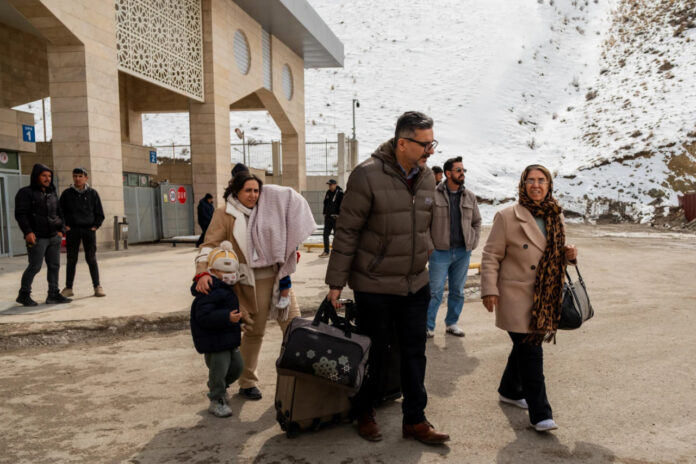
After bombs exploded near her home in the eastern Iranian city of Golestan, 32-year-old hairdresser Merve Pourkaz decided she had no choice but to leave. She traveled nearly 1,500 kilometers to a mountainous border crossing, hoping to reach safety in the Turkish city of Van.

“If they let me, I will stay in Van until the war ends,” Pourkaz told The Associated Press while waiting at the border crossing. “If the war doesn’t end, maybe I’ll go back and die.”

Pourkaz is among the estimated 3.2 million people displaced within Iran since the outbreak of the U.S.-Israel war with Iran, according to the U.N. refugee agency. While some Iranians are seeking shelter in safer areas inside the country or crossing into neighboring states, others are returning from abroad to protect their families and homes.

So far, relatively few people have chosen to leave the country entirely. The United Nations estimates that about 1,300 Iranians have crossed into Turkiye each day since the conflict began. On some days, the number of people returning to Iran even exceeds those leaving. Still, neighboring countries and European governments are increasingly concerned that the conflict could trigger a larger migration crisis if the fighting continues.

At the same time Pourkaz was entering Turkiye, Leila Rabetnezhadfard was traveling in the opposite direction, AP says.

Rabetnezhadfard, 45, had been in Istanbul preparing to marry a German university professor when the fighting broke out. She postponed the wedding and returned to her home city of Shiraz in southern Iran.

“How can I feel safe in Istanbul when my family is living in Iran during the war?” she said. Rabetnezhadfard explained that bringing her family to Turkiye was not feasible because her apartment is small, her brother requires medical care, and living costs in Istanbul are high.

“I will not leave Iran until the war ends,” she said.


Fleeing the fighting

The United Nations has reportedly warned that continued hostilities could force far more Iranians to abandon their homes.

As during last year’s 12-day conflict, many people are choosing to shelter in place. Some lack the financial resources to flee, while others have been influenced by warnings such as the one issued by U.S. President Donald Trump on February 28.

“Stay sheltered. Don’t leave your home. It’s very dangerous outside. Bombs will be dropping everywhere,” Trump said at the time, according to AP.

Despite fears of escalation, large numbers of Iranians have not yet left the country. Instead, many residents of major cities have moved temporarily to rural areas along the Caspian Sea north of the capital, Tehran, according to the International Organization for Migration (IOM).

“Movement out of Iran appears limited mainly because people are prioritizing staying with their families, as well as the safety of their families and property, and due to security conditions and logistical constraints,” said Salvador Gutierrez, head of the IOM mission in Iran.

However, analysts warn that the situation could change rapidly if critical infrastructure is damaged, AP reports, noting that scenario could push large numbers of people toward Iran’s borders with Pakistan, Afghanistan, Turkmenistan, Azerbaijan, Armenia, Turkiye, and Iraq.

“If Tehran, a city of 10 million people, doesn’t have water, they’re going to go somewhere,” said Alex Vatanka, a fellow at the Middle East Institute in Washington.

Iran is already coping with one of the world’s largest refugee populations — about 2.5 million forcibly displaced people, mostly from Afghanistan and Iraq.


Neighbors brace for possible influx

Aid organizations say that if the crisis deepens, the most likely escape routes for refugees will be toward Iran’s borders with Iraq and Turkiye. These borders stretch roughly 2,200 kilometers (1,367 miles) across mountainous terrain inhabited by many Kurdish communities and are difficult to control.

During Syria’s prolonged civil war, Turkiye maintained an “open-door” policy that allowed millions of Syrian refugees to enter the country. However, Ankara has since abandoned that approach for several reasons.

Instead, Turkish authorities are preparing contingency plans to house potential Iranian refugees in “buffer zones” along the border, or in tent cities and temporary housing inside Turkey, according to reports by the Turkish newspaper Hurriyet, citing Interior Minister Mustafa Ciftci.

Many Iranians fleeing the war are unlikely to seek formal refugee status in Turkiye because the asylum process can take years, said Sara Karakoyun, an aid worker with the Human Resource Development Foundation near the border.

“They don’t want to wait in limbo for years for a refugee status they might not get,” she said.

Turkiye has also reinforced its border with Iran. The Turkish Defense Ministry said in January that authorities had built 380 kilometers of concrete walls, installed 203 optical surveillance towers, and established 43 observation posts.

According to Riccardo Gasco, an analyst at the IstanPol Institute, Turkiye may deploy additional troops to secure the border and strictly control the flow of migrants while seeking financial support from the European Union to manage the situation.


Europe prepares for a potential crisis

Europe is also watching the situation closely. The relationship between the European Union and Turkiye was significantly reshaped during the Syrian refugee crisis a decade ago, when nearly two-thirds of the 4.5 million Syrians fleeing the war sought refuge in Turkey. Many later traveled onward to Europe by sea.

In 2016, the EU and Turkiye reached a migration agreement in which Brussels offered Ankara incentives and up to €6 billion ($7.1 billion) to support Syrian refugees in Turkey in exchange for preventing large numbers of migrants from crossing into Greece.

Humanitarian organizations criticized the arrangement, arguing it created overcrowded camps with poor living conditions. However, EU leaders have said the deal helped save lives, reduced irregular migration, and improved conditions for refugees in Turkiye.

The agreement is due for renewal this year, but public sentiment in Turkiye has increasingly turned against Syrian refugees, while anti-immigration political parties have gained momentum in several European countries.

Meanwhile, another humanitarian crisis is unfolding even closer to Europe. Fighting in Lebanon between Israel and Hezbollah has already displaced more than 800,000 people.

“We’ve got a situation in the Middle East that could have grave humanitarian consequences at a time when humanitarian funding has been drastically reduced,” said Ninette Kelley, chair of the World Refugee & Migration Council, referring to cuts to U.S. foreign aid under the Trump administration.

“Is the world ready for another humanitarian disaster?” she asked.

The tragedy in Mina: the crime that could end Donald Trump and his Defense Secretary’s careers

0

The "Shajareh Tayebe" school in the city of Mina, located in southern Iran, became a target on the first day of the U.S. and Israel's war against Iran. The attack resulted in the deaths of approximately 170 students and dozens of teachers. This horrific crime, initially ignored by the media and denied by the U.S. president and defense secretary, is now under increasing investigation, and the American role in it is becoming clearer.

Reports from media outlets and early admissions from U.S. officials confirm the strong likelihood that the United States, rather than Iran, is responsible for the killings. U.S. Congress is demanding that officials, including Defense Secretary Pete Hegseth, provide reports and the results of an investigation into the attack on the school. It appears that this tragedy could bring an end to the careers of not only the U.S. defense secretary but also the president.


"All my hopes were destroyed": the attack on the school

The attack on "Shajareh Tayebe," a school where children aged 7 to 12 studied, took place on February 28, when parents were bringing their children to school, and classrooms were full of students.

According to Iran's Ministry of Education, there were 264 students in the school that day. Sources report that 170 people were killed.

The school was hit by three separate strikes, according to eyewitness accounts and independent media investigations. Two Red Crescent doctors stated that after the first strike, the school principal led a group of students to a prayer room and called their parents to pick them up. Then the second strike hit, destroying the shelter. The third strike completely destroyed the remaining two-story building.

The roof of the school collapsed, and hundreds of people, most of whom were young girls, were buried under the rubble.

When news of the attack spread, concerned parents rushed to the school. Security forces tried to push them away from the destroyed building, fearing a new attack. However, parents who had lost their children, hearing their voices under the rubble, began to dig with their bare hands, despite the danger.

After the attack, Iranian media interviewed parents who were searching for their children amidst the fire and water. One parent shared, "The school called and said my daughter was alive. I rushed to pick her up, full of hope. But before I could get there, the second strike occurred, and all my hopes were shattered."

In a video that spread across social media and shocked the world, a man, finding blood-soaked books and notebooks among the ruins, yelled, "These are the books of the children who are now buried under these ruins. Do you see their blood? These are not soldiers, they were not going to war. It was a school, and they came here just to learn!"

The images published after the incident stunned the world: lifeless bodies in the arms of rescuers, books and notebooks stained with blood, tables and chairs amidst the ruins.

Nearby, a military base of the Islamic Revolutionary Guard Corps (IRGC) was also attacked.


Victim numbers vary

Ebrahim Tahiri, the prosecutor of Mina, reported that 165 people were killed and 96 were injured, most of whom were students. Other official Iranian sources report 168 dead, while some reports mention up to 180 victims. Among the dead, about 110 were children (66 boys and 54 girls), 26 female teachers, and 4 parents. The school principal was also killed.

On the same day as the school attack, the city's hospital was also attacked, worsening the condition of the wounded. Grieving families went to the hospitals to collect the bodies of their children, and the morgues of Mina were overflowing.

The rescue operation for the survivors concluded on March 1. On March 3, a memorial ceremony was held in the center of the city, attended by thousands of people. Published images showed that more than 100 graves had been dug for the victims of the school attack.


The first response from Mojtaba Khamenei

Mojtaba Khamenei, Iran’s new Supreme Leader, in his first address (read by an announcer), spoke of "revenge for the blood of martyrs" and said, "We will be more sensitive to the blood of our children."

He promised that the crime at the school would be thoroughly investigated.


What Iranian doctors, officials, and analysts say

Masoud Pizishkian, the President of Iran, called the attack on the school the work of the U.S. and Israel, stating that "this will never be erased from the historical memory of our people."

Abbas Araghchi, Iran's Foreign Minister, posted a photo of the destroyed school on social media and wrote, "This is a girls' school in southern Iran. On a clear day, when it was filled with students, it was bombed. Dozens of innocent children were killed… These crimes against the people of Iran will not go unanswered."

Esmail Baghaei, a spokesperson for the Iranian Ministry of Foreign Affairs, called the attack "an obvious crime" and condemned it, urging the UN Security Council to act according to its responsibilities under the Charter.


What Trump and U.S. officials say

U.S. officials' responses have been contradictory, simultaneously denying involvement, expressing doubt, and promising a lengthy investigation.

According to Reuters, General Dan Kane, Chairman of the Joint Chiefs of Staff, on March 2, openly showed a map of attacks, saying that their goal was to weaken Iran’s naval forces in the southern region. Importantly, the map also highlighted the attack on the city of Mina.

Pete Hegseth, U.S. Secretary of Defense, on March 4, refrained from providing specific answers, merely stating, "We are investigating the incident" (a map highlighting the attack on Mina was also presented at that meeting).

On March 7, Donald Trump, the U.S. President, without providing any documentation, blamed Iran, claiming that Iranian weapons were inaccurate and that they may have accidentally hit their own targets—a statement many experts considered absurd and false, typical of Trump.


U.S. senators pressure the Pentagon

On March 9, six key U.S. Senate Democrats, including influential figures like Brian Schatz, Patty Murray, Jack Reed, Mark Warner, Jeanne Shaheen, and Elizabeth Warren, issued a joint statement.

Their statement read, "The murder of schoolchildren under any circumstances is unacceptable and a horrific tragedy. Secretary Hegseth must conduct a thorough and comprehensive investigation to determine whether political decisions by the leadership were the cause of this tragedy."

The senators expressed particular concern about "rules of engagement," prompted by Hegseth’s previous statement, in which he harshly said that "operations against Iran should be conducted without restrictions, using all force and weaponry."


What independent media investigations revealed

Several independent investigations by outlets like Bellingcat, BBC Verify, CNN, NYT, CBC, NPR, and HRW have come to a unified conclusion: the attack on the school in Mina was carried out by the U.S.

The most crucial piece of evidence is that the Iranian news agency Mehr published a video of the attack, claiming the missile was American.

BBC Verify and other media outlets later conducted investigations and confirmed that the school building was hit by a "Tomahawk" missile. According to the researchers, the "Tomahawk" is a long-range naval weapon used exclusively by the U.S.

The Washington Post also reported, citing several weapon experts, that the missile used was a "Tomahawk," and The New York Times, on March 11, citing U.S. officials, reported that the attack was carried out by U.S. forces, citing outdated strike data.

Furthermore, Jeffrey Lewis, a well-known international security expert, rejected the theory that the missile was Iranian, stating that "the missile in this video does not match any known Iranian weapon," according to NBC News.

Reuters, on March 5, citing two U.S. officials involved in an internal investigation, wrote that "it is highly likely that the attack was carried out by U.S. forces."

CBC concluded that the target was a military complex but noted that "the school was attacked either as a result of a military error or serious intelligence failure."

Satellite data shows that until 2016, the site belonged to an IRGC military base but was later separated from it. The school had been functioning as a civilian educational institution for over 10 years, with no evidence of its military use.


International reactions

Following the deadly attack on the school, international organizations and prominent world leaders condemned the incident and called for an immediate investigation.

UNESCO described the attack as "a serious violation of international humanitarian law," emphasizing that schools must be absolutely safe under international law.

UN Secretary-General António Guterres also strongly condemned the attack.

Volker Turk, the UN High Commissioner for Human Rights, demanded "an immediate, impartial, and thorough investigation," noting that "responsibility for the investigation primarily lies with the forces that carried out the attack."

The UN Committee on the Rights of the Child, consisting of 18 independent experts, expressed deep concern over the incident, stating that "there is no justification for killing girls in a classroom!"

Human rights defenders, having reviewed 14 videos, photos, and 40 satellite images, concluded that the attack was carried out using "high-precision weapons." The organization stressed that this was not a "missile error" and called on the U.S. and Israel to acknowledge their guilt.


Activist and state reactions

Nobel Peace Prize laureate Malala Yousafzai, in a post on social media X, expressed deep sorrow: "This news broke my heart and made me feel anxious. Killing innocent civilians, especially children, is a violation of conscience, and I condemn it entirely."

Ravina Shamdasani, a spokesperson for the UN High Commissioner for Human Rights, called the attack "the most bloody and destructive event of recent times." She stressed the need for a thorough and independent investigation.

Russia and China also strongly condemned the attack in Mina, calling it "barbaric" and "inhuman" and blamed the U.S. and Israel.

Among European countries, only Italy clearly and directly condemned the attack. Prime Minister Giorgia Meloni, in the Senate, stated that she strongly condemned "the killing of the girls from Mina school" and demanded that "those responsible be swiftly found."

Other European countries have not yet issued specific statements on the tragedy and have not published any declarations. Other countries, including Central Asian states, have not made official statements regarding the incident.


Media reactions to the attack

The tragedy in Mina made headlines in major international media outlets like NYT, The Washington Post, BBC, CNN, Al Jazeera, Guardian, Reuters, CBC, and NPR. However, most of these outlets remained silent during the first week after the attack, drawing criticism for their lack of coverage.

For example, Marizyush Zawadzki, a Polish journalist for Gazeta Wyborcza, said that Western media largely ignored the incident during the first week and did not give it adequate attention.

Annie Shill, an expert at the Center for Civilian Protection in Conflicts (CIVIC), noted a prevalent trend in U.S. politics: "We have often seen Washington first deny its involvement in attacks, and then independent media and civil society investigations reveal the bitter truth." She warned that there is a risk that authorities will again try to cover up the truth.

Experts argue that, despite international media finally investigating the incident, the delayed response and excessive trust in official statements from U.S. authorities show that pressure from civil society is crucial in uncovering the truth.

Mardon Muhammad, a Tajik journalist who worked for BBC's Russian Service over 20 years, sharply criticized not only the attack itself but also its portrayal in Western media in an interview with Asia-Plus on March 5.

It is worth noting that the attack on the school and the killing of children in Iran by American forces has also faced strong condemnation within the United States, with the number of supporters for investigation and punishment of those responsible growing daily.

The U.S. Congress has now taken notice of the case and demanded a detailed report from the defense secretary about the investigation. The results of this investigation and the detailed report could expose the authorities behind the Middle East war.