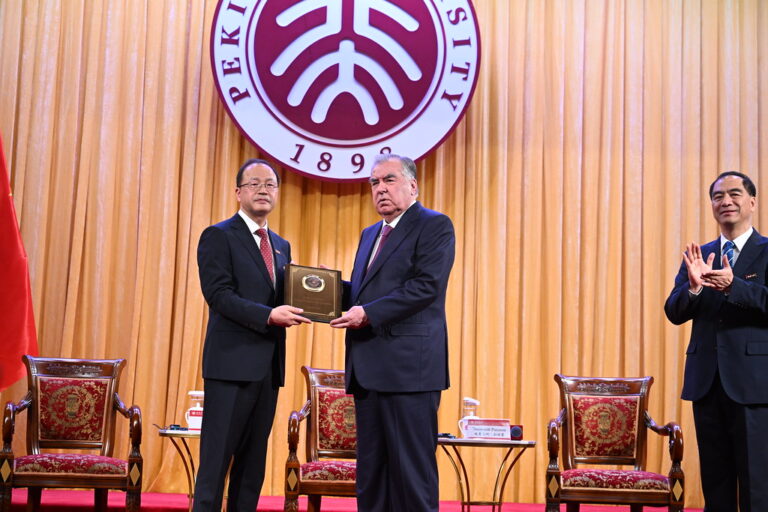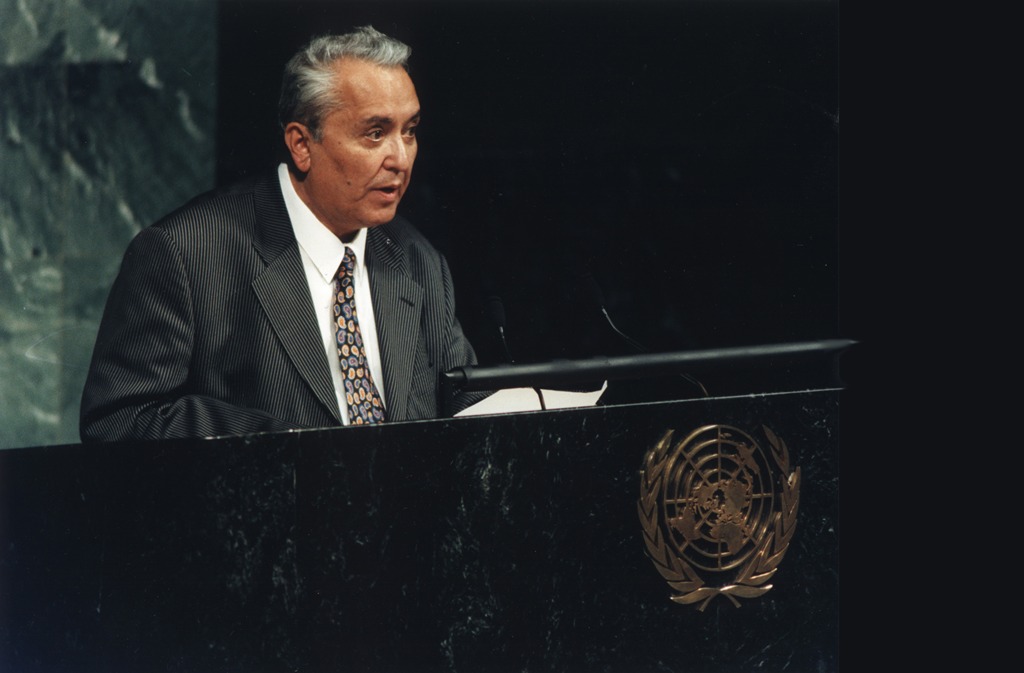
On March 15, renowned Tajik diplomat, former foreign minister, and academician Talbak Nazarov celebrates his birthday. This year he turned 88. On this occasion, we revisit an archival story about the life and career of one of Tajikistan’s most respected yet remarkably modest statesmen.
A difficult childhood
Talbak Nazarov was born in 1938 in a village in the former Kangurt district of the Kulob region. It was a difficult period marked by Stalinist repression, when many prominent representatives of Tajik intellectual life — including Nusratullo Makhsum, Shirinsho Shotemur, Abdurahim Khojibaev, Abdulvokhid Munzim, Munirkhon Muinzoda, Payrav Sulaymoni, and Saidali Valizoda — were persecuted.
Nazarov belonged to a generation that experienced hardship early in life. He lost his mother at the age of three and his father when he was in the sixth grade. These challenges forced him to become independent at a young age.
In 1953, after finishing the seventh grade, he moved to the capital, then called Stalinabad (now Dushanbe). Standing near the Financial and Credit Technical School, he decided to try to enroll.
“A man approached me and asked if I wanted to study. He looked at my documents and saw only top grades. I was admitted. After three years of excellent study, I was offered the opportunity to continue my education — at Tajik State University, in Tashkent, or at the Leningrad Financial and Credit Institute. I chose Leningrad,” Nazarov later recalled.
Study and early hardships
While studying in Leningrad, Nazarov had to rely entirely on himself. His scholarship barely covered basic expenses, so he worked during holidays.
After his first year, he worked at the Admiralty Shipyard in Leningrad, where the Soviet Union’s first nuclear-powered icebreaker, Lenin, was being built. Nazarov helped paint the ship’s hull.
In later years, he traveled to Kazakhstan to participate in the Virgin Lands campaign, repairing agricultural machinery. For this work he received an award from the Central Committee of the Komsomol.
Half a century later, in 2006, Kazakhstan’s former president Nursultan Nazarbayev awarded him the medal “50 Years of the Development of Virgin Lands.”
Scholar and public figure
In 1960, Nazarov returned to Dushanbe and began working as an assistant at the Faculty of Economics of Tajik State University. Three years later he defended his candidate dissertation, and in 1972 he earned a doctorate in economics.
In 1980, while serving as dean of the economics faculty, he was elected a deputy of the Supreme Soviet of the Tajik SSR and later a deputy of the Soviet Union’s parliament.
In 1988, he was appointed Minister of Public Education of Tajikistan. Later he became First Deputy Chairman of the Council of Ministers and head of the State Planning Committee, a position he held until the collapse of the Soviet Union.
Role in the peace process
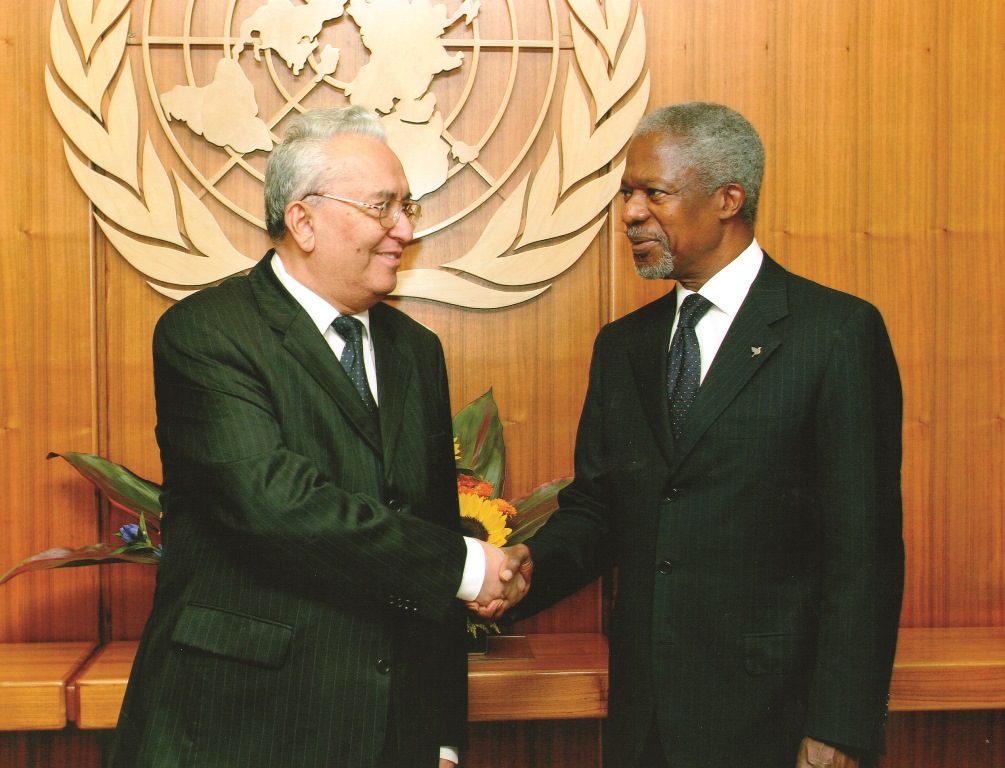
In 1994, President Emomali Rahmon appointed Talbak Nazarov Minister of Foreign Affairs of Tajikistan, a position he held for 12 years.
During this time, his diplomatic skills became especially evident. Nazarov established contacts with colleagues from both Western and Eastern countries.
One of the most challenging periods of his career was leading the government delegation in negotiations with the United Tajik Opposition during the civil conflict.
“Fortunately, my mission ended with the signing of the peace agreement in 1997,” he later recalled.
During these years, Tajikistan’s key foreign policy principles were shaped: maintaining constructive relations with all countries while firmly defending national interests.
A life without luxury
Despite holding high-ranking positions, Nazarov remained known for his modesty. Science, culture, and service to society were always his top priorities.
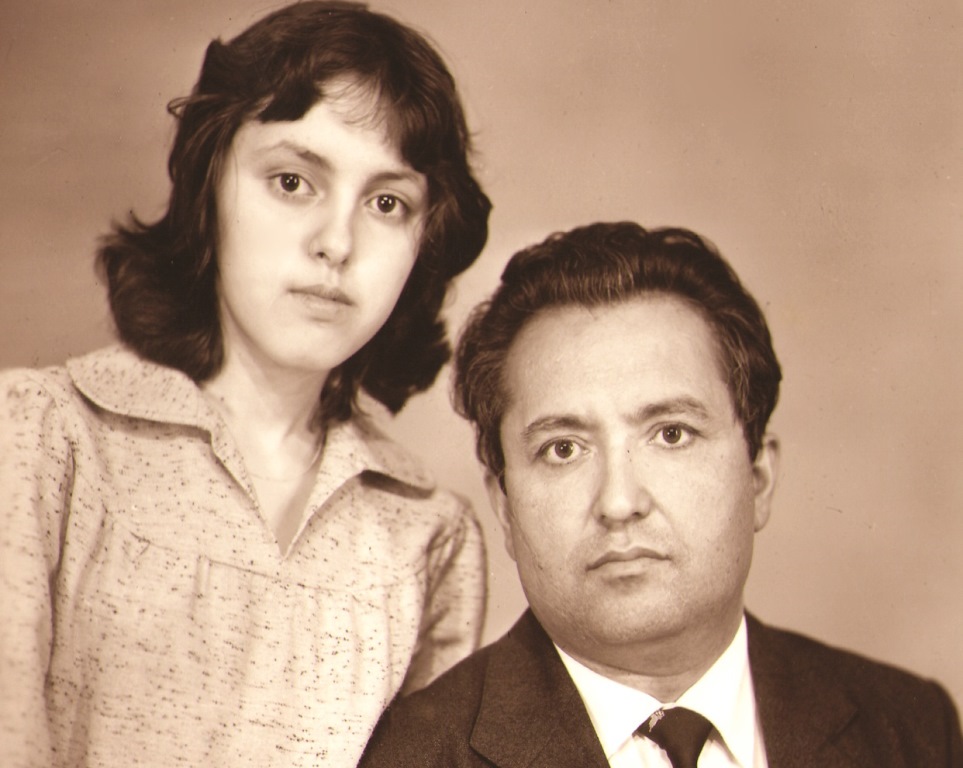
In one of his rare interviews, he said he had never been interested in luxury.
“Many officials begin their tenure by renovating their offices. In my case, the furniture in my office at the Foreign Ministry remained the same as before I arrived. I believed the main thing was cleanliness and order — luxury was unnecessary,” he said.
For many years he did not even own a personal car. Only after leaving office did the president present him with a Hyundai.
Nazarov considers the Abu Ali Ibn Sina Prize, worth $2,500, to be the largest monetary award he ever received. He used the money to establish a computer classroom in a boarding school for deaf children.
“At my age, my needs are modest. That money is enough for life. In general, the issue of money has never concerned me much. As long as I live, I am able to support myself,” Nazarov said.