Home Blog Page 39

Output from Tajikistan’s free economic zones increases by 30% in 2025

0

In 2025, the production value of industrial goods in Tajikistan's Free Economic Zones (FEZs) reached approximately 687 million somoni (around $69 million), according to the Agency for Statistics under the President of Tajikistan.  This marks a 30.6% increase (161 million somoni) compared to 2024.

Last year, 35 enterprises operated within the FEZs, including 21 in the FEZ Sughd, 12 in the FEZ Danghara, 1 in the FEZ Kulob, and 1 in the FEZ Panj. In 2024, there were 30 active enterprises across these zones.

FEZs are specific, limited territories within Tajikistan that provide preferential economic conditions and special legal frameworks for business and investment activities.


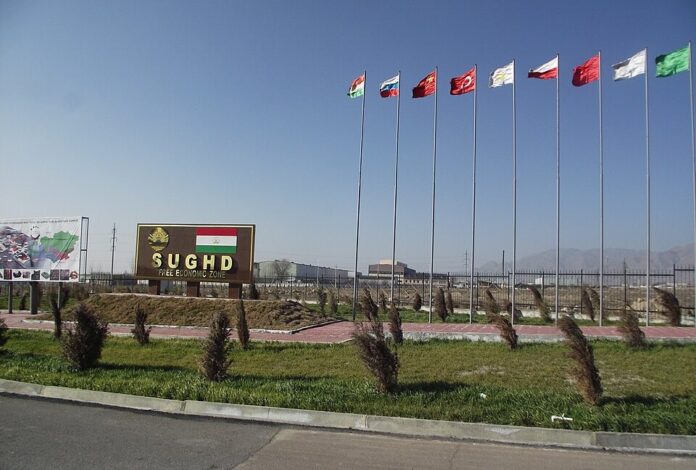
FEZ Sughd

Located in Khujand, the capital of Sughd province, the 320-hectare Sughd zone hosts 44 registered companies, including 38 domestic firms and six joint ventures with Poland and Turkiye.  It remains one of the country’s key economic hubs. In 2025, 21 industrial enterprises operated here, marking a 26.2% increase from the previous year. The total industrial production amounted to 557.7 million somoni, accounting for nearly 82% of the total output from all FEZs in the country.

Last year, the major contributors to production were Tajprof LLC (365 million somoni) and Afrang Plastik LLC (82 million somoni). This zone produces high-demand goods such as solar thermal collectors, plastic pipes, meat products, and fruit packaging.

Additionally, services worth 4.6 million somoni were provided, and construction work amounted to 757,100 somoni.

Established in May 2008 and launched in August 2009, the zone’s mandate is valid for 50 years.


FEZ Danghara

FEZ Danghara, covering 541.3 hectares in Khatlon province, hosted 12 industrial enterprises in 2025, generating around 112 million somoni in production. The top performers include Tajikistan Petroleum LLC, Aufen LLC), and Detyen Beton LLC.

Last year, key contributors included Tajikistan Petroleum LLC with 26.5 million somoni in production and Aufen LLC, which produced goods worth 46 million somoni.

In addition, paid services worth 2.3 million somoni were rendered, and transport services generated an additional 6 million somoni.

The zone was established by government decree in February 2009, with regulations approved in 2010.


FEZ Kulob

In FEZ Kulob (309 hectares), two companies are registered, but only Tajik Almos LLC was active, producing approximately 463,000 somoni worth of goods. However, construction and contracting works in the zone amounted to 17.6 million somoni construction contracts totaled 10.9 million somoni.

This zone was established in August 2019.


FEZ Panj

FEZ Panj (401.6 hectares, Jayhun district in Khatlon province) registered six enterprises, but only JSC Fon Daryo JSC last year produced goods (valued at around 17 million somoni.  

The zone was created by a government decree on August 30, 2019.


FEZ Ishkashim

FEZ Ishkashim (200 hectares, Ishkashim district in the Gorno-Badakhshan Autonomous Region, or GBAO) recorded no industrial production in 2025, limiting activity to construction works valued at 1.2 million somoni.  

The zone was established in February 2009.


Conclusion

Nearly two decades after the creation of the first free economic zones, only Sughd and Danghara have proven effective as platforms for industrial growth and investment. Meanwhile, Panj, Kulob, and Ishkashim remain in early infrastructure development or exist mostly on paper. Experts warn that without comprehensive business support and improved infrastructure, the potential of these zones may remain largely untapped.

The free economic zones provide preferential terms for economic, financial, trade, information, and other activities for investors.  The FEZs offer incentives to investors, including preferences on taxation and customs procedures.

In the early 2000s, foreign direct investment has remained low because of political and economic instability, the poor domestic financial system, and Tajikistan’s geographic isolation.  To attract foreign investment and technology, Tajikistan has offered to establish free economic zones in which firms receive advantages on taxes, fees, and customs.  In 2004, the parliament passed a law on free economic zones.  The zones offer customs and tax incentives to qualified investors.

By 2024 a total of 88 corporate residents have been registered with five FEZs operating in Tajikistan; only 33 of them (37.5 percent) were operational in 2023.

 

Tajikistan authorities order Somon Air to organize charter flights for citizens from the Middle East

0

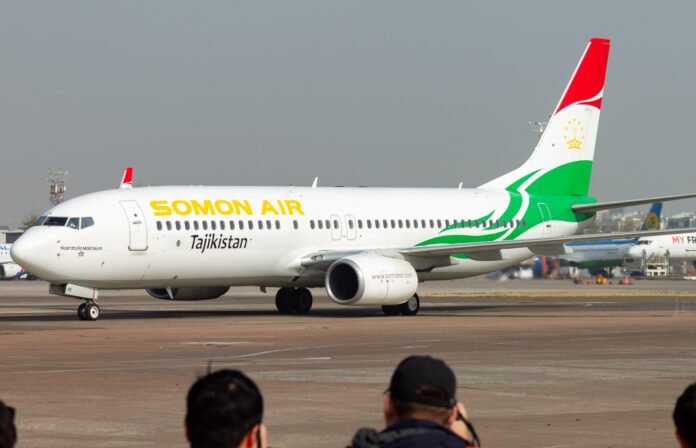
The Tajik government has tasked the airline Somon Air with organizing charter flights to repatriate Tajik citizens from Middle Eastern countries if necessary. The Ministry of Foreign Affairs of Tajikistan announced this development.

"Citizens who intend to return home via these flights can contact the diplomatic and consular missions of the Republic of Tajikistan in the respective countries for additional information and registration," the ministry said in a statement.

The Ministry also provided contact information for Somon Air and Tajikistan’s diplomatic and consular missions:

·         Somon Air Information Center

Phones: +992446404049, +992446404050, +992937777459 (WhatsApp), +992901115022 (WhatsApp), +992901032000 (WhatsApp)

·         Tajik Embassy in Iran

Mobile: +989363253147

WhatsApp: +992918818889

·         Tajik Embassy in Saudi Arabia and Bahrain

Tel: +966115120333

WhatsApp: +966563417592

·         Tajik Embassy in the UAE

Tel: +97124417950

WhatsApp: +971581531574

·         Tajik Consulate General in Dubai

Tel: +97143945814

WhatsApp: +971585081221

·         Tajik Embassy in Kuwait and Oman

Tel: (+965) 25329896

WhatsApp: +96565762307

·         Tajik Embassy in Qatar

Tel: +97444123906

WhatsApp: +97439902438

·         Tajik Embassy in Turkmenistan

Tel: +99391827271

WhatsApp: +9269738322

·         Tajik Embassy in Azerbaijan

Tel: +994513484032

WhatsApp: +994513484032

Following US and Israeli airstrikes on Iran and Iran’s retaliatory attacks on Israel and US military bases in the region, the security situation in the Middle East has deteriorated. As a result, dozens of airlines have canceled or postponed flights indefinitely, leaving hundreds of passengers, including Tajik citizens, stranded in hotels or airports in the Middle East.

At present, it is unclear how many Tajik citizens remain stranded in the conflict zone and wish to return home. Earlier, the Tajik embassy in Iran reported that around 200 people had applied to return. The embassy also stated that no one had been injured due to the recent events, and they are working on organizing citizens' departure via border crossings in Azerbaijan and Turkmenistan. On March 1, 13 Tajik citizens left Iran through the Astara border crossing and arrived in Azerbaijan.

Earlier, the Ministry of Foreign Affairs advised citizens to "avoid traveling to Middle Eastern countries until the situation stabilizes." They also recommended that those currently in the region follow safety protocols and local authorities' instructions, avoid crowded places and potentially dangerous areas, and always carry personal identification and communication devices.

In light of the ongoing events in the Middle East, Somon Air announced that it would suspend flights on the Dushanbe-Tehran-Dushanbe route until March 31 and cancel flights on the Dushanbe-Dubai-Dushanbe route until March 6.

Uzbekistan to introduce life sentences for pedophiles and arrests for sexual harassment

0

Uzbekistan is preparing changes to its criminal legislation aimed at tightening penalties for crimes involving violence against women and children. Among the proposed reforms is the introduction of life sentences for those convicted of pedophilia and administrative detention of up to five days for sexual harassment.

These initiatives were discussed during a meeting with President Shavkat Mirziyoyev, Fergana reported, citing the president’s press service. The proposed changes were prepared by a coordination council, taking into account public opinion, expert advice, and international best practices.

Mirziyoyev reportedly approved the initiatives and signed a decree instructing relevant authorities to amend the existing laws.

The Prosecutor-Generl’s Office, the Supreme Court, the National Social Protection Agency, and the Ministry of Justice have been tasked with preparing a draft of the amendments to the Criminal Code within three months.

The amendments will introduce life sentences for individuals previously convicted of crimes against the sexual freedom of minors, as well as for engaging in immoral acts with them.

Starting from November 1, 2026, investigations into crimes related to sexual violence will be exclusively handled by prosecution authorities. These cases will include those related to the following articles of the Criminal Code:

·         Article 118 — rape

·         Article 119 — forced satisfaction of sexual needs in an unnatural way

·         Article 121 — coercion to engage in sexual intercourse

·         Article 128 — sexual intercourse with a person under 16 years of age

·         Article 128-1 — sexual intercourse with a person aged 16-18 years for material goods or other advantages

·         Article 129 — immoral acts towards a person under 16 years of age

According to the decree, those convicted under Articles 118 and 119 will not be eligible for transfer to correctional colonies. Improvement in their living conditions will only be possible after undergoing psychological correction.

Starting January 1, 2027, investigations into cases involving violence against women and children will be conducted by specially trained investigators and judges. To this end, a new educational program, "Procedural Aspects of Working with Women and Children Affected by Crimes," will be introduced at educational institutions.

Additionally, from April 1, 2026, women with protection orders will be required to install the my.ihma.uz application on their devices. Developed by the National Social Protection Agency, the app will allow women to instantly report incidents of violence or harassment to law enforcement authorities.

How Iranians are coping with bombing raids: rare testimonies of life during war and internet blackouts

0

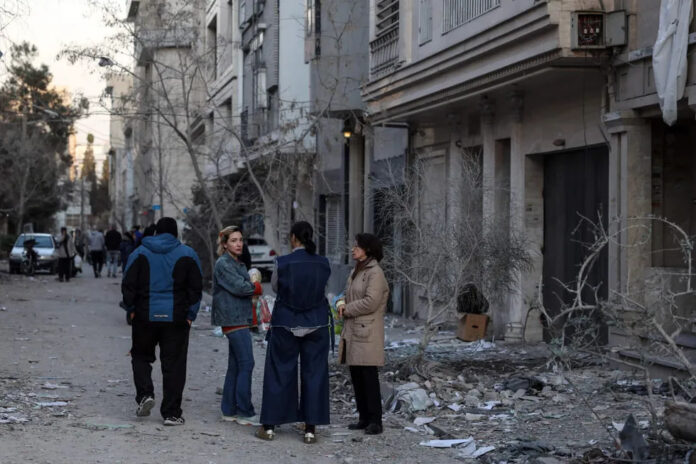
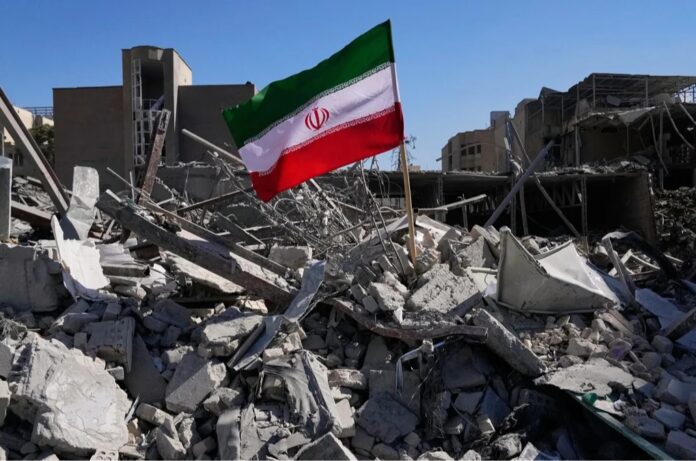
Since the outbreak of the new war in the Persian Gulf, missile strikes from Israel and the US have targeted strategic sites in Iran, many of which are located within urban areas. Alongside government officials and military commanders—40 of whom have died from the bombings—ordinary citizens of the Islamic Republic are also suffering.

However, due to widespread internet outages, information about the situation in the country remains scarce. Nonetheless, Western journalists have managed to communicate with local residents. Meduza has compiled reports from The New York Times, BBC, The Wall Street Journal, and Reuters, shedding light on how Iranians are experiencing the onset of this new war.


Residential areas and hospitals in Tehran suffer from airstrikes

According to the Iranian Red Crescent, by Tuesday, March 3, 787 Iranians were confirmed dead as a result of US and Israeli airstrikes. From the very beginning of the new war in the Persian Gulf, the attacks have targeted strategic sites in Tehran and other Iranian cities: besides government buildings and the residence of Ayatollah Khamenei, other bombed sites included the airport and the state television office.

Tehran, a densely populated city with tightly packed buildings, faces severe consequences. In an interview with The New York Times, local residents described how residential neighborhoods are often not separated from government and security agency buildings. Mina, a 61-year-old engineer, recounted how, while watching TV on Sunday, March 1, she heard a huge explosion from a nearby office just three houses away.

"The attacks are so close, the sounds are deafening. Pray we survive this night," Mina said in a voice message sent to The New York Times correspondent.

The blast wave shattered windows and doors in her building and the entire street, Mina reported. Another resident described seeing a massive explosion from her window, saying, "I thought the apartment would collapse. It was terrifying."

In one instance, the strike on a telecommunications tower in Tehran forced the staff of a nearby private hospital, Gandhi Hospital, to evacuate all patients. Additionally, other hospitals in Tehran, as well as two medical centers in different cities, were evacuated. While Al Jazeera reported some damage to several Tehran hospitals, journalists have not confirmed direct hits on these facilities.

Some locals are now afraid to go to hospitals, fearing they could be hit.

"My ten-year-old daughter is on dialysis, and now we are trapped. I'm scared to take her to the hospital. What if they bomb it? Why are you bombing us?" exclaimed Firouzeh Seraj in a conversation with Reuters.

Iranian state media also reported a missile strike hitting a girls' school, Shajareh Tayebeh, in the city of Minab on the first day of the war. According to the Tasnim agency, associated with the Islamic Revolutionary Guard Corps, 148 people were killed and 98 injured. However, Reuters has not been able to verify these figures.


Panic grips Tehran and surrounding cities

As explosions rang out in Tehran on Saturday, people rushed to grocery stores to stock up on food and water, according to The Wall Street Journal. Reuters sources reported long lines at gas stations, and traffic was paralyzed.

Soon after the attacks began, many residents packed their belongings into plastic bags and fled the capital, seeking refuge in the mountains or along the Caspian Sea. The number of those who left is unknown, but many remained in Tehran due to a lack of alternatives.

"People are really scared," said an anonymous oil magnate in an interview with The Wall Street Journal. He himself gathered his belongings and fled Tehran for his villa by the Caspian Sea.

The airstrikes have not been limited to Tehran alone. A resident of Karaj, a city located 42 kilometers west of the capital and a major hub of the military-industrial complex, told the BBC about intense bombings. He counted 17 consecutive explosions on the first night. "The hits were so strong that the house shook. I heard loud explosions. I'm just trying to find a safe place," he added.

In Urmia, near the borders with Turkey and Iraq, a woman complained to Reuters about the total lack of shelters and aid. On Tuesday, March 3, an explosion was reported in the city.


Anger and isolation amid internet blackouts

As reported by various local residents, many Iranians are furious at being cut off from the outside world due to yet another internet blackout in the country. Fatima, an elderly woman from the port city of Bushehr, told Reuters that due to unstable network coverage and power outages, she cannot contact her children.

"My children call me, but the internet barely works. I’m afraid, so afraid, that I will never see them again because I might die in these bombings," she said.

Despite the chaos, there are no reports of widespread unrest in the cities. According to a resident of Karaj speaking with the BBC, the Islamic Revolutionary Guard Corps still maintains control at the local level.

"I think the death of Khamenei and the number of people killed during recent protests have only widened the gap between the government's supporters and its opponents," said the resident. Both The New York Times and the BBC reporters noted that checkpoints have been set up throughout Tehran, with security forces thoroughly searching local residents and passing vehicles.

On Tuesday, March 3, US Secretary of State Marco Rubio warned that the heaviest strikes on Iran are still to come.

Free heart disease treatment campaign for children launched in Dushanbe

0

The Republican Scientific Center of Cardiology in Dushanbe launched a campaign on March 2 to provide free diagnostics and surgeries for children with heart conditions. The campaign will run until March 9.

According to cardiothoracic surgeon Usmonjon Ismonov, the initiative is being held in observance of the holy month of Ramadan.

"All expenses are covered by charitable funds, and families do not have to pay for treatment. Our goal is to help children suffering from heart defects. Every child, regardless of their family's financial situation, has the right to live with a healthy heart," Ismonov said.

Parents who wish to schedule an appointment can contact the following numbers: +992 888221132, +992 001333003, +992 930888241.

Parents are required to bring their child’s birth certificate and their own passport. No additional documents are needed for the consultation, as all examinations are conducted directly at the center.

Tajik experts predict prolonged conflict as U.S. and Israel wage war against Iran

0

As the war between the United States and Israel against Iran enters its fifth day, airstrikes from both sides continue. The U.S. and Israel have targeted various cities in Iran, while Iran has retaliated by attacking Israel and U.S. military bases in Arab countries across the Middle East.

Tajik experts highlight that the bombings and the targeting of military leaders have not brought about the collapse of the Iranian regime, and Iran is prepared for a prolonged war.


Why did the war start?

The U.S. and Israel have provided their own versions of events to justify the conflict. They accuse Iran of abandoning the agreement to halt its nuclear program, claiming that without these airstrikes, Iran would soon have acquired nuclear weapons. However, this claim contradicts their earlier statements from the "12-day war" when both the U.S. and Israel claimed that strikes on Iran’s uranium enrichment facilities had deprived Iran of the ability to develop nuclear weapons.

Iran, on the other hand, insists that the U.S. initiated the conflict by abandoning diplomatic negotiations and turning to military action, as it did a year ago. Tehran maintains that the accusations from the U.S. and Israel are merely a pretext, emphasizing that Iran’s nuclear program is peaceful and it has no intention of developing nuclear weapons. Iran has repeatedly expressed its willingness to provide the International Atomic Energy Agency (IAEA) with conditions for inspections of its nuclear facilities. The head of the agency has also confirmed that "Iran does not possess nuclear weapons."

Despite these claims, the war began with airstrikes on Iran by the U.S. and Israel, and the conflict has now been ongoing for five days, causing casualties and destruction. The situation raises several questions: Why did the war start? What are the real objectives of the U.S. and Israel? How resilient is the Iranian regime? Why does Iran have no allies nearby? Is Iran ready for a prolonged war? How will Arab countries react to Iran’s strikes on their territories? And what will this conflict lead to? We sought answers from Tajik analysts and experts.


“The West’s main problem is Iran’s political system”

Political analyst Rahmatullo Abdulloyev believes the war was triggered by Iran’s independent policies, which are at odds with Western interests. He argues that the issues raised in negotiations are merely a pretext, and the real problem for the West is that Iran has no internal partners or collaborators willing to carry out its plans. According to Abdulloyev, the main goal of the U.S. and Israel is regime change in Iran, which has resisted Western pressure for over 40 years.

Abdulloyev recalled the disputes over Iran’s nuclear program, long-range missile development, and Iran’s support for political and military groups in Palestine and Lebanon. He also pointed out that the Joint Comprehensive Plan of Action (JCPOA) signed in 2015, involving Western countries, Russia, and China, was supposed to resolve the conflict but was abandoned by U.S. President Donald Trump.

The JCPOA, an agreement between Iran and six international mediators (the U.S., Russia, China, the U.K., France, and Germany), aimed to limit Iran’s nuclear program in exchange for lifting economic sanctions.

Abdulloyev considers the U.S. withdrawal from the agreement and the inaction of other signatories as a "betrayal of Iran," proving that the real issue is not Iran’s nuclear program, but rather the country’s independent political system. He added that Iran has no internal forces capable of implementing the U.S. and Israeli plans, and representatives of the former Pahlavi dynasty do not have significant support within the country.


Will Iran stand alone?

Abdulloyev suggests that while Iran is currently supported primarily by its own people, the situation may change in the long term. He believes Iran will not be able to remain isolated and is likely to receive unofficial military, informational, and intelligence support from countries like China, Russia, and Pakistan. If a ground operation were to occur, he anticipates that volunteers from neighboring countries could join Iran’s side. However, he does not believe the U.S. and Israel are prepared for a ground operation, given the costly and challenging experience of the war in Afghanistan.


“Iran is capable of waging a prolonged war”

Conflict analyst Rustam Azizi argues that Iran has demonstrated its ability to sustain a long-term military conflict despite heavy losses. According to Azizi, "a few missile and bomb strikes will not topple the Iranian regime or destroy its system." He highlights Iran’s large reserve of military personnel and the absence of a personalized political system.

Azizi recalls the “12-day war,” when Israel eliminated several high-ranking Iranian military commanders, but they were quickly replaced, and the regime did not collapse. In the ongoing conflict, dozens of commanders, including Iran’s supreme leader, have been killed, but the war continues. Iran has retaliated by targeting U.S. bases in Arab countries, and reports suggest vulnerabilities in the U.S. air defense system.


Alarm in Arab countries

Azizi notes that the situation has been highly tense and unexpected for Arab states, which have relied on the U.S. for their defense. However, Iran’s retaliatory strikes have revealed weaknesses in their air defense systems. In the Arab media, new narratives have emerged, including the following points:

·         The U.S. is unable to provide protection;

·         Huge amounts of money spent on defense have yielded little effect;

·         Strikes on energy infrastructure and the threat of blocking the Strait of Hormuz create global risks.

Despite these concerns, Azizi believes Arab countries will not be able to respond militarily to Iran—neither in terms of capability nor willingness to suffer significant losses. He emphasizes that a prolonged war would be extremely dangerous for Gulf countries, whose military forces are not strong enough for a ground conflict.


"This war won’t be resolved by bombings and missile strikes"

Azizi concludes that the war will not be settled by airstrikes or missile attacks alone. "A ground operation would require enormous resources. Iran is a large country with a powerful army and many supporters. In the case of a guerrilla war, the conflict could drag on for a long time," he says.

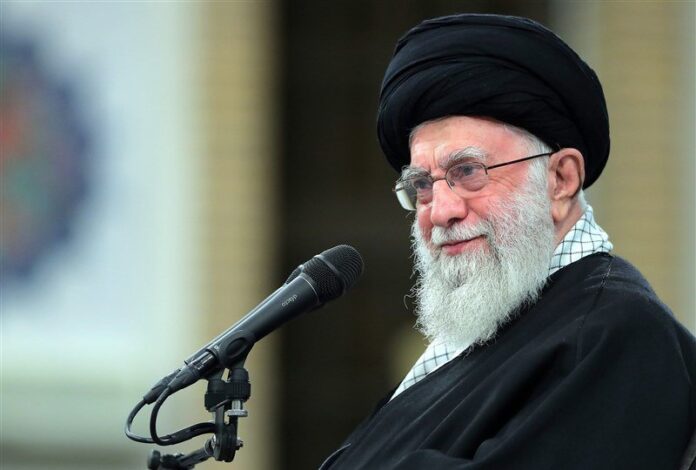
Iranians to bid farewell to late Supreme Leader Khamenei at Tehran ceremony

0

Iranians will bid farewell to late Supreme Leader Ayatollah Ali Khamenei ​at a ceremony in Tehran late on Wednesday.  The farewell ceremony will begin on March 4 at 10:00 PM local time and will take place at the Imam Khomeini Complex in Tehran, according to the Iranian news agency Tasnim.

Details regarding the funeral of Khamenei will be announced after the final arrangements for the ceremony are made, as stated by the Islamic Propaganda Coordination Council.

Khamenei’s funeral will take place in Mashhad, the second-largest city in Iran and his birthplace. Iranian media report that he will likely be buried at the Imam Reza Shrine, where his father is also interred. The exact date of the funeral has not yet been disclosed.

The former Supreme Leader of Iran was killed in his residence on February 28 during missile strikes carried out by the U.S. and Israel. Iranian media reported that Khamenei was in his office at the time of the attack.

The missile strike also claimed the lives of his daughter, son-in-law, granddaughter, and one of his daughters-in-law. His wife, Mansoureh Khodjasteh Bagherzadeh, succumbed to her injuries several days later.

In the wake of Khamenei's death, the Iranian government declared a 40-day period of national mourning.

Following his death, Iran is being governed by a temporary council composed of President Masoud Pezeshkian, Head of the Judiciary Gholam Hossein Mohseni-Ejei, and member of the Guardian Council Ayatollah Alireza Arafi.

Meanwhile, CNN, citing Iran’s semi-official Fars News Agency (FNA)  reported on March 4 that a group of senior Iranian officials has been meeting virtually to select a new supreme leader after the initial US-Israel strikes killed Ayatollah Ali Khamenei.  Khamenei’s son, Mojtaba Khamenei, 56, is reportedly among a small handful of clerics tipped as likely successors.  


ADB’s country partnership strategy for 2026-2030 unveiled

0

The Asian Development Bank (ADB) Tajikistan Resident Mission (TJRM) reports that during the visit to Tajikistan, ADP President, Mr. Mr. Masato Kanda,  joined government officials to unveil ADB’s country partnership strategy for 2026–2030.  

Co-created with the government and partners and rooted in national priorities, ADB–Tajikistan’s Country Partnership Strategy 2026–2030 reportedly supports resilient infrastructure, stronger competitiveness, and expanded access to inclusive social services.

This Country Partnership Strategy (CPS) proposes broad-based support in areas that are essential for Tajikistan to enhance governance, strengthen public sector institutions, and improve the business environment and investment climate.  

According to the ADB TJRM, Mr. Kanda also visited an ADB-supported modern skills training center in Dushanbe. In Tajikistan, where over half the population is under 25, practical and market-ready education is critical. With a grant from the Asian Development Fund and cofinancing from the Japan Fund for Information and Communication Technology, six modern skills training centers across the country provide youth and adults with skills in agriculture, green energy, information and communication technology, tourism, and other priority sectors.

Since Tajikistan joined ADB in 1998, ADB has committed close to $3 billion in development assistance, making it one of the country’s largest multilateral development partners. The partnership has delivered concrete results including upgrading roads connecting major cities across the country, modernizing key irrigation and water supply systems, and building hospitals and schools. ADB has also supported the construction of power transmission lines and electricity substations, the reconnection of the country’s electrical grid to the Central Asian power network, and the rehabilitation of the Nurek and Golovnaya hydropower plants.

ADB is a leading multilateral development bank supporting inclusive, resilient, and sustainable growth across Asia and the Pacific.  Founded in 1966, the Asian Development Bank is owned by 69 members—50 from the region.

Tajikistan President Emomali Rahmon meets with ADB President Masato Kanda to discuss cooperation

0

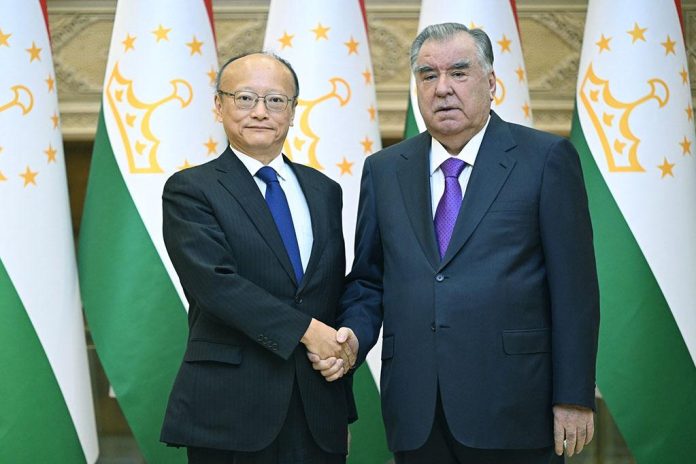
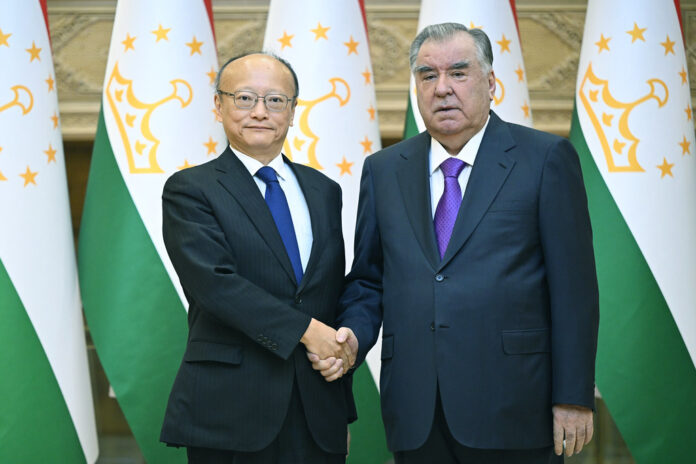
On March 4, President of Tajikistan Emomali Rahmon welcomed Mr. Masato Kanda, President of the Asian Development Bank (ADB), during his first official visit to the country.

The Tajik president’s official website says President Rahmon congratulated Mr. Kanda on his election as ADB President and emphasized that his visit signified the Bank’s strong commitment to fostering long-term cooperation with Tajikistan.

During the meeting, both sides highlighted the significant contributions made by the ADB towards Tajikistan's socio-economic development goals. It was noted that the Bank has been one of Tajikistan's key partners, supporting over 200 projects totaling $2.9 billion.

The leaders also expressed satisfaction with the adoption of the new ADB-Tajikistan Partnership Strategy for 2026-2030, which aligns with Tajikistan’s national priorities, including energy development, transportation, digitalization, climate change adaptation, and strengthening both the social and private sectors.

A special focus was placed on priority investment projects, with President Rahmon thanking the ADB for its support to the state budget and its contributions to advancing the "green" economy.

The conversation also addressed expanding cooperation in areas such as education, addressing climate change impacts, and glacier protection. Both parties acknowledged the need for additional financing and continued structural reforms to enhance human capital development and regional ecological security.

In conclusion, the leaders reaffirmed their commitment to strengthening the long-term partnership between Tajikistan and the ADB, expressing confidence that the outcomes of the meeting would further boost bilateral cooperation, according to the Tajik president’s official website.

Meanwhile, the ADB Tajikistan Resident Mission (TJRM) reports that Mr. Kanda said during the meeting that ADB “is planning around $1.1 billion in support over 2026–2028 to strengthen infrastructure, improve competitiveness, and make social services better and easier for everyone to use.”

“We will continue supporting the government’s efforts to build a dynamic private sector that creates jobs, sparks innovation, and supports resilient growth,” ADB President noted.

Mr. Kanda reportedly also reaffirmed ADB’s commitment to a strong partnership with Tajikistan during his meeting with First Deputy Prime Minister and ADB Governor Hokim Kholiqzoda.

Experts forecast moderate price growth for food in Tajikistan in 2026

0

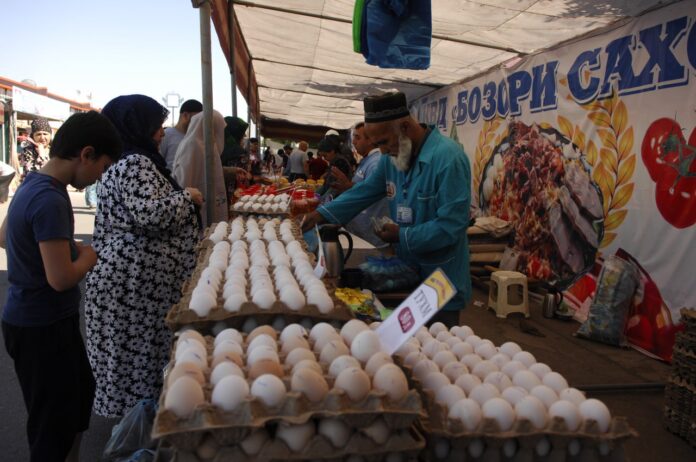
Food prices in Tajikistan are expected to rise by 3.8% in 2026, slightly above the global average, says a report from the Food and Agriculture Organization of the United Nations (FAO) covering 160 countries worldwide.

The FAO estimates that global food prices will increase by an average of 3.2%. However, in some countries, the growth rate will be significantly higher due to currency instability, inflationary pressures, and supply chain issues.

Against the backdrop of global trends, Tajikistan is showing a relatively moderate price increase. The predicted 3.8% growth is close to the regional average for Europe and Central Asia (4.2%) and remains significantly lower than in several neighboring countries.

For comparison, food inflation in 2026 is expected to reach 12.7% in Kazakhstan, 9.4% in Kyrgyzstan, 9.2% in Ukraine, 8.9% in Belarus, 8.2% in Georgia, 6.8% in Azerbaijan, 5.5% in Uzbekistan, 4.9% in Moldova, 4.6% in Russia, and 3.1% in Armenia.

The highest food price increase is anticipated in Iran, where the FAO predicts food inflation may reach 55.9% year-on-year. Iran’s currency depreciation and prolonged inflationary pressures have already pushed food inflation to extreme levels in recent years. The 2026 forecast suggests those pressures may persist.

Argentina (33.2%) and Turkiye (25.1%) also make the top three, with long-standing inflation and pressure on national currencies continuing to be key factors driving price hikes.

Food prices continue to be one of the most persistent cost pressures for households worldwide. According to the FAO report, grocery bills are expected to rise sharply in some countries in 2026, while remaining relatively stable in others. The report highlights that inflationary pressures are currently strongest in emerging and import-dependent economies.

Food inflation is influenced by a range of factors, including currency movements, commodity prices, trade disruptions, and domestic supply conditions. Countries facing currency depreciation or ongoing economic instability are likely to experience sharper increases in food costs, the FAO notes.