Home Blog Page 41

Three scenarios: how the US-Israel war on Iran could impact Tajikistan

0

Even if the US-Israel war on Iran remains confined within the country, it will have varying degrees of impact on the Central Asian region. Iran is a key trading partner, an essential transport corridor, and a significant political player in the region.


Scenario 1: a limited conflict

If the conflict remains localized and does not escalate into a regional war, there will be no direct security threats to Central Asia. However, Tajikistan could face indirect consequences, primarily in the form of macroeconomic effects through three key channels.

Energy channel

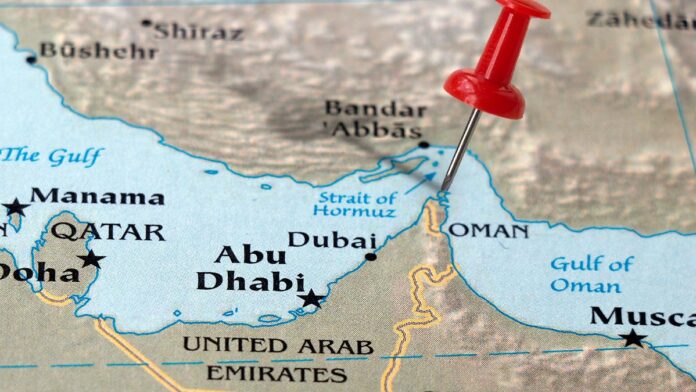
Tajikistan relies heavily on imports of petroleum products, as its domestic production is minimal. Although the country does not import oil products from Iran, global price increases will lead to higher fuel costs for all exporting countries, including Russia, the main supplier of fuel to Tajikistan. In 2025, about 80% of Tajikistan’s fuel imports came from Russia. With geopolitical instability in the Middle East and potential disruptions in the Strait of Hormuz, oil prices could rise sharply. This will increase transportation costs and inflationary pressure on consumers, lowering purchasing power and expanding the trade deficit.


Logistics channel

Iran is a key element in the "North-South" transport corridor, through which Tajikistan receives imported goods and access to the Persian Gulf ports. Even without direct infrastructure damage, regional instability will likely result in increased shipping costs, longer delivery times, and potential supply chain disruptions, leading to inflationary pressure within Tajikistan.


Financial channel

Global financial markets are sensitive to instability, with investors often turning to more stable assets like the dollar. This could strengthen the dollar and weaken the Tajikistani somoni. A weakened somoni would make imports more expensive, pushing up domestic prices, especially for fuel and essential goods. The weakening currency could also make Tajikistan’s foreign debt harder to service, adding pressure on the national budget and potentially slowing foreign investment.


Scenario 2: escalation and involvement of major powers

If the conflict in Iran escalates and major powers become more involved, the consequences for Tajikistan will not just be military but also economic. As tensions rise, infrastructure and logistics will be affected, oil prices and transportation costs will increase, and there will be mounting pressure on neighboring countries’ budgets. Tajikistan’s economy, which relies heavily on external markets, transport corridors, and financial flows, will feel the ripple effects: currency depreciation, rising costs, and delays in projects.


Logistics vulnerability

The Strait of Hormuz, which accounts for a significant portion of global oil shipments, could see disruptions due to regional instability. Tajikistan, which is landlocked, relies on neighboring countries’ transport routes. Any disruptions to these routes will lead to higher import costs, including for fuel, industrial equipment, and building materials, directly affecting project costs and consumer prices within Tajikistan.


Trade risk

Tajikistan’s trade with Iran has grown significantly in recent years, with trade volumes increasing by 28.1% between 2024 and 2025. However, an escalation of conflict could lead to secondary sanctions risks and hinder banking transactions, causing delays and uncertainties in trade. Even without formal sanctions, business activity could slow as firms seek to minimize risk.


Economic consequences

If global oil prices continue to rise, Tajikistan will face further inflationary pressure. This will weaken the somoni, increase the cost of living, and exacerbate the country’s trade deficit. Moreover, a slowdown in major economies like Russia or China, as a result of the conflict, could reduce trade, investment, and remittance inflows, compounding the economic strain.


Scenario 3: destabilization within Iran

The most concerning scenario is one in which internal instability in Iran results in the collapse of central authority, economic collapse, increased protests, or even fragmentation of the political system. The consequences for the region would be not only economic but also long-term geopolitical.


Migration chains via Afghanistan

In the event of severe instability in Iran, part of the population could flee to Afghanistan, triggering a new wave of migration toward Tajikistan’s borders. For Tajikistan, this would mean an increased burden on border security and internal safety measures. Iran's political weakening could alter the balance of power in Afghanistan, particularly in the western and northern provinces, intensifying competition among regional players and the activity of radical groups. For Tajikistan, with its complex border with Afghanistan, this scenario would directly impact national security.


Decline in investment and trade activity

Iran plays a key role in Tajikistan’s infrastructure and energy projects. For instance, Iran helped build the Sangtuda-2 hydroelectric power plant and invested in the construction of the Istiklol Tunnel. However, internal instability in Iran could lead to the freezing of these projects, along with trade disruptions and reduced logistical cooperation.


Weakened transport and transit prospects

Iran is a critical transit route for Tajikistan, providing access to ports in the Persian Gulf. Prolonged instability would hinder the development of southern transport corridors, increase transit costs, and deepen Tajikistan’s reliance on alternative routes.


Why Tajikistan is not just a bystander

Tajikistan’s economy is closely tied to the outside world, particularly through labor migration, external trade, and dependence on energy and food prices. Even if international conflicts do not directly affect the country, their consequences are felt in the form of remittance fluctuations, rising fuel and food prices, currency depreciation, and inflation.

Tajikistan’s economy remains vulnerable due to its reliance on external factors and relatively small domestic markets. Therefore, any external crisis (whether financial, political, or military) quickly impacts the incomes of the population and the business environment. To mitigate the possible effects, experts suggest diversifying transport routes, strengthening energy independence, and expanding foreign trade ties.

It’s important to note that the current situation does not necessarily indicate a disaster, but rather a test of resilience. The extent of the consequences depends on how long the instability lasts, the impact on oil and essential commodity prices, and the overall health of the economy—its reserves, budget, and National Bank policies. If the situation stabilizes quickly, the impact will be manageable. However, prolonged instability could lead to increased pressure on the currency, budget, and public incomes, posing a significant economic challenge for the country.

Pamir Highway, “Tajik Machu Picchu,” and the “Sleeping Dragon”: a complete guide to GBAO

0

The Gorno-Badakhshan Autonomous Region (GBAO) is the largest region by area in Tajikistan. This majestic land is home to one of the world’s most significant mountain systems — the Pamirs. Here lie the famous seven-thousanders that mountaineers from all over the world aim to conquer.

This guide provides insight into the wonders of Gorno-Badakhshan, from its towering peaks and mysterious ancient ruins to the thrill of exploring one of the world’s most dramatic highways. Whether you're an avid adventurer, history enthusiast, or simply in search of serenity, GBAO offers experiences that will leave a lasting impression.

The region presents a unique geographical mosaic: the diverse landscapes of the districts of Darvaz, Vanj, Rushan, Shugnan, Roshtqala, Ishkashim, and Murgab are sure to amaze even the most seasoned traveler. The Pamirs attract adventure seekers, outdoor enthusiasts, and, of course, mountain lovers who come to admire snow-capped peaks, unique lakes, breathe in fresh mountain air, and enjoy the true silence of nature.

The mountain region is not only fascinating for its nature but also its ethnic diversity. Each district is home to communities with unique languages and ancient traditions, and the warm hospitality of the local mountain people offers travelers more comfort than the hottest sun.

Here are some must-visit places in GBAO.


Pamir Highway

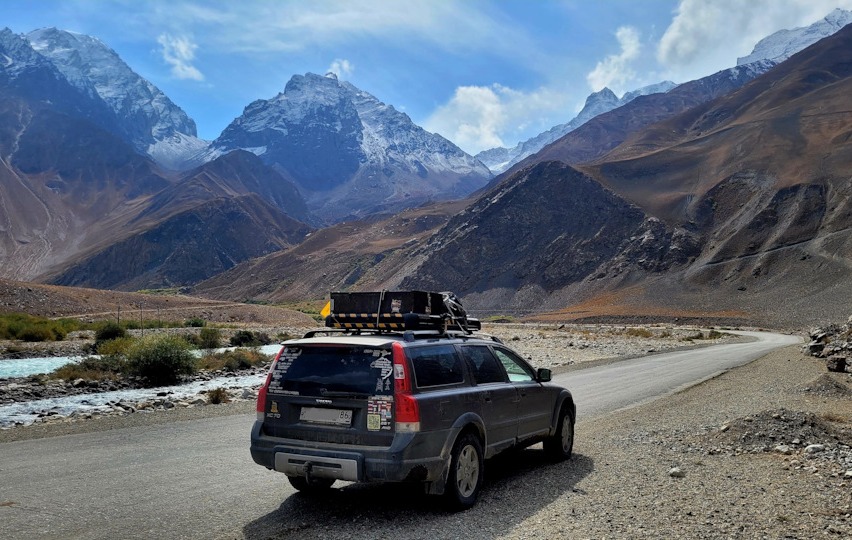
We begin with the Pamir Highway, the region’s main artery and one of its most notable attractions. This is one of the most scenic and extreme highways in the world, winding through valleys and gorges, "Martian plains," and mountain deserts. In 2020, the Pamir Highway was named one of the top 10 most beautiful roads in the world.
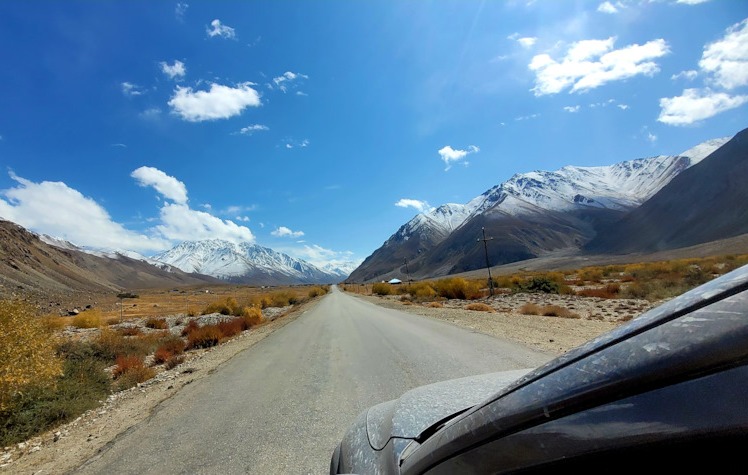
The Pamir Highway spans about 700 kilometers, stretching from the center of the region, the city of Khorog, to the Kyrgyz city of Osh. There’s also the concept of the Greater Pamir Highway, which is approximately 1300 kilometers long, beginning in Dushanbe, passing through Kulob, reaching the Pyanj River, and following it along the road to Khorog and Osh.

Traveling along this route is a cherished dream for many road trip enthusiasts. The journey takes you to altitudes starting from 900 meters, reaching its peak at 4655 meters at the Khushang Pass (Ak-Baytal). Long hours on rocky dirt roads and winding serpentine routes demand physical effort, but the experience is worth it for the unique atmosphere of a true adventure, where you dive into a picturesque world of mountains.
Important: GBAO is a region with a special entry and stay regime, and foreigners need special permission to visit. This can be obtained when applying for an electronic visa on the website www.evisa.tj, where the option "GBAO permit" must be selected. The cost of the service is an additional $20 on top of the visa fee. If you already have a visa or are from a visa-free country, you can obtain the permit at the Passport and Registration Department of the Ministry of Internal Affairs in Dushanbe or Khorog.


The ancient city of Karon: Pamir's Machu Picchu

The gateway to GBAO is the Darvaz district, which symbolically translates as "gate." Just a few kilometers from the district center, Qalai-Khumb, lies Karon — one of the most significant archaeological discoveries of modern times. This ancient city, situated at an altitude of 2,000 meters, is often referred to as "Tajikistan’s Machu Picchu."
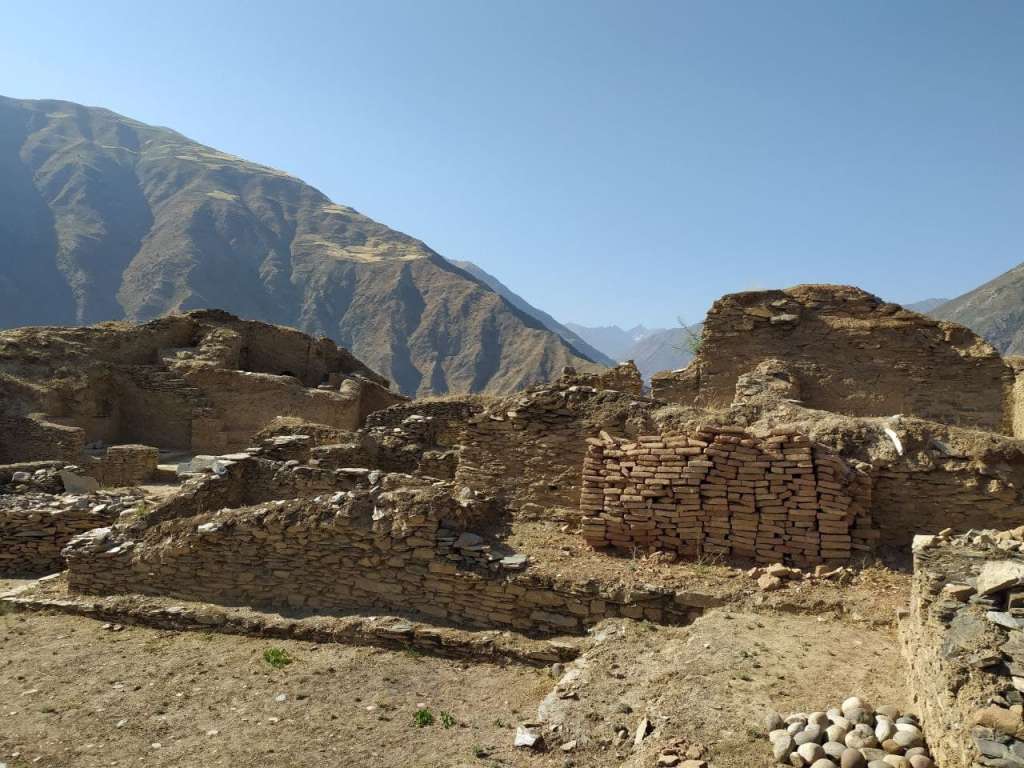
Karon was only discovered in 2012. Like its Peruvian counterpart, the ancient city is shrouded in mystery. Founded around 4,000 years ago, it had a developed infrastructure: here, temples of fire, Zoroastrian shrines, an observatory, and even a large polo stadium that could accommodate 10,000 spectators have been uncovered.

However, in the 15th century, life in the city suddenly ceased — its inhabitants left their homes in an organized manner, taking all their belongings with them, and the reasons for this departure remain a mystery to this day. As you walk along the stone streets of Karon, you cannot help but admire the craftsmanship of the ancient builders who erected such a large city in such an inaccessible location.


Khorog: the heart of the region and the high-altitude Botanical Garden

GBAO’s capital, the city of Khorog, attracts visitors with its unique culture, the cozy atmosphere of narrow streets, and the sound of the Gunt River. The journey from Dushanbe takes about 12-13 hours by car. While Khorog has an airport, flights from Dushanbe are irregular due to the unpredictable mountain weather.
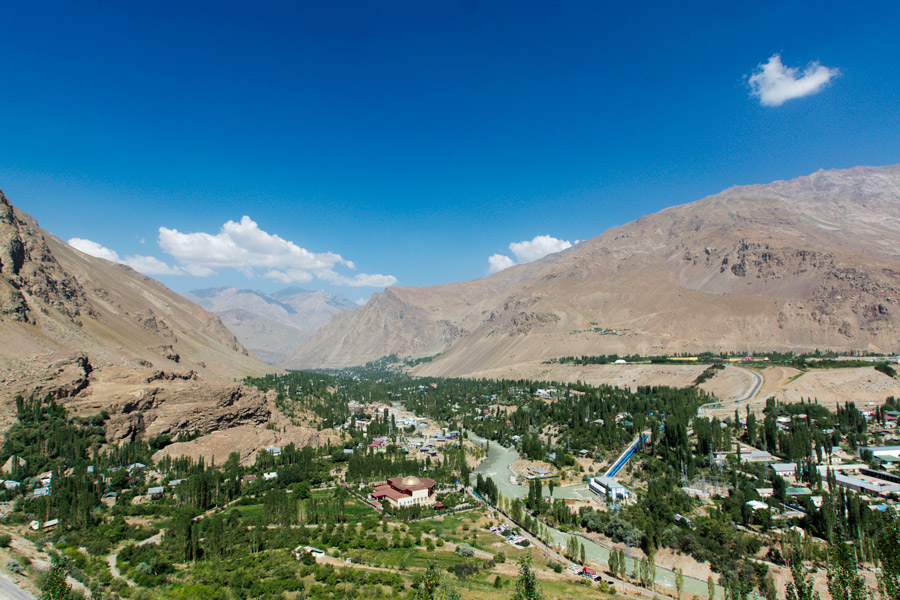
To truly experience the culture of the Pamiri people, visit a traditional Pamir house, or cheed, in Khorog.

The architecture is deeply symbolic: it features a flat roof with a four-tiered skylight (chorkhona) symbolizing the elements (earth, air, fire, water), and five central pillars representing key figures in Ismaili Islam, blending Zoroastrian and Islamic spiritual traditions. 

Above the city, at an altitude of over 2,300 meters, lies the Pamir Botanical Garden — the highest botanical garden in the post-Soviet space.
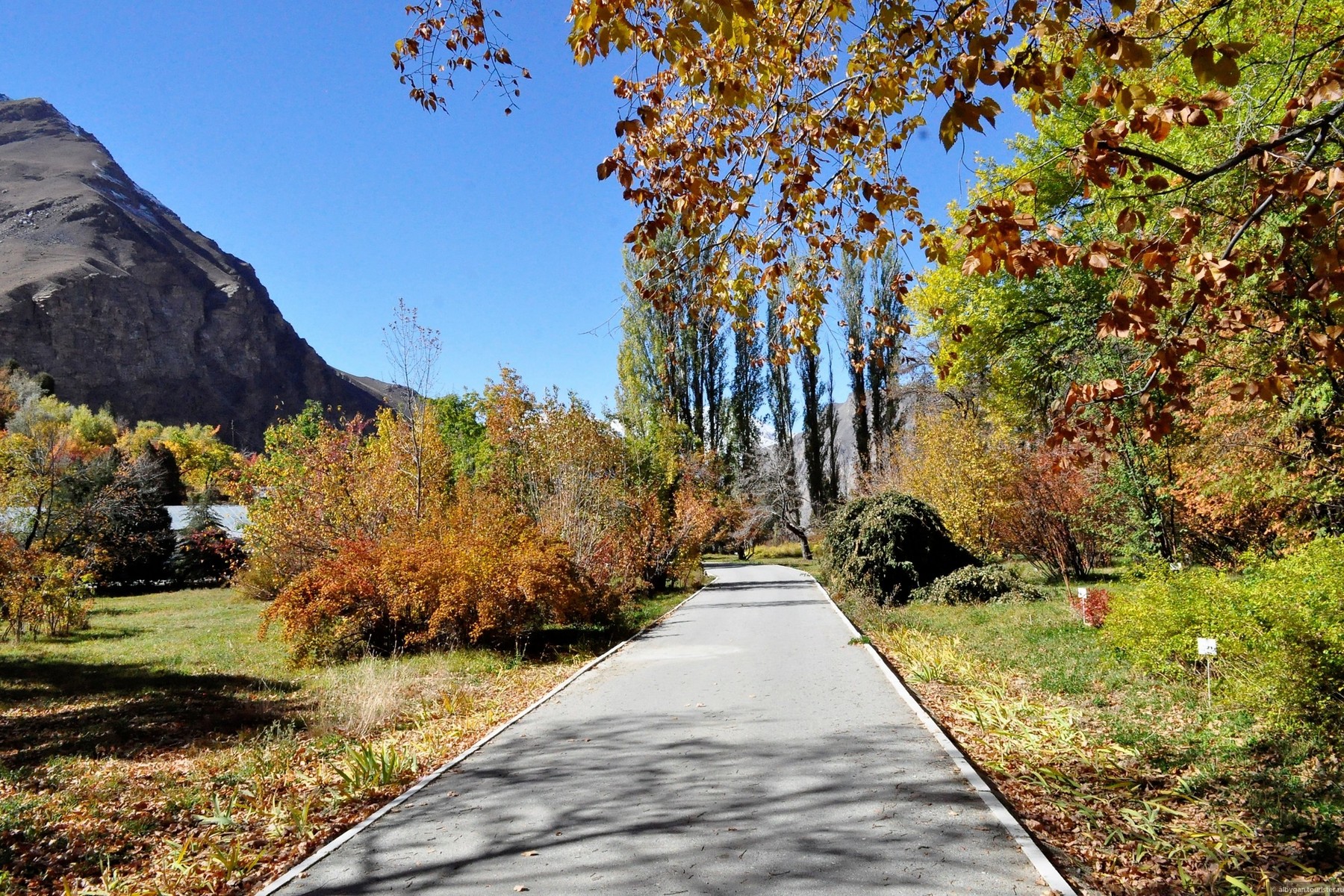
Thousands of plant species from all continents are gathered here. From the garden's terraces, visitors can enjoy breathtaking panoramic views of the entire city of Khorog.

Another highlight of Khorog is the Historical and Local History Museum, where among other exhibits, one can find an antique piano that Russian soldiers carried by hand over mountain passes from Osh in 1914.


Kakh-Kakha and Yamchun Fortresses: Guardians of the Silk Road

Located approximately 15 kilometers from the settlement of Ishkashim is one of the region's ancient landmarks — the Kakh-Kaha Fortress. The fortress, covering an area of 700×220 meters, sits on a hill in the Panj River valley and was built during the Kushan Empire in the 1st-2nd centuries AD. According to legend, the fortress was named after the local ruler of that time.
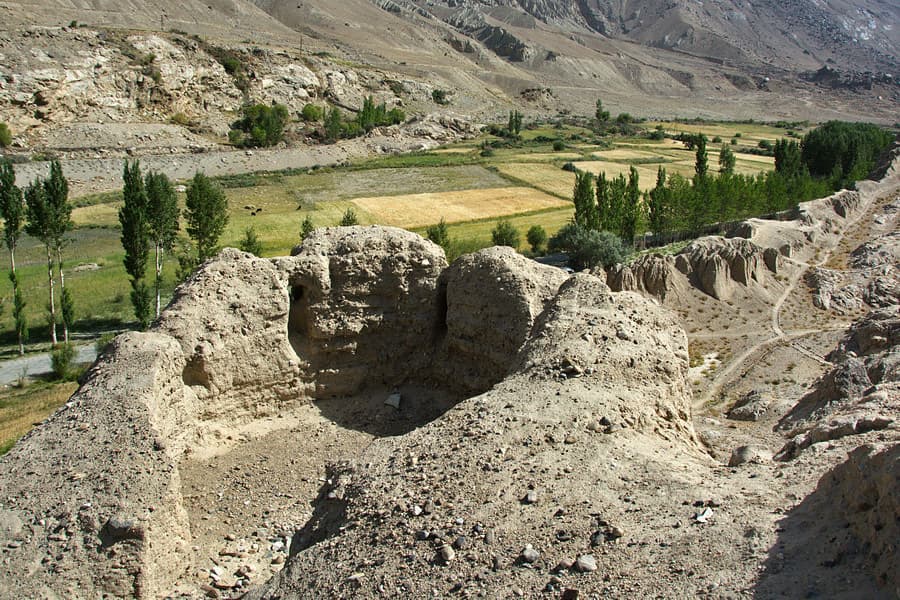
Kakh-Kakha, constructed from clay and stones, has about 50 towers in both round and square shapes. Although only ruins remain of this once enormous fortress, it is clear that it was once a significant fortification. Today, the eastern part of the fortress serves as a border outpost, and access is restricted, with photography strictly prohibited.

Even more majestic is the Yamchun Fortress, located at an altitude of 3,000 meters. Founded in the 3rd century BC, it predates Kakh-Kakha and is a masterpiece of ancient engineering. To reach it, visitors must turn off the highway and climb a winding serpentine road. From its walls, there is a magnificent panorama of the valley.
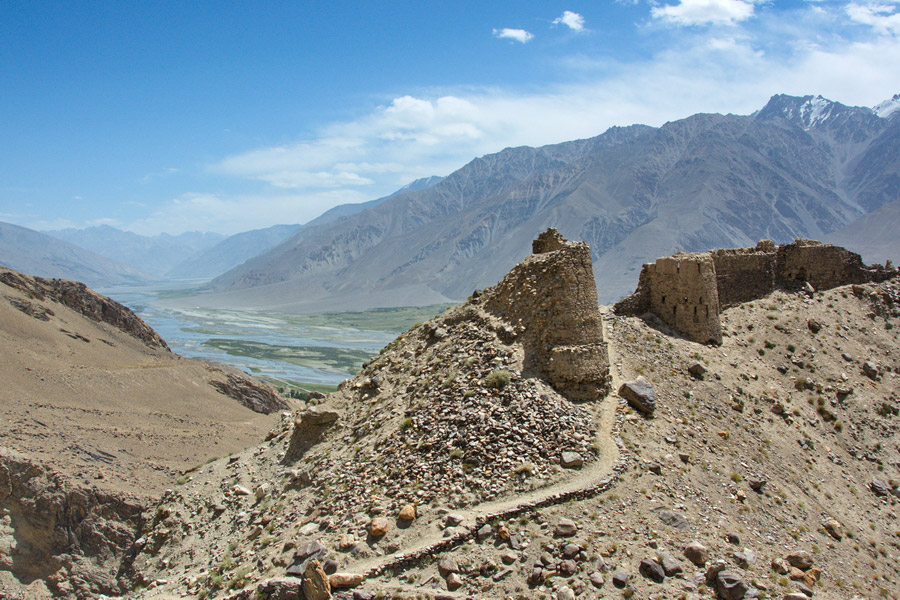
In ancient times, the fortress occupied 75 hectares, but only the upper bastion has survived to this day. Despite the passage of time and the erosion caused by harsh winds that wear down its stone towers and battlements, Yamchun remains a silent witness to the history of the Silk Road, gazing down on the valley from a height of 400 meters.

Another imposing fortress, Vamar (Qala-i-Vamar), is located in the Rushan district, directly on the banks of the Panj River. Vamar is situated on the plain where the Bartang and Panj rivers meet, right on the border with Afghanistan. Unlike many other ruins in the Pamirs, Vamar has been relatively well preserved, with its walls still standing today.


Buddhist stupa in Vrang

One of the most intriguing landmarks in the Wakhan Valley is the Buddhist stupa, perched on a rocky outcrop near the village of Vrang. Located at an altitude of 2,805 meters, this monument of the ancient Silk Road stands 90 kilometers from Ishkashim. The path to it winds along the Pyanj River, passing ancient Kushan-era fortresses and Zoroastrian shrines, immersing travelers in the multi-millennial history of the region.
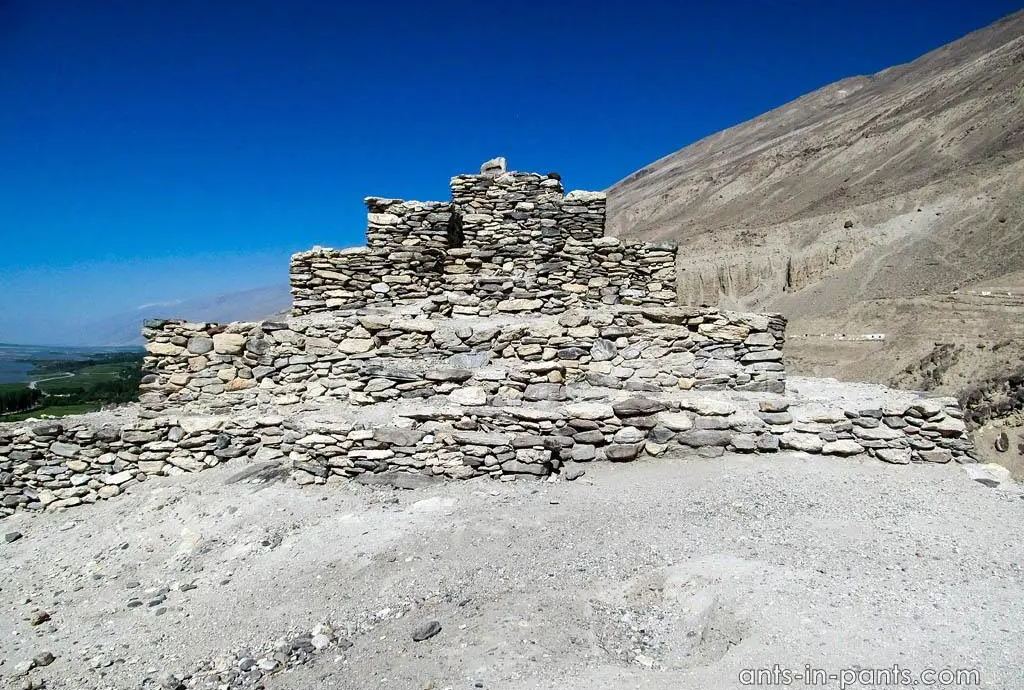
The architecture of this sacred structure is unique to the Pamirs. It takes the form of a stepped pyramid with five rectangular tiers, visually resembling a staircase to the heavens. From the temple platform, there is a panoramic view of the valley: both Tajik and Afghan villages on either side of the river are visible as if placed in the palm of your hand.


Healing Springs of Garmchashma and Bibi Fotima-i Zahro

The Pamirs are rich in hot springs, with the most famous being Garmchashma, the primary center of balneology in the region. The Garmchashma health complex is located 35 kilometers from Khorog at an altitude of 2,842 meters. The spring is renowned for its dazzling white travertine cascades, formed over thousands of years.
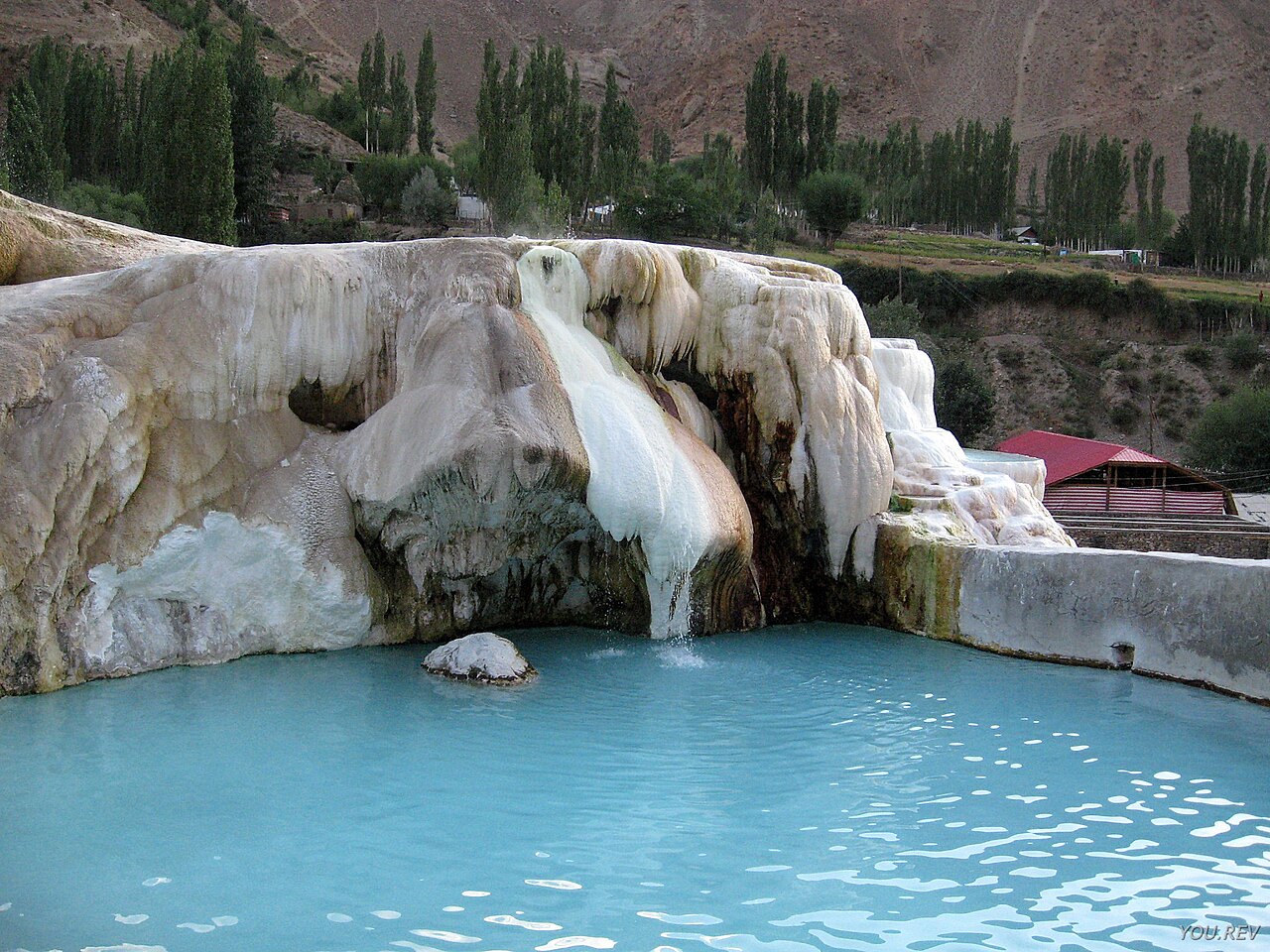
The water here is rich in sulfur, silicon, and magnesium, making it ideal for treating cardiovascular diseases, skin conditions, and joint ailments.

Garmchashma not only heals the body but also provides aesthetic pleasure. With modern infrastructure, including hotels and restaurants, visitors can enjoy a comfortable stay throughout the year.

Further into the Wakhan Valley, near the Yamchun Fortress, lies another legendary spring — Bibi Fotima-i Zahro.
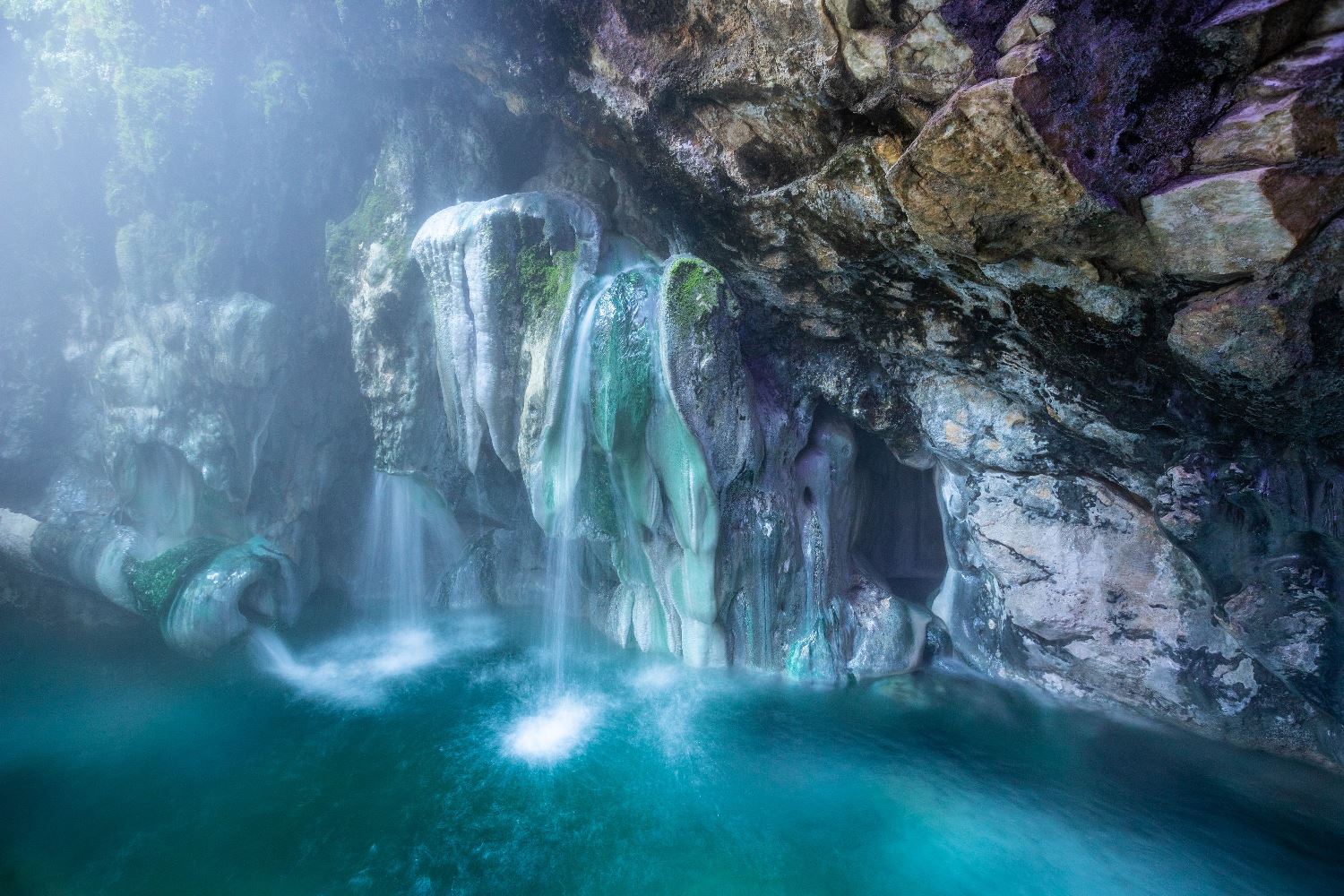
The crystal-clear water here flows directly from the crevices in the rocks. Local residents and pilgrims consider the site sacred, associating it with the name of the daughter of the Prophet Muhammad.


Bartang Valley: in search of pristine wilderness

Bartang Valley is the perfect destination for those seeking an authentic, untouched Pamir. Situated between the Yazgulyam and Rushan mountain ranges at altitudes up to 3,500 meters, the valley stretches from the center of Rushan to the border of Murgab. The Bartang River, a right tributary of the Panj River, flows out of Lake Sarez, crossing the entire valley from east to west.
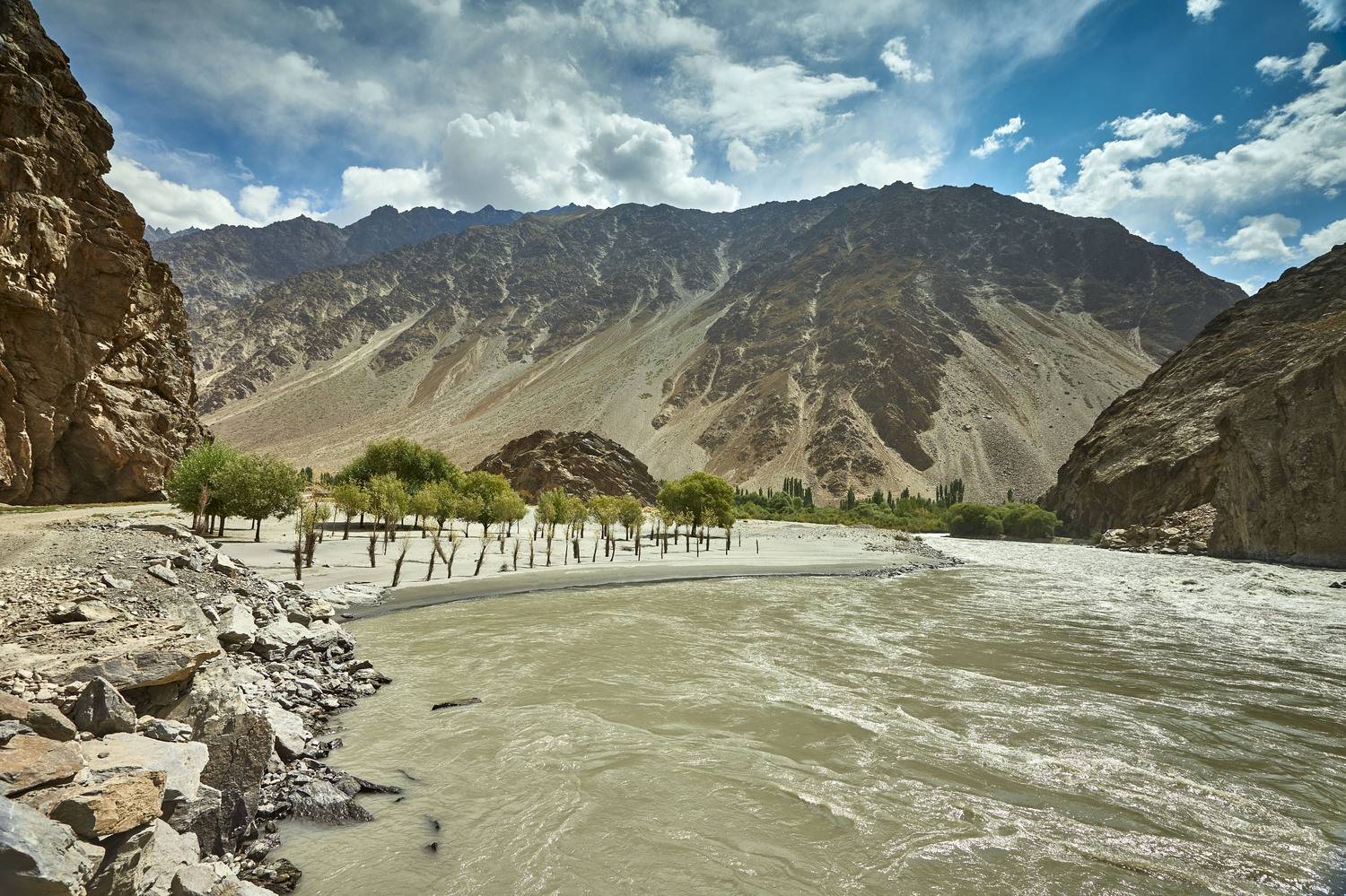
The people here maintain a traditional way of life, passing down the knowledge and customs of their ancestors from generation to generation.

The road to Bartang is considered one of the most challenging in the Pamirs. The narrow highway connecting the valley to the Pamir Highway is frequently closed due to avalanches, rockslides, mudflows, or flooding. However, it is precisely in this remote location, far from civilization, where travelers can experience a true sense of unity with nature.


Lake Sarez

The famous Lake Sarez, often called the "Sleeping Dragon" of Central Asia, is located in the Rushan district of GBAO. This unique lake was formed in 1911 after a powerful earthquake caused a massive landslide (the Usoy landslide) that blocked the Murgab River. The lake stretches up to 70 kilometers in length, with a maximum depth of 500 meters.
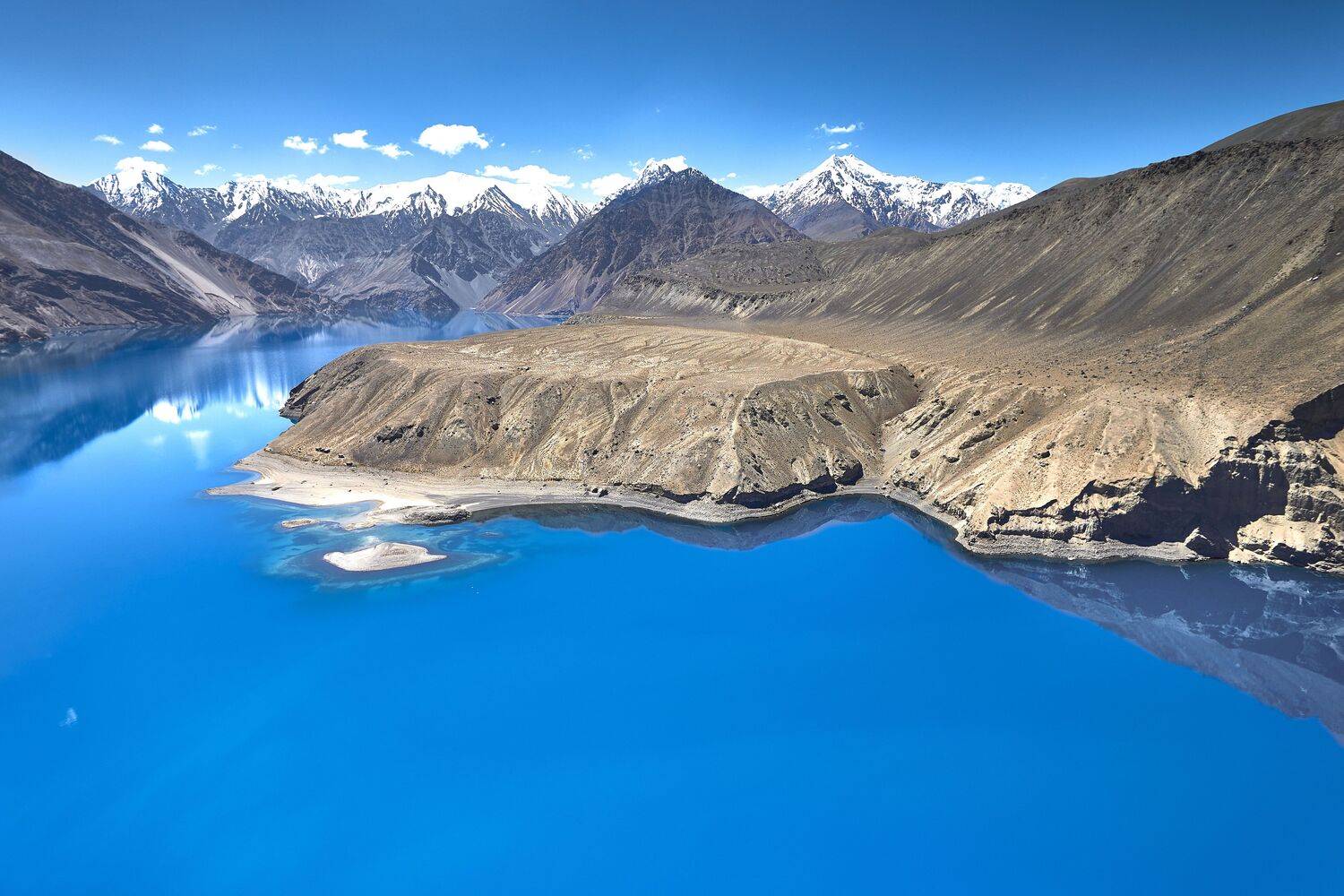
The road ends at the village of Barchidev, and from there, travelers must walk for about 9-10 hours along the Murgab River, navigating steep climbs to reach the lake. A trek to the giant Usoy Dam, combined with a glimpse of the piercing blue of Lake Sarez, will provide some of the most profound experiences that wild nature can awaken in a person.

Important: In addition to the GBAO entry permit, visitors to Lake Sarez also need approval from Tajikistan’s Emergencies Committee.


Eastern Pamir: The Fantastic Murgab

Eastern Pamir greets travelers with truly otherworldly landscapes. The Murgab district is a land of cold lakes, desert plateaus, and silence so profound that it feels almost tangible. At altitudes exceeding 3,500 meters, it seems as though the sky has come closer and the air has become more transparent.

A true jewel of Murgab is Kara-Kul, Tajikistan's largest lake, whose name translates to "Black Lake." It is located in the crater formed by a meteorite impact. The lake’s saline waters change color from azure to deep black.
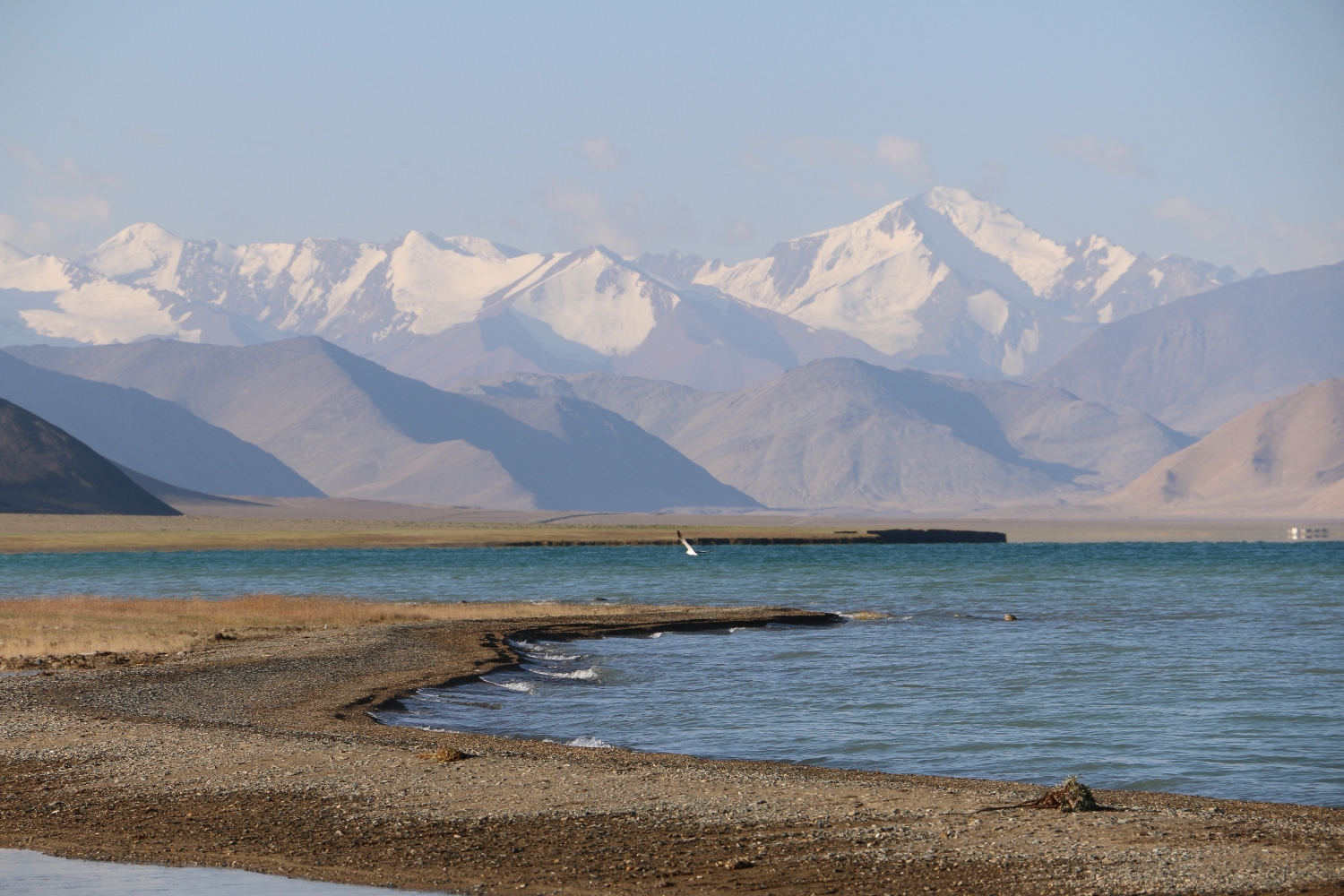
Equally beautiful are the freshwater lakes Yashilkul ("Green Lake") and Bulunkul, located close to each other. Known for their mirror-like surfaces and abundant trout, these lakes offer breathtaking views. At the junction of Ishkashim and Murgab districts lies Zorkul Lake, the source of the Pamir River, which is one of the sources of the mighty Amu Darya.

The center of the district, Murgab, is the highest settlement in the CIS (3,600 meters). Here, it’s worth visiting the local market, located in shipping containers, where you can find everything from spare parts to yak wool products.
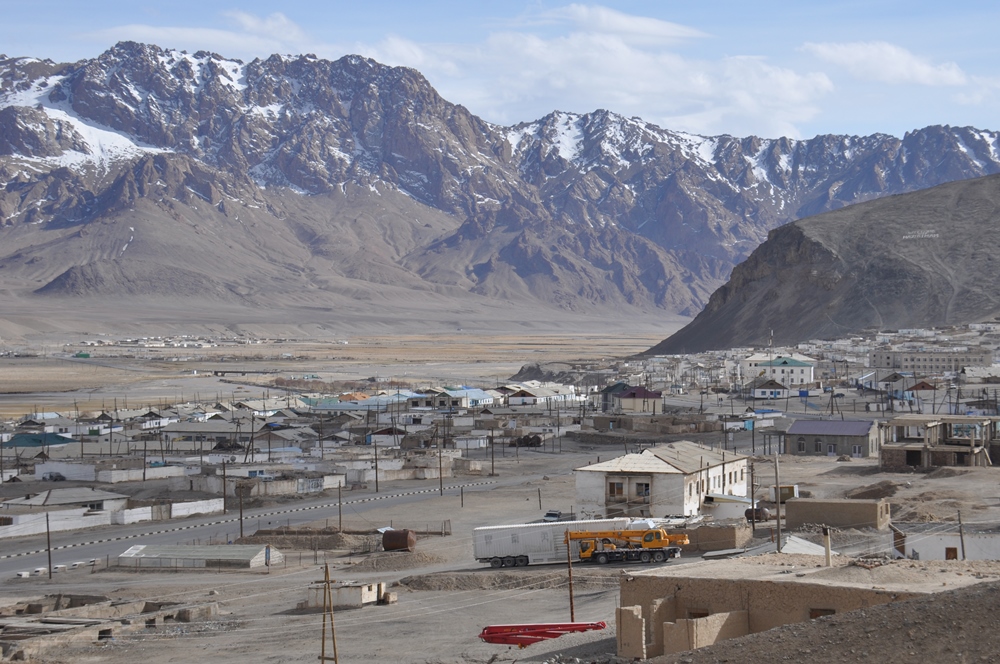
In the surrounding area, you can discover ancient petroglyphs, taste local kumis, see real yaks, and experience what it feels like to be at the edge of the world.

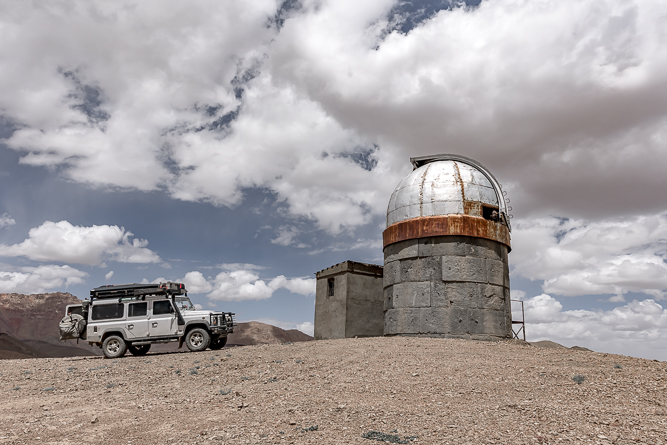
Not far from the settlement of Murgab, at an altitude of 4,350 meters, stands the Shorbuk Observatory, considered one of the highest astronomical stations in the world. Once, this observatory served as a frontier for space exploration and infrared radiation studies, chosen for its phenomenally clear and dry air.

Currently, the station is no longer operational, but its abandoned buildings and old telescopes still exude a mystical atmosphere. Despite its state of decay, a visit here is worth every kilometer of the journey, offering incredible views of the seven-thousanders of Chinese Xinjiang — Muztagh-Ata and Kongur.
 

Mountaineering in the Pamirs: only stars are higher

For mountaineers, the Pamirs are the ultimate challenge. The region is home to three legendary seven-thousanders: Ismoil Somoni Peak (7,495 meters), Lenin Peak (7,134 meters, now named Abu Ali ibn Sino in Tajikistan), and Korzhenevskaya Peak (7,105 meters, now known as Ozodi Peak), as well as several peaks over 6,000 meters. This is a land of extreme altitudes where physical strength, endurance, and immense courage are essential.

Each ascent in the Pamirs is a serious multi-day expedition for those who are ready to take on the forces of nature. The path to the summits begins in base camps, such as the famous Moskvina Glade, which can only be accessed by helicopter.
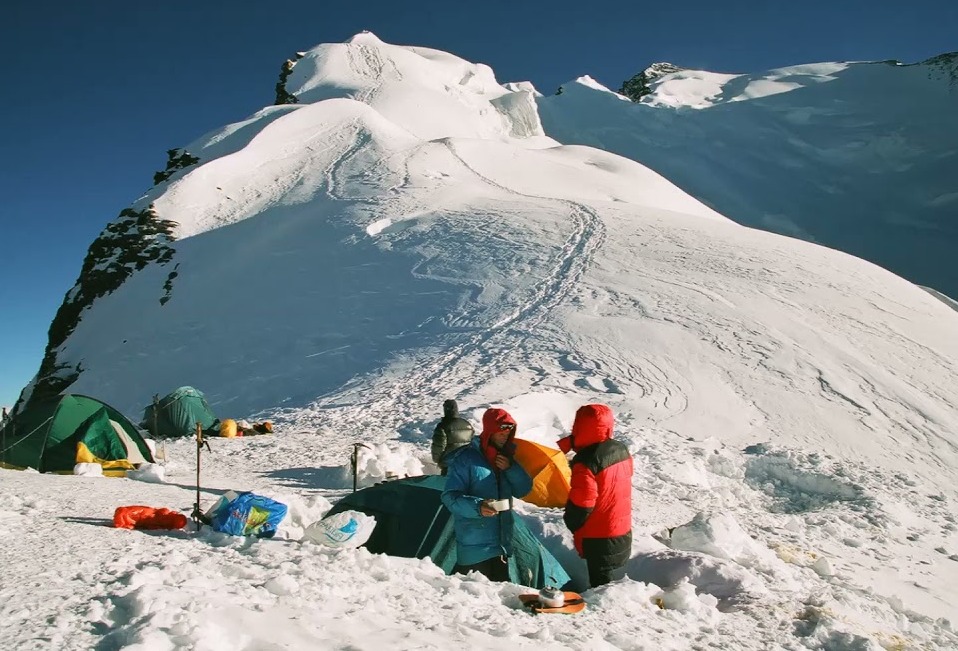
Harsh weather conditions — gusty winds, sudden snowstorms, and treacherous crevasses in glaciers — make the Pamirs a school of survival. But the reward for overcoming these challenges is the view from the "Roof of the World," where clouds lie far below, and the horizon stretches across several great mountain ranges.

Important: Any ascent route must be reported to the Tajikistan Emergency Situations Committee (KChS).

GBAO is a region of true contrasts, where icy peaks coexist with the life-giving power of crystal-clear waters. The Pamirs reveal themselves to each traveler in their own way, but they invariably leave a deep mark on the heart of anyone who dares to embark on this journey.

Local travel companies can help you plan your route and organize your trip:

 ·         Badakhshon Travel (Tel. +992 935556856, 935711349)

·         "Bomi Jahon Tour" (Tel. +992 935637141, 935632992)

·         "Nuri Kuhiston" (Tel. +992 935817560, 919021030, 918708337)

·         Silkway Adventure (Tel. +992 935757800, 934271717)

·         "Buzi Kuh" (Tel. +992 987230982, 919990803)
  

Central Asia faces lower irrigation water reserves in 2026

0

Central Asia enters the upcoming growing season with lower water reserves compared to last year. A significant factor contributing to this is the considerably lower water inflow into the Aral Sea, which, during the first months of the interseasonal period, received only about two-thirds of the expected volume.

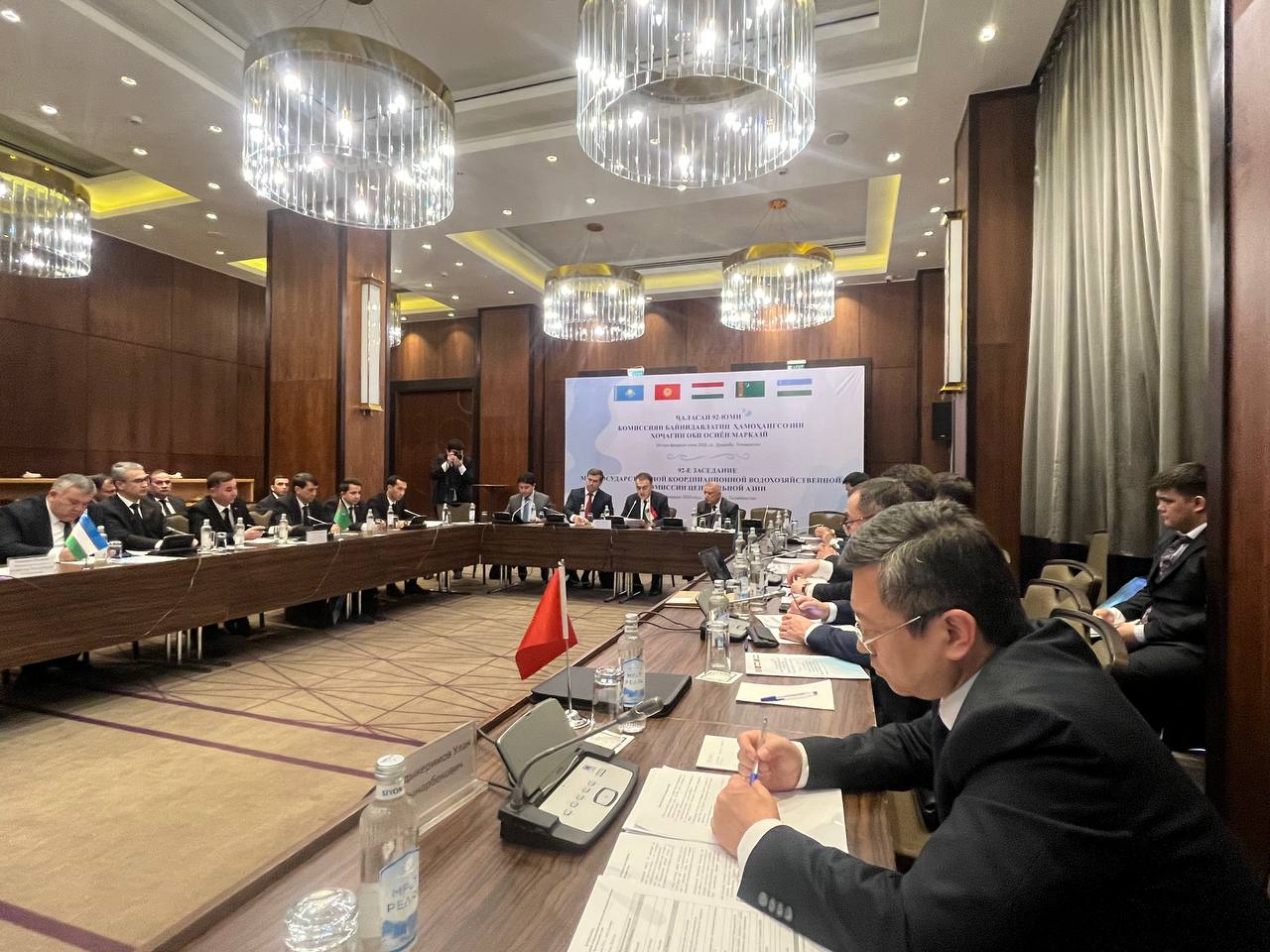
After the 92nd meeting of the Interstate Coordination Water Commission, the official results for the 2025–2026 interseasonal period were released. The report includes data on the usage of water resources by countries in the region, water flow levels in the Amu Darya and Syr Darya rivers, as well as the current state of reservoirs.


Amu Darya: water levels significantly below normal

The Amu Darya basin experienced an interseason with reduced water flow. As of February 11, the water flow level was only 66.8% of the normal rate. In comparison, last year this figure was 101.8%, indicating that the river was almost in a full-flow condition.

The decrease in water inflow affected water accumulation in the Tuyamuyun Reservoir. As of February 10, 2026, its volume stood at 4,349 million cubic meters, which is 610 million cubic meters lower than last year’s level of 4,959 million cubic meters.

Due to the more difficult situation, flushing irrigation in the lower reaches of the river began only on February 10, while last season it started on December 15.

Tajikistan fully used its water allocation — 2,073.4 million cubic meters, which is 100% of the allocated volume. Turkmenistan used 3,439.5 million cubic meters, or 96% of its allocated limit, while Uzbekistan used 2,600.4 million cubic meters, or 75.3% of its share.

Over the course of four months, 935 million cubic meters of water were directed to the Amu Darya delta and the Aral Sea, compared to the planned 1,400 million cubic meters — about two-thirds of the planned volume.

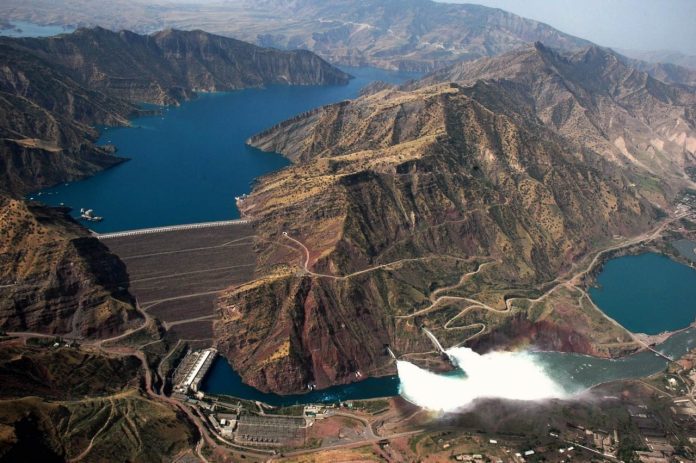
The operation of the Nurek Reservoir followed the approved schedule. The inflow of water was 2,854.6 million cubic meters, while the release amounted to 5,084.3 million cubic meters. By the end of the reporting period, the reservoir volume reached 7,910 million cubic meters, slightly higher than the forecasted level.


Syr Darya: above forecast, but below normal

The situation in the Syr Darya basin appeared more stable. With an overall inflow norm of 11,782 million cubic meters, the forecast was 9,170 million cubic meters. In reality, 10,255 million cubic meters of water arrived, which is 1,085 million cubic meters above the forecast but still only 87% of the normal rate.

Inflows to the upper reservoirs matched the forecast and totaled 3,591 million cubic meters. Lateral inflow was higher than expected, partially compensating for the water shortage.

A total of 15,536 million cubic meters of water was released from reservoirs during the interseason, which is 99% of the agreed schedule. Water distribution to the countries occurred within the established limits. Of the total limit of 2,633 million cubic meters, 2,155 million cubic meters were used, or 82%.

The majority of the volume was directed to Uzbekistan — 1,954 million cubic meters. Tajikistan used 35 million cubic meters against a limit of 173 million cubic meters.

As of February 11, 2026, water reserves in the Naryn-Syr Darya cascade reservoirs totaled 16,774 million cubic meters, which is 2,511 million cubic meters less than the previous year.

Navrouz: a festival with a millennia-old history

0

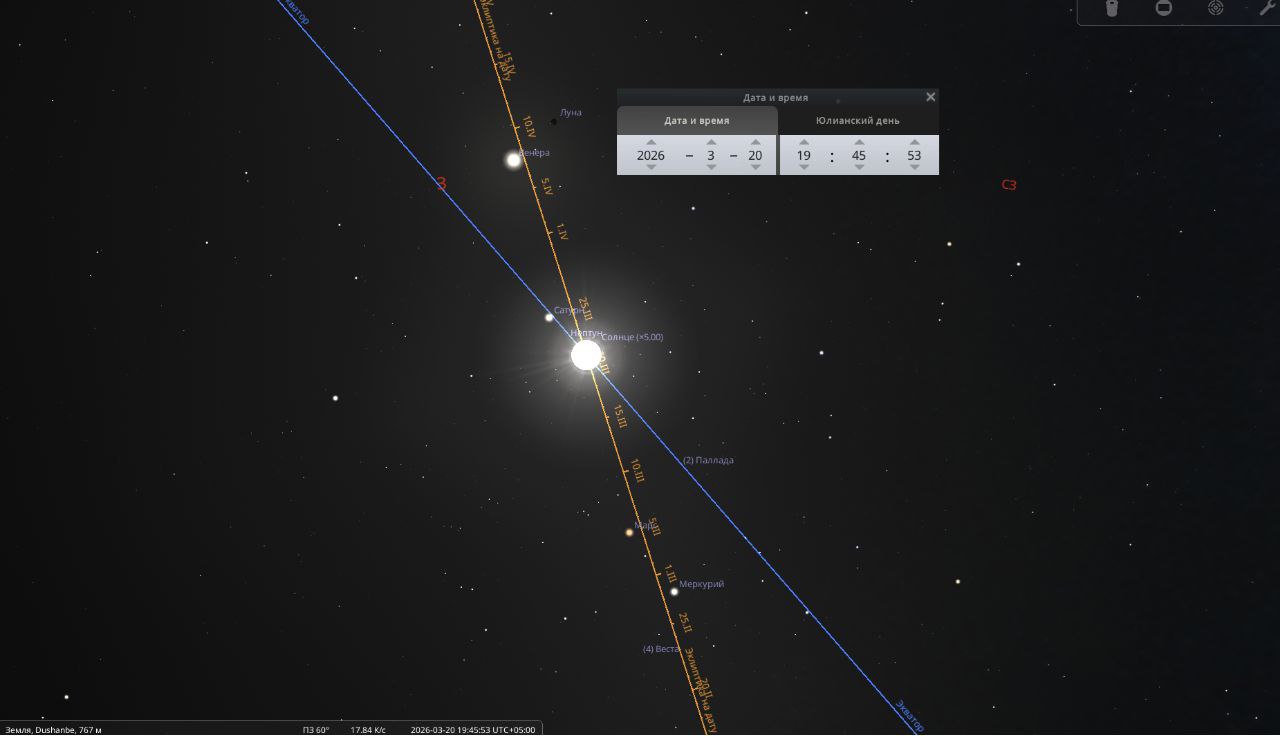
This year, Navrouz in Tajikistan will begin on March 20 at 14:01:25 Dushanbe time. According to astronomical calculations, at this moment, the center of the Sun's orbit will move from the southern hemisphere to the northern hemisphere, Anvar Bourizoda, Director of the Institute of Astrophysics at the National Academy of Sciences of Tajikistan, told Asia-Plus in an interview. 

He explained that this moment in astronomical tradition is called "tahvili sol" — the start of the new year according to the solar calendar. At this time, the center of the solar disk, in its visible motion, crosses the boundary between the southern and northern hemispheres of the celestial sphere.

Additionally, according to Bourizoda, the point where the ecliptic (the Sun's visible path) intersects the celestial equator is called the vernal equinox. Thus, at the moment of Navrouz, the Sun will be located at the vernal equinox — at the intersection of the celestial equator and the ecliptic.

This moment marks the beginning of the astronomical spring and is a significant milestone for the Navrouz celebration, which is observed by Tajikistan and other people across Central Asia.

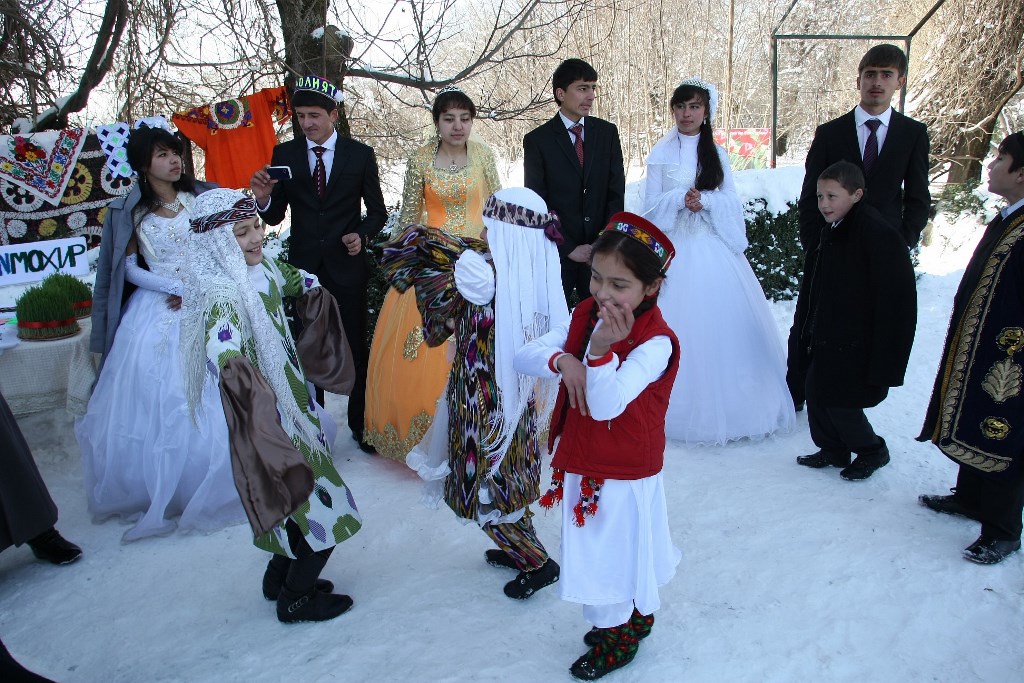
Navrouz is not only the arrival of spring but also an ancient festival with rich symbolism dating back thousands of years and being celebrated by millions around the world.

This festival, with millennia of history, holds special significance for the people of Tajikistan, where every tradition and every element of the festive table carries its own meaning.

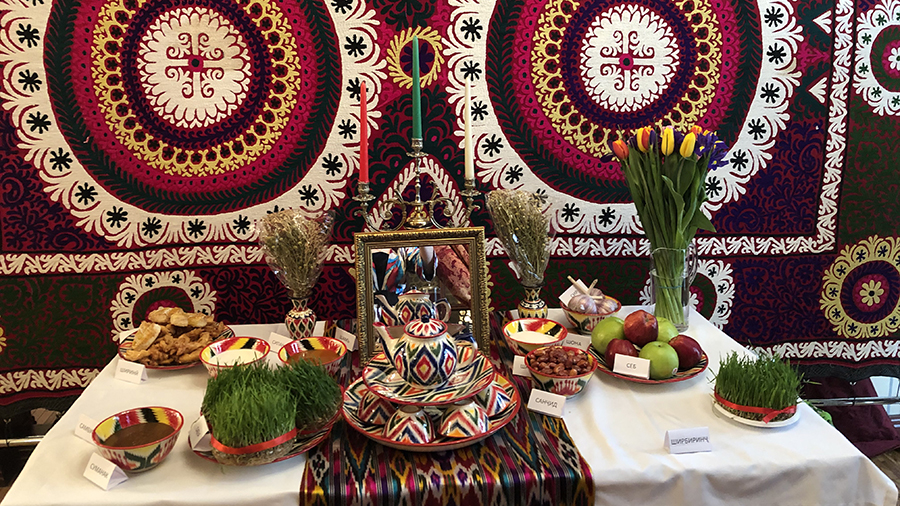
The holiday dishes and rituals, such as sprouted wheat, painted eggs, mirrors, and sumanak, symbolize renewal of life, fertility, family unity, and hope for a better future. Each of these elements not only decorates the table but also carries a philosophical meaning passed down from generation to generation.

This year, the holy month of Ramadan in Tajikistan will last until March 20. As a result, the celebration of Eid al-Fitr falls on March 21, but the date of celebration of Eid al-Fitr has not yet been officially confirmed. This special day for Muslims is marked by prayers and festive celebrations to mark the end of fasting.

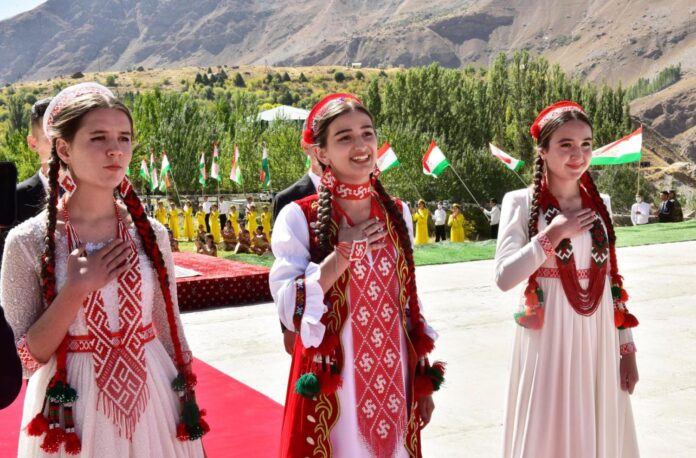
 In Tajikistan, Navrouz is celebrated with great enthusiasm and preparation, beginning long before the actual event. Throughout the country, traditional musical instruments such as the karnay, surnay, and dutar fill the air, creating a festive atmosphere.


Symbols of Navrouz

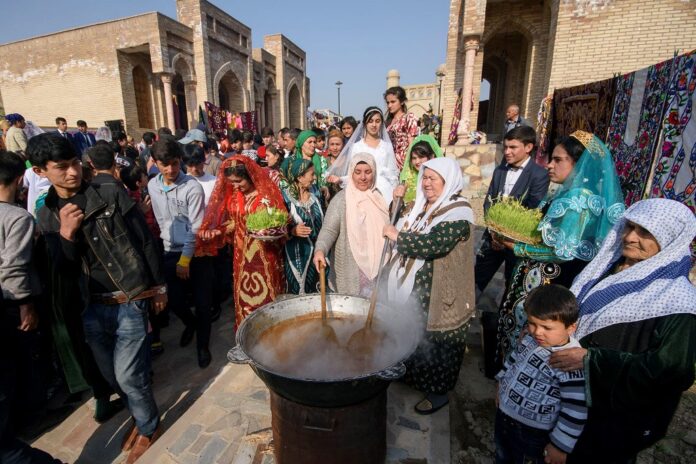
A special feature of the preparations for the holiday is the installation of "Sabza" — a composition of sprouted wheat shoots, symbolizing renewal and the start of new life. The festive table is always adorned with aromatic sumanak — the main dish of Navrouz, along with other traditional foods like sambusa with greens (alafin), fried dumplings tushbera, grain soup gandumkucha, and juicy meat barabiryun.

An essential part of the festive table is the haft sin or haft shin — a tradition where seven dishes are placed on the table, each beginning with the letter "s" or "sh."


Fire and rites of Navrouz

One of the most important symbols of Nowruz is fire. Numerous rites and beliefs are associated with it. It is believed that walking around a fire in a circle purifies a person from bad luck and brings health, prosperity, and peace of mind in the coming year.

Nowruz is also a time of hopes and new beginnings. Traditionally, many young people use this time to seek out future brides, with girls showcasing their culinary and domestic skills. Rejecting proposals during Nowruz is considered an ill omen.


Conclusion

Navrouz in Tajikistan is not just a celebration of spring but also a symbol of renewal, hope, and new beginnings. The celebration involves numerous traditions, rituals, and symbols, making it an important cultural event for the entire nation.

It is to be noted that in Iran, Nowruz—the Persian New Year and spring equinox—will also occur on Friday, March 20, 2026. The exact astronomical moment of the vernal equinox marks the beginning of the new year, which typically falls on March 20 or 21.

Over 700 civilians killed in Iran since war began, rights group reports

0

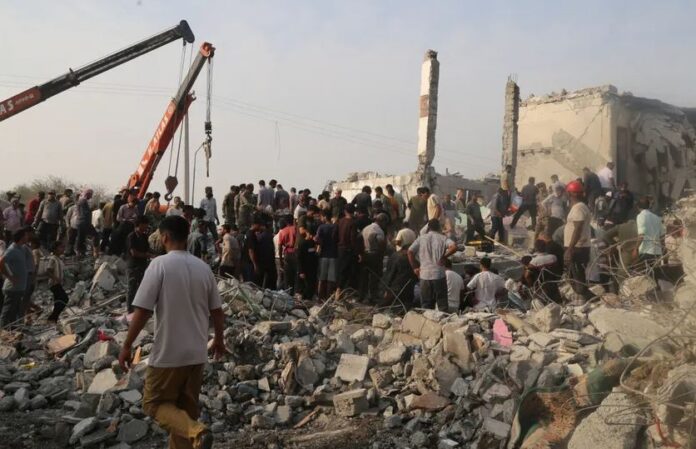
CNN reports that according to a report from the U.S.-based Human Rights Activists News Agency (HRNA), at least 742 civilians have been killed in Iran since the war began, including 176 children. Over 900 civilians have been reported injured, with at least 85 deaths occurring in the past 24 hours alone. The group has stated that it is in the process of verifying hundreds of additional reported fatalities.

The HRNA also reported significant damage to religious and residential buildings in the last 24 hours. Among the structures affected were a mosque in Karaj, a city near Tehran, multiple residential buildings, a governor's office south of the capital, and the Shahid Bahonar Pier in Bandar Abbas on the Strait of Hormuz. In addition, Iran has claimed that hospitals in Tehran have been damaged, CNN reported.

Military targets were reportedly also hit during the same period, including the headquarters of the Kurdistan law enforcement command and the Kurdistan border guard command center in the western city of Sanandaj. An air base in Isfahan and an army base in Tehran were also reportedly damaged, according to HRNA.

CNN has noted that it cannot independently verify the accuracy of these reports, and HRNA has stated that their analysis is preliminary and subject to change as further information becomes available.

According to Meduza reports, on the first day of the war in the Middle East, February 28, a U.S. and Israeli missile strike hit the Iranian city of Minab, located 30-40 kilometers from the strategically important Strait of Hormuz. The missile struck the Shajareh Tayyebeh girls' school, where classes were taking place at the time.

The attack occurred between 8:00 and 10:00 a.m. local time. According to Islamic traditions, weekdays in Iran begin on Saturday. Almost immediately after the strike, Iranian state media reported that 40 people were killed in the school at the time of the attack.

The district prosecutor in Minab confirmed that most of the victims were students, with additional fatalities among school staff and parents.

According to Iran’s Tasnim news agency, 148 people were killed, and 95 others were injured in the attack. The exact number of children among the victims has not been clarified.

On March 1, Iran's Foreign Minister Abbas Araghchi confirmed that 140 children were among those killed.

On March 3, preparations were underway in Minab for the burial of the victims. The funerals are scheduled for that day.

BBC points out that conducting an independent verification of the official death and injury tolls is currently impossible, as international organizations are often denied visas to enter Iran, severely limiting information gathering in the country.

Neither U.S. nor Israeli officials have commented on the strike in Minab. U.S. military officials told The Washington Post they are "investigating" reports of the attack.

Tajik IT entrepreneur wins Gabriel Al-Salem Award for excellence in consulting

0

Tajik IT entrepreneur Muboriz Subhonov and his company SHEDEVR have been awarded the prestigious international Gabriel Al-Salem Award for Excellence in Consulting. This award, one of the leading global honors in management consulting, was given for outstanding achievements in consulting and "green" digitalization.

The significance of this achievement is emphasized by the fact that the project for which the company was recognized aligns with Tajikistan's priorities in digitalization and innovative development.

The award was established by the Gabriel Al-Salem Foundation, a non-profit organization from the United States. It is awarded annually to consultants and companies worldwide for projects that demonstrate tangible results, social impact, and contributions to sustainable development. The jury evaluates applications based on their alignment with the UN Sustainable Development Goals (SDGs), innovative solutions, and measurable impact on society and business.


SHEDEVR’s school management automation project

SHEDEVR won the award for its 2025 project titled Digital Transformation for Quality Education: Automating School Management in Tajikistan, which involves a comprehensive digital platform to automate the management of the private school "Imperiyai Donish."

The project achieved the following results:

·         Replacing paper-based processes with digital solutions, creating an eco-friendly paperless system;

·         Strengthening communication between parents, students, and teachers;

·         Optimizing school administration;

·         Enhancing management efficiency and the quality of the educational process;

·         Making an important contribution to the digital transformation of education in Tajikistan.

The project was implemented with the support of a grant from the European Bank for Reconstruction and Development (EBRD), which helped strengthen its sustainability and scalability, including in the CIS countries and the UAE.


Tajik project’s international competitiveness

SHEDEVR passed a multi-stage selection process among applications from around the world and emerged as a winner alongside other strong international projects.

Other 2025 awardees included:

·         Total Synergy Consulting (India) — sustainable tourism project;

·         UNISON Group (Kyrgyzstan) — projects in sustainable energy;

·         CMC-Ukraine (Ukraine) — business recovery and resilience;
and other initiatives focused on social, environmental, and economic development.

This achievement confirms the high level of the Tajik project and its competitiveness on the international stage.


Award history and significance for Tajikistan

The award is named after Gabriel Al-Salem, an American consultant and one of the pioneers of the consulting industry in Central Asia. After his tragic death in 2010, his colleagues and partners established the foundation and international award to promote professional standards and international cooperation.

Since 2012, the award has annually brought together experts and projects from various countries, becoming a major platform for evaluating best practices in consulting.

For Tajikistan, SHEDEVR's victory signifies:

·         Strengthening the international image of the domestic IT sector and consulting industry;

·         Demonstrating the potential of national digital solutions;

·         Confirming the global demand for local developments.

The award shows that projects implemented in Tajikistan meet international standards and can participate in global professional initiatives.

Trump says U.S. is “knocking the crap” out of Iran, warns ‘big wave’ still to come

0

U.S. President Donald Trump said Monday that the American military is intensifying its operations against Iran, warning that a larger phase of action is imminent.

In a nine-minute phone interview with CNN, Trump said the United States is delivering significant blows to Iranian targets but suggested that the most substantial military action has yet to begin.

“We’re knocking the crap out of them,” Trump said. “I think it’s going very well. It’s very powerful. We’ve got the greatest military in the world and we’re using it.”

The president addressed a range of issues during the interview, including the potential duration of the conflict, what he described as unexpected levels of Iranian retaliation, and questions surrounding Iran’s political succession plans.

When asked whether the United States is taking additional steps beyond military action to support the Iranian people in regaining control of their country from the current regime, Trump responded affirmatively.

“We are indeed,” he said, without elaborating. “But right now we want everyone staying inside. It’s not safe out there.”

Trump also cautioned that conditions are likely to deteriorate further.

“We haven’t even started hitting them hard,” he said. “The big wave hasn’t even happened. The big one is coming soon.” 

Tajik air carrier temporarily suspends Dushanbe–Dubai flights

0

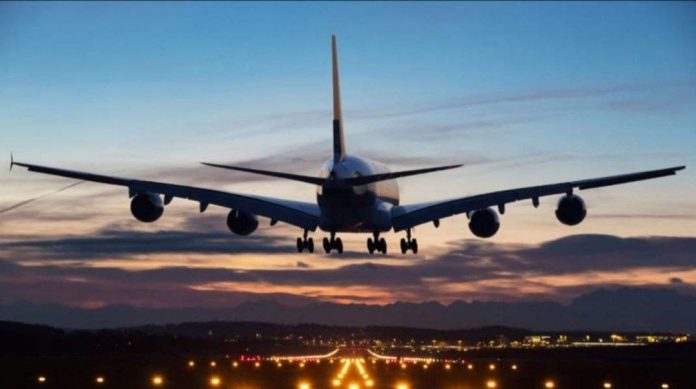
Tajik air carrier, Somon Air, has temporarily suspended flights on the Dushanbe–Dubai–Dushanbe route until March 6, 2026, inclusive, the airline’s press service reported.

The decision was made due to current restrictions on the use of airspace in the Middle East region.

Passengers holding tickets for the affected period are advised to check the status of their flights in advance on the airline’s official website and to contact the call center for additional information.

Consultations are available by phone at +992 44 640 40 49 and +992 44 640 40 50, as well as via WhatsApp at +992 93 777 74 59.

Meanwhile, Meduza, citing TASS, reported yesterday that the first passenger aircraft since the outbreak of the military conflict in the Middle East departed from Dubai International Airport heading to Samarkand.

According to Meduza, TASS, citing a source within air traffic circles, reported that the first passenger aircraft since the outbreak of the military conflict in the Middle East has departed from Dubai International Airport. According to the source, the aircraft is heading to Samarkand, Uzbekistan. The Telegram channel reportedly also said that a flight from Dubai to Dhaka had departed.

Earlier, the emirate’s press service reportedly stated that Dubai’s international airports may resume operations in a limited capacity during the day. At the same time, local authorities advised passengers not to travel to airports until airlines contact them directly to confirm departure times.

A few hours earlier, the first passenger flight in more than two days departed from Abu Dhabi to Moscow’s Sheremetyevo Airport, TASS noted. Several other flights have also left the UAE capital.

Amid escalating tensions and ongoing exchanges of strikes between Iran, the United States, and Israel since February 28, thousands of tourists remain in the Persian Gulf countries, including the United Arab Emirates. In this context, international airlines are canceling or rescheduling flights to and from the region.

Tajikistan’s Foreign Ministry urges citizens to refrain from travel to the Middle East

0

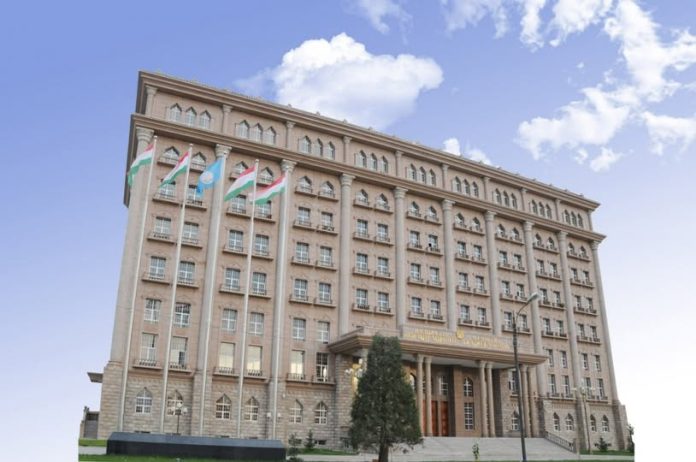
The Ministry of Foreign Affairs of Tajikistan has advised citizens to temporarily refrain from traveling to countries in the Middle East due to the deteriorating and unstable security situation in the region.

The ministry emphasized that until the situation stabilizes, citizens should avoid planning trips to countries in the region.

Tajik nationals currently in Middle Eastern countries are advised to strictly comply with security requirements and instructions issued by local authorities, avoid crowded places and potentially dangerous areas, carry identification documents and communication devices at all times, and closely follow official information and announcements from the diplomatic missions of the Republic of Tajikistan.

The ministry noted that in the event of emergencies or if assistance is required, citizens should contact Tajikistan’s diplomatic missions.


Contacts of diplomatic missions:

Embassy of Tajikistan in Iran

Mobile: +989363253147

WhatsApp: +992918818889


Embassy of Tajikistan in Saudi Arabia and Bahrain

Tel.: (+966 11) 5120333

WhatsApp: +966563417592


Embassy of Tajikistan in the UAE

Tel.: +971 24417950

WhatsApp: +971581531574

Consulate General of Tajikistan in Dubai

Tel.: +971 43945814

WhatsApp: +971585081221


Embassy of Tajikistan in Kuwait and Oman

Tel.: (+965) 25329896

WhatsApp: +96565762307


Embassy of Tajikistan in Qatar

Tel.: +974 44 12 39 06

WhatsApp: +97439902438


Embassy of Tajikistan in Turkmenistan

Tel.: +99391827271

WhatsApp: +9269738322


Embassy of Tajikistan in Azerbaijan

Tel.: +994513484032

WhatsApp: +9943484032


Embassy of Tajikistan in Pakistan

Tel.: (+92518900222)

WhatsApp: +923328686050. 

Ambassador: No Tajik citizens injured in attacks on Iran

0

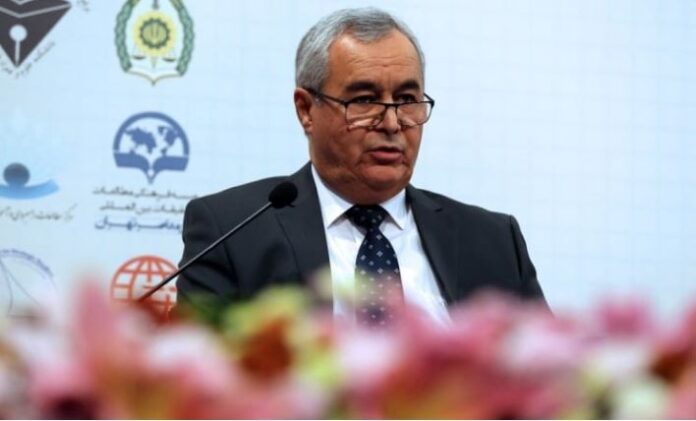
No citizens of Tajikistan were injured as a result of the attacks on Iranian territory, Tajikistan’s Ambassador to Iran, Nizomiddin Zohidi, said in an interview with Radio Liberty’s Tajik Service, known locally as Radio Ozodi.

According to him, approximately 300 Tajik citizens are currently in Iran. More than 200 of them have contacted the embassy seeking assistance in returning home.

The ambassador noted that some Tajik nationals are in Iran for trade, tourism, and medical treatment. Following the closure of the country’s airspace, many expressed a desire to leave.

Zohidi stated that on March 1, 15 Tajik citizens were repatriated via Azerbaijan. In the coming days, around 50 more people are expected to travel through the Serakhs border crossing into Turkmenistan, from where they will continue on to Tajikistan.

“Some citizens intend to return home through Azerbaijan. Those located in Iran’s Khorasan province prefer to leave via Turkmenistan. We have prepared the necessary lists and coordinated the arrangements with the embassies of Turkmenistan and Azerbaijan in Iran,” the ambassador said.

Earlier, the Tajik Embassy in Tehran urged its citizens to remain calm, stay vigilant, and closely follow official information and recommendations issued by the embassy and Iranian authorities. Citizens were advised to avoid areas near military and government facilities and to refrain from taking photos or videos throughout the country.

The embassy in Tehran provided the following contact numbers: +98 02122299584; +98 02122834650; +98 9363253147; +98 9104519815; +98 9379743508; +98 9304334234.

Amid escalating tensions in the Middle East, the Tajik Embassy in the United Arab Emirates and the Consulate General in Dubai also advised Tajik citizens to take precautionary measures.

The diplomatic missions stated that all necessary steps are being taken to ensure the safety and protection of the rights and interests of Tajik citizens. They also maintain constant communication with the competent authorities of Tajikistan and the UAE.

Tajik nationals in the Emirates were urged to remain calm, avoid panic, refrain from visiting public places unless necessary, and not travel to airports without confirming the status of airspace and flight schedules.

Citizens were further advised not to spread rumors or unverified information, to rely solely on official statements from local authorities, and to keep identification documents, communication devices, and essential items with them at all times.

In case of emergency, citizens may contact:

Embassy of Tajikistan in the UAE:

[email protected]
[email protected]
Tel.: +971 24417950; +971 581531574 (WhatsApp)

Consulate General of Tajikistan in Dubai:

[email protected]
[email protected]
Tel.: +971 43945814; +971 585081221.