DUSHANBE, December 12, 2012, Asia-Plus – Silk Road Newsline reports that a new report by the U.S. National Intelligence Council (NIC) projects that interstate conflicts over water in Central Asia cannot be ruled out by 2030.
“Water may become a more significant source of contention than energy or minerals out to 2030 at both the intrastate and interstate levels,” according to “Global Trends 2030: Alternative Worlds,” a 140-page report prepared by the office of the National Intelligence Council of the Office of the Director of National Intelligence and released in Washington on December 10.
“The world’s major belt of water stress lies across northern Africa, the Middle East, Central and Southern Asia, and northern China,” says the report.
“The lesser (and in many cases) less well-known watersheds across this belt—including the Jordan in Israel/Palestine, the Kura-Ural and Kizilimak (adjacent to the Tigris & Euphrates and largely in Turkey), Syr Darya and Amu Darya (at one time more substantial rivers feeding the Aral Sea), and Lake Balkhash and Tarim in Central Asia—are mostly under high stress,” the report argues.
According to the U.S. intelligence community, water stress is present when a country’s or region’s annual water supply is less than 1,700 cubic meters per person per year.
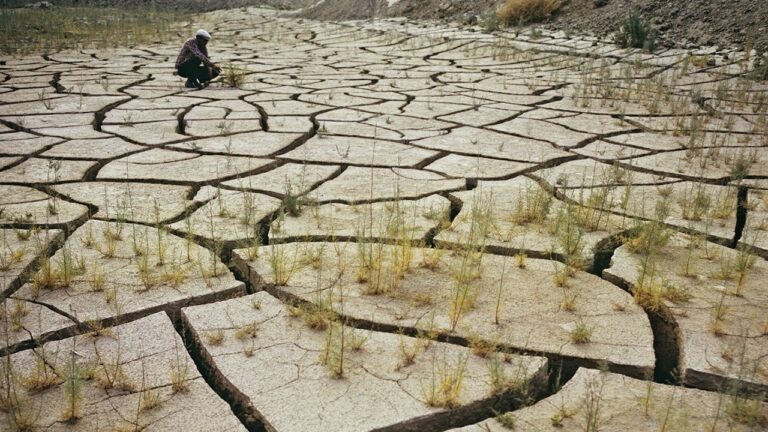
“Historically, water tensions have led to more water-sharing agreements than violent conflicts, but a number of risks could change this past pattern, including high levels of population growth in affected areas and rapid changes in the availability of water, such as, for example, from severe droughts,” the report projects. “Intrastate disruptions and conflicts probably are more likely to be the immediate result as pressures build within countries for relief and migration from impacted areas puts added strains on other areas. However, the fact that many of the river basins in the most affected water-stressed areas are shared means that interstate conflict cannot be ruled out—especially in light of the other tensions ongoing between many of these countries.”
By 2030, the report continues, “Demand for food, water, and energy will grow by approximately 35, 40, and 50 percent respectively owing to an increase in the global population and the consumption patterns of an expanding middle class. Climate change will worsen the outlook for the availability of these critical resources. Climate change analysis suggests that the severity of existing weather patterns will intensify, with wet areas getting wetter and dry and arid areas becoming more so. Much of the decline in precipitation will occur in the Middle East and northern Africa as well as western Central Asia, southern Europe, southern Africa, and the US Southwest.”
“We are not necessarily headed into a world of scarcities, but policymakers and their private sector partners will need to be proactive to avoid such a future. Many countries probably won’t have the wherewithal to avoid food and water shortages without massive help from outside,” the report projects.
Formed in 1979, the National Intelligence Council describes itself as a “center of strategic thinking within the U.S. government, reporting to the Director of National Intelligence (DNI) and providing the President and senior policymakers with analyses of foreign policy issues that have been reviewed and coordinated throughout the Intelligence Community.”
Produced every four years for the incoming U.S. president, the Global Trends report is delivered between Election Day and Inauguration Day. The report assesses critical drivers and scenarios for challenges that will confront the global community during the next 15-20 years.