
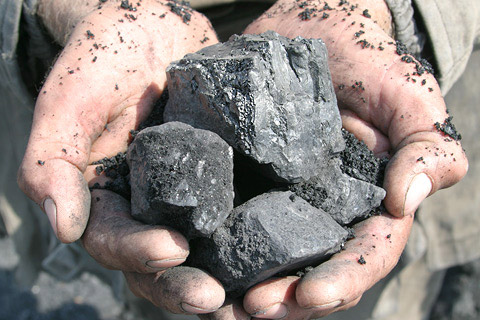
DUSHANBE, August 14, 2013, Asia-Plus – Establishment of mining and chemical plant for processing and concentrating coking coal from the Fon-Yaghnob field could solve the issue of providing energy security of the Tajik Aluminum Company (TALCO), Professor Haidar Safiyev, Director of the Metallurgical Research Institute, TALCO told Asia-Plus in an interview.
“Taking into account increasing natural-gas prices, TALCO has installed gas generators for gasification of coal,” Safiyev noted.
Coal gasification is the process of producing coal gas, a type of syngas (synthesis gas) – a mixture of carbon monoxide (CO), hydrogen (H2), carbon dioxide (CO2) and water vapour (H2O)–from coal.
Safiyev, however, considers that the establishment of the mining and chemical plant for processing and concentrating coking coal from the Fon-Yaghnob field is the more advanced solution to the problem. “More than 500,000 tons of metallurgical coke, 300 million cubic meters of coke gas and 30,000 tons of other valuable chemical products can be produced from 1 million tons of coking coal,” the Metallurgical Research Institute directors aid.
Metallurgical coke is used as a fuel and as a reducing agent in smelting iron ore in a blast furnace.
We will recall that Tajikistan has reduced aluminum productions in recent years. Over the first six months of this year, Tajikistan has reportedly produced 117,600 tons of primary aluminum, which was 18.7 percent or 271 tons fewer than in the same period last year. Tajikistan has exported little more than 109,000 tons of primary aluminum over the same six-month period, which was 31,700 tons fewer than in January-June 2012.
During the report period, an average price for one ton of primary aluminum was 1,914 U.S. dollars, 166.00 U.S. dollars fewer than in January-June 2012.
Tajik experts attribute considerable reduction in aluminum production to disruption in natural gas supply from Uzbekistan.
Tajikistan produced 272,500 tons of aluminum last year, which was 2.0 percent fewer than in 2011. The share of aluminum in Tajikistan’s exports fell from 54.6 percent in 2011 to 39.5 percent in 2012.
Tajikistan’s aluminum exports over the first ten months of 2012 fell to 221,500 tons, which was 12,300 tons fewer than in the same period in 2011. The country’s aluminum exports reportedly declined due to the fall in the international aluminum prices.
The aluminum plant, run by the Tajik Aluminum Company (TALCO), was launched in late March 1975. It is one of the ten largest aluminum smelters in the world and provides up to 70% of the country’s foreign currency earnings, consuming 40% of the country’s electrical power. Tajikistan does not mine alumina but imports the raw material through tolling arrangements.