DUSHANBE, October 13, 2014, Asia-Plus — The leaders of the Eurasian Economic Community (EAEC) on October 10 formally dissolved the integration group in order to prepare for the Eurasian Economic Union (EES).
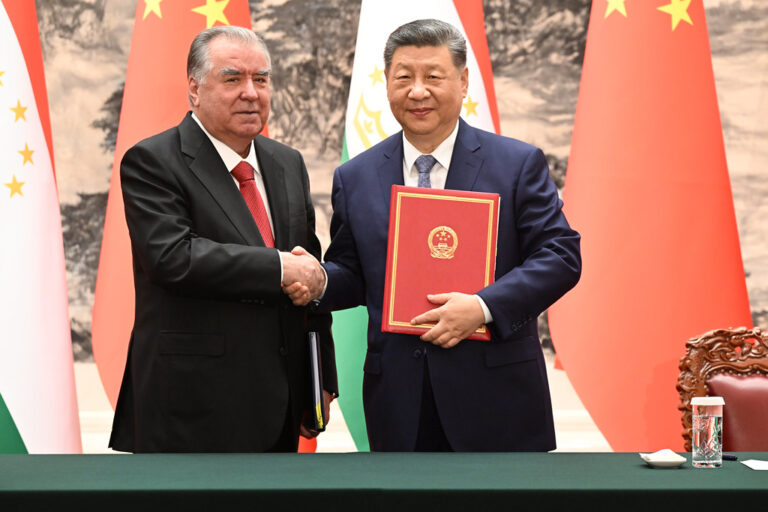
At the meeting in Minsk, the heads of state from Russia, Belarus, Kyrgyzstan, Kazakhstan, and Tajikistan signed an agreement on the abolition of the EAEC.
Russia media sources quoted Russian President Vladimir Putin as saying on the same day that none of the rich heritage of the Eurasian Economic Community should be lost and that the implementation of the agreements and other documents signed within the community would be continued.
Armenian President Serzh Sarkisian signed the agreement to join the EES and Armenia is now set to join Russia, Belarus, and Kazakhstan in the economic bloc when it comes into force on January 1, 2015.
Also in Minsk, Kyrgyz President Almazbek Atambayev expressed hope that his country would join by year”s end.
Meanwhile, Tajik President Emomali Rahmon said that Tajikistan was analyzing the EES legal documents and did not rule out that it might join.
Earlier, Belarusian President Alexander Lukashenko signed a law on the ratification of the EES, advancing a Russian-led drive to strengthen ties among former Soviet republics. Russian President Vladimir Putin signed the law ratifying the treaty on the creation of the EES between Russia, Belarus, and Kazakhstan on October 3.
The presidents of Russia, Belarus and Kazakhstan signed the Treaty on the Eurasian Economic Union in Astana, Kazakhstan on May 29, 2014. The signing of the EEU agreement reportedly brings together 170 million people onto a common market, making it a new powerful center for economic development.
The agreement seeks to launch the development of domestic trade, economic and cooperative ties, increase competitiveness of national production and strengthen the role of the union’s countries in the global economic system.
Under the treaty, the EEU will begin functioning as of January 1, 2015. It reportedly intensifies the economic cooperation among the three countries that was begun with the Customs Union. The presidents of the three countries are scheduled to meet in Minsk on October 10 to exchange ratification documents.
The Treaty is the basic document setting out the agreements between Russia, Belarus and Kazakhstan on establishing the Eurasian Economic Union in order to remove barriers to free movement of goods, services, capital and labor, and carry out coordinated, agreed or common policy in key economic sectors. The Treaty sets out the transition to the next integration stage following the Customs Union and the Common Economic Space.
The Eurasian Economic Community (EAEC) originated from the Commonwealth of Independent States (CIS) Customs Union of Belarus, Kazakhstan and Russia on March 29, 1996. The Treaty on the establishment of the Eurasian Economic Community was signed by the presidents of Belarus, Kazakhstan, Kyrgyzstan, Russia and Tajikistan in Kazakhstan”s capital Astana on October 10, 2000. On October 7, 2005 it was decided between the member states that Uzbekistan would join. Uzbekistan joined the EAEC in January 2006. Tashkent suspended its membership in the EAEC in October 2008. Freedom of movement without visa requirements has been implemented among the members. A Common Economic Space for the community was launched on 1 January 2010.