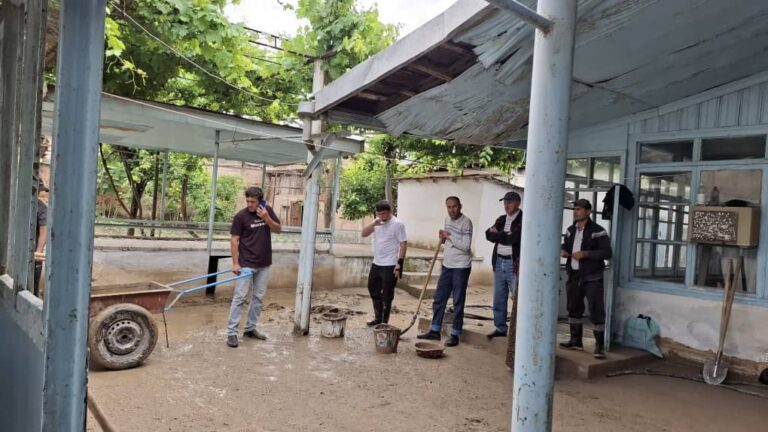
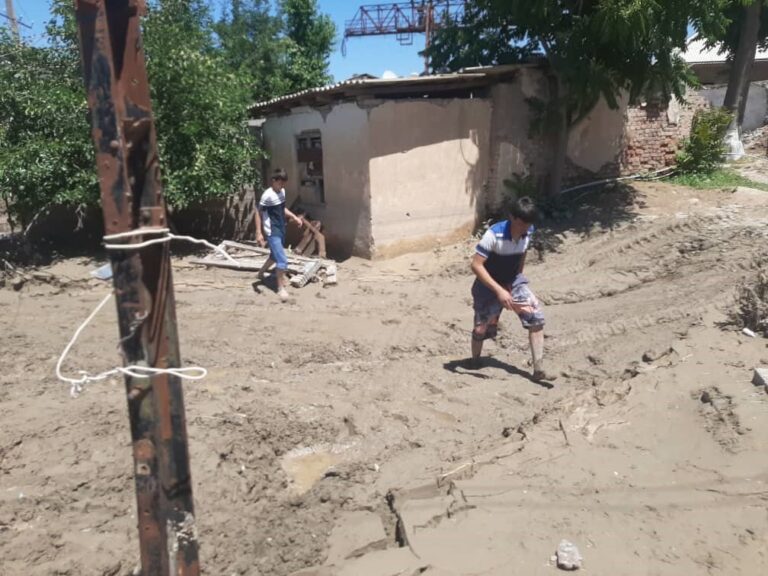
DUSHANBE, April 26, 2016, Asia-Plus — Asia and the Pacific, the world’s most disaster prone region, is home to many transboundary river basins that are perennially affected by large scale flooding. Recent advances in science and technology, especially space technology applications, have enabled longer lead times of up to five to eight days for flood forecasts in transboundary river basins, according to the United Nations Economic and Social Commission for Asia and the Pacific (ESCAP). These scientific advances, however, rarely reach the communities who live along these vast rivers. On average, communities receive one-day advance notice for evacuation.
ESCAP, in collaboration with the Regional Integrated Multi-Hazard Early Warning System (RIMES), has launched a toolkit that uses real-time satellite data and state-of-the-art flood modeling to improve flood forecasting in transboundary river-basins.
Floods are one of the most frequent natural disasters in Asia-Pacific, with devastating impacts on the poor and vulnerable populations who are dependent on agriculture for their livelihoods. About 70 percent of the global population exposed to the risk of river flood lives in the Asia-Pacific region. In 2015 alone, floods caused more than US$ 11 billion in economic damage in the region, much of which is attributed to large-scale transboundary floods.
The toolkit attempts to fill the gap between scientific innovations and their outreach to communities at risk. It provides operational and technical methods and tools on ways to utilize multiple sources of data and information. This includes space-based real-time data and new weather and hydrology models that will enable a longer lead time in flood forecasting, and enhance end-to-end early warning systems.
Countries that share transboundary river basins have different capacities in flood forecasting and early warning. The toolkit will be used by ESCAP to build capacities of flood forecasters, technical experts, disaster risk managers, and policymakers to strengthen preparedness to tackle recurrent river-basin floods.
Operationalizing the toolkit requires regional cooperation among countries. ESCAP is working with its member countries and partners to scale up regional efforts and strengthen the operational capacity of riparian countries to build resilience to devastating transboundary floods.