A powerful earthquake rocked the northeast Japanese coast on Tuesday, according to international media outlets.
The Telegraph reports lines of cars were seen snaking away from the coast in the pre-dawn hours after authorities issued a tsunami warning and urged residents to seek higher ground immediately. The warning was lifted nearly four hours later.
The magnitude 7.4 earthquake, which was felt in Tokyo, sent thousands of residents fleeing for higher ground as dawn broke along the northeastern coast.
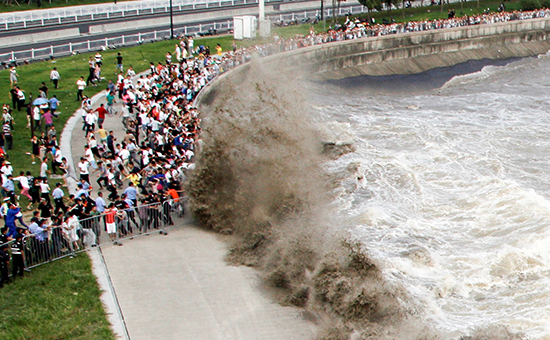
On Tuesday, tsunami waves were recorded along the coast. The highest one was 1.4 meters in Sendai Bay. A tsunami advisory was eventually lifted at 12:50 pm local time.
According to Reuters, there were no reports of deaths or serious injuries several hours after the quake hit at 5:59 a.m. It was reportedly centered off the coast of Fukushima prefecture at a depth of about 10 kilometers.
The U.S. Geological Survey measured Tuesday's quake at magnitude 6.9, down from an initial 7.3.
Reuters reports all Japan's nuclear power plants on the coast threatened by the tsunami have been shut down in the wake of the March 2011 disaster, which knocked out cooling systems at Tokyo Electric Power Co's Fukushima Daiichi nuclear plant, causing reactors to melt down and spew radiation into the air, soil and sea.
Tohoku Electric Power Co said there was no damage to its Onagawa nuclear plant, while the Kyodo news agency reported there were no irregularities at the Tokai Daini nuclear plant in Ibaraki prefecture.
Japanese Minister for Disaster Management Jun Matsumoto told reporters about three hours after the quake that there had been no reports of significant injuries so far. One woman suffered cuts to her head from falling dishes, Kyodo news agency reported, citing fire department officials.
Earthquakes are common in Japan, one of the world's most seismically active areas. Japan accounts for about 20 percent of the world's earthquakes of magnitude 6 or greater.
The March 11, 2011, quake was magnitude 9, the strongest quake ever recorded in Japan. The massive tsunami it generated knocked out the Fukushima Daiichi plant, causing the worst nuclear crisis since Chernobyl a quarter of a century earlier.