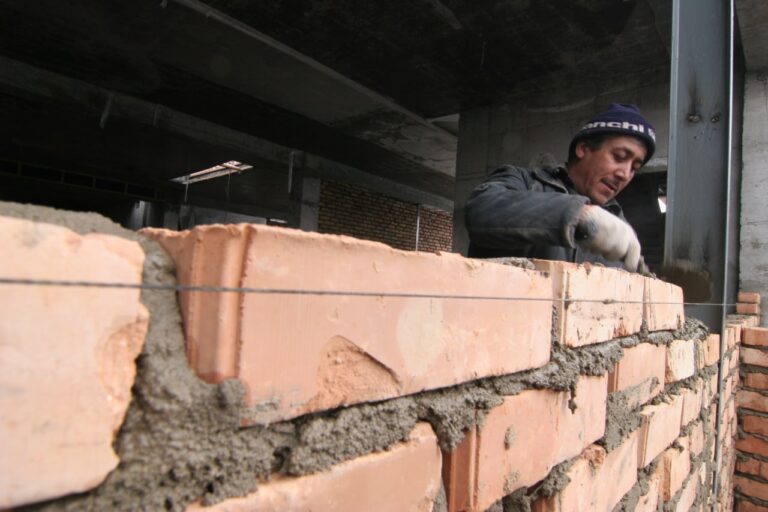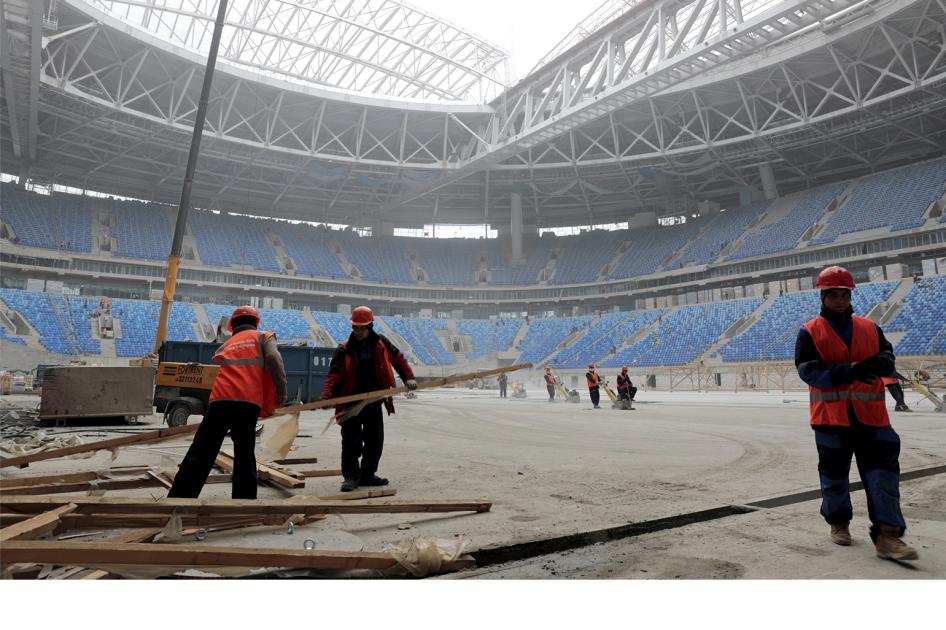
Construction workers building stadiums for Russia to host the FIFA 2017 Confederations Cup and 2018 World Cup face exploitation and labor abuses, Human Rights Watch (HRW) said June 14, noting that FIFA has yet to fully deliver on its commitments to conduct effective monitoring of labor conditions ahead of the Confederations Cup and World Cup.
The World Cup is the world’s premier football tournament. Russia will host eight international football teams, including its own, at the Confederations Cup from June 17 to July 2, 2017, in four cities. The Confederations Cup also marks the one-year countdown to the 2018 World Cup, which will run from June 14 to July 15, 2018, with 32 teams playing in 12 stadiums in 11 Russian cities.
The 34-page report, Red Card: Exploitation of Construction Workers on World Cup Sites in Russia, documents how workers on six World Cup stadium construction sites faced unpaid wages either in full or part, several months’ delays in payment of wages, work in temperatures as cold as -25 degrees Celsius without sufficient protections, and employers’ failure to provide work contracts required for legal employment.
Human Rights Watch interviewed Russian nationals, including some who had migrated internally for jobs on World Cup construction, as well as foreign migrant workers, including from Central Asian countries, Belarus, and Ukraine.
At least 17 workers have died on World Cup stadium sites, according to the Building and Wood Workers’ International global union. Workers on several stadiums have organized strikes repeatedly to protest non-payment of wages and other labor abuses. International media have published credible reports about North Korean workers employed on the World Cup Stadium in St. Petersburg in 2016 working long hours with few days off and compelled to send wages to the North Korean government. FIFA states that the workers are no longer working at the St. Petersburg or other World Cup stadiums, but publicized no information about steps taken to protect or assist these workers.
Workers interviewed by Human Rights Watch consistently said that they were afraid to speak out about abuses, fearing reprisals from their employers.
Under the UN Guiding Principles on Business and Human Rights, business entities, including FIFA, have responsibilities to respect human rights, avoid complicity in abuses, and ensure that any abuses that occur despite these efforts are adequately remedied. The Guiding Principles also call on private enterprises to ensure transparency as part of a credible response to human rights concerns.