The European Union (EU) Foreign Affairs Council has called for development of a new EU’s Strategy for Central Asia by the end of 2019
The “EU and Central Asia: Working for a Safer and Successful Future Together" Joint Communiqué was adopted following the 13th annual EU-Central Asia ministerial meeting that took place in the Uzbek city of Samarqand on November 10.
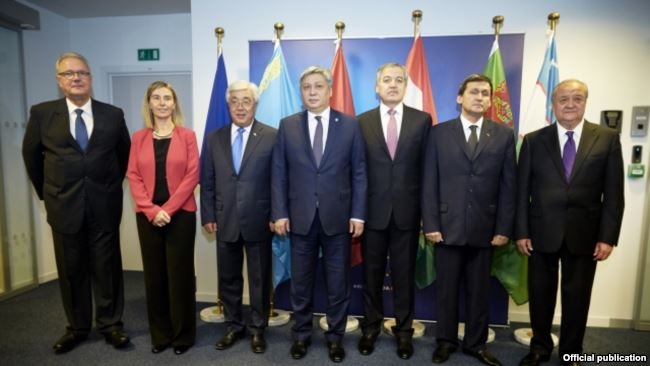
The meeting brought together the Foreign Ministers of Kazakhstan, Kyrgyzstan, Tajikistan, Turkmenistan and Uzbekistan as well as the European Union’s (EU) High Representative for Foreign Affairs and Security Policy and Vice-President of the European Commission, and the European Commissioner for International Cooperation and Development.
The Communiqué, in particular, notes that the meeting participants reviewed the overall relationship between the European Union and the Central Asian countries and welcomed the frequency of meetings at Ministerial level between the EU and individual countries and between the EU and the region.
The participants also confirmed their readiness to cooperate on issues of development in Central Asia with other similar international partners.
The participants reportedly focused on the potential for enhanced economic relations between the EU and the Central Asian countries. Strengthening the nexus between security, migration, climate change and economic sustainable development could contribute to stronger economies. Transparent rules and regulations, as well as increased use of e-governance solutions, are important for a favorable investment climate and private sector development in the countries of Central Asia, which will promote the region’s further sustainable economic development.
The Foreign Ministers welcomed the European Union’s commitment to a relationship with Central Asia based on the principles of responsibility and cooperation and aimed at assisting the stable, secure and sustainable development of this region. They welcomed the European Union’s continued financial support amounting to €1 billion for programs to be implemented in Central Asia until 2020. They also welcomed the involvement of EU Member States in regional and bilateral development programs.
It is timely for the European Union to examine its approach to the Central Asian region, building on the experience gained during the ten years of the current EU Central Asia Strategy, the Communiqué says.
“The European Union employs a comprehensive approach to its engagement with the individual countries and to the region, encompassing not only political meetings and multilateral financial assistance, but also support by individual EU Member States and the active engagement of European and multilateral financial institutions, such as the European Investment Bank and the European Bank for Reconstruction and Development. This approach continues to be relevant and brings direct, tangible benefits to the populations of the five Central Asian countries,” the document says, noting that the close involvement of the governments of the Central Asian countries, as well as of civil society, is essential regarding any further development of the EU’s policy to take EU-Central Asia relations into the next decade.
In this context, the five Foreign Ministers welcomed the call by the EU Foreign Affairs Council for a new EU Central Asia Strategy by the end of 2019, which should be based on mutual interests, common approaches and values of the EU and countries of the region.