Most likely, the International Monetary Fund (IMF) is aware of the current economic situation in Tajikistan, which has already been in debt, Rahim Karimov, an expert on the Tajik economy told Asia-Plus in an interview.
Over the past five years, the Tajik authorities have failed to get preferential loan from the International Monetary Fund (IMF).
The previous three-year Extended Credit Facility program ended in Tajikistan in July 2012.
The Extended Credit Facility (ECF) provides financial assistance to countries with protracted balance of payments problems. The ECF was created under the Poverty Reduction and Growth Trust (PRGT) as part of a broader reform to make the Fund’s financial support more flexible and better tailored to the diverse needs of low-income countries (LICs), including in times of crisis. The ECF is the Fund’s main tool for providing medium-term support to LICs.
The ECF supports countries’ economic programs aimed at moving toward a stable and sustainable macroeconomic position consistent with strong and durable poverty reduction and growth.
The ECF may also help catalyze additional foreign aid.
In autumn 2012, the Tajik authorities have applied to the IMF for a new three-year arrangement under the extended credit facility.
The IMF representatives that time raised hopes of coordinating the next three-year program. However, the negotiations on this subject are still continuing and now specific agreements have been reached so far.
Tajikistan had intended to attract a $500 million preferential loan from the IMF for supporting the country's economy.
“We need these financial resources in order to prevent economic stagnation and make loan resources more accessible,” Jamoliddin Nouraliyev, the first deputy head of the National Bank of Tajikistan (NBT), told reporters in Dushanbe in summer last year.
After completion of its visit to Tajikistan in late May this year, the IMF staff mission, in particular, noted that Tajikistan has implemented positive reforms in the past two years, but external shocks have affected economic confidence, reduced buffers, and increased vulnerabilities.to Tajikistan in late May this year.
At the same time, the IMF team noted that concrete steps in key reform areas will need to be taken, building on the efforts already made by the Tajikistan authorities, to resume program negotiations. These steps reportedly include preparing a medium-term fiscal strategy to assure debt sustainability, an assessment of the macroeconomic implications (on growth, exports, and debt sustainability) of large infrastructure projects, and banking reforms. Steps that demonstrate reform progress would pave the way for resumption of program negotiations, which will need careful preparation by both the Tajikistan authorities and IMF staff.
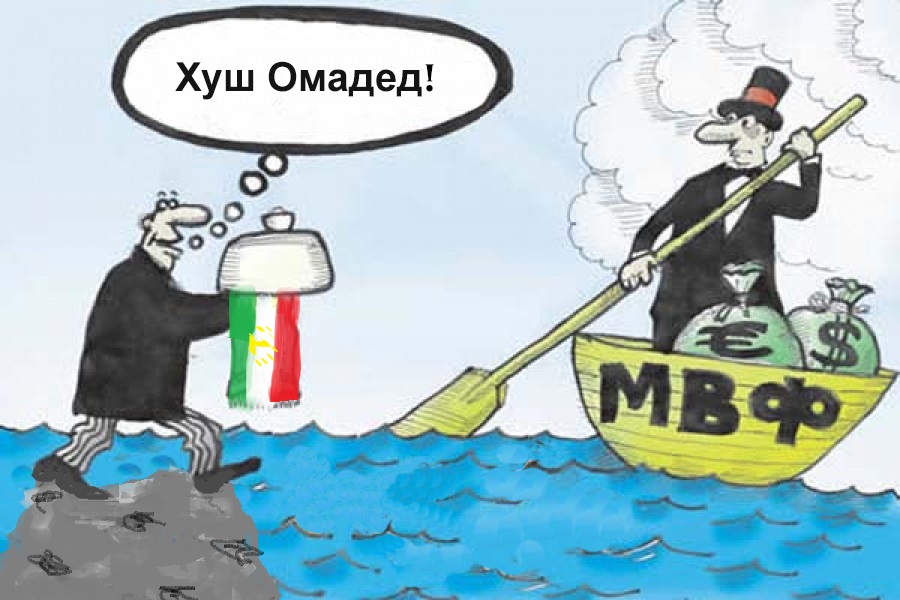
Meanwhile, Rahim, Karimov, the expert on the Tajik economy, says, “It is time for Tajikistan to get out of the habit of begging for external assistance. We have been begging for grants and loans for already twenty-five years. Most likely, the International Monetary Fund (IMF) is aware of the current economic situation in Tajikistan, which has already been in debt. Therefore, the IMF is attempting in every way possible to delay the negotiation process, evading in a gentle manner the procedure of granting the next loan.”