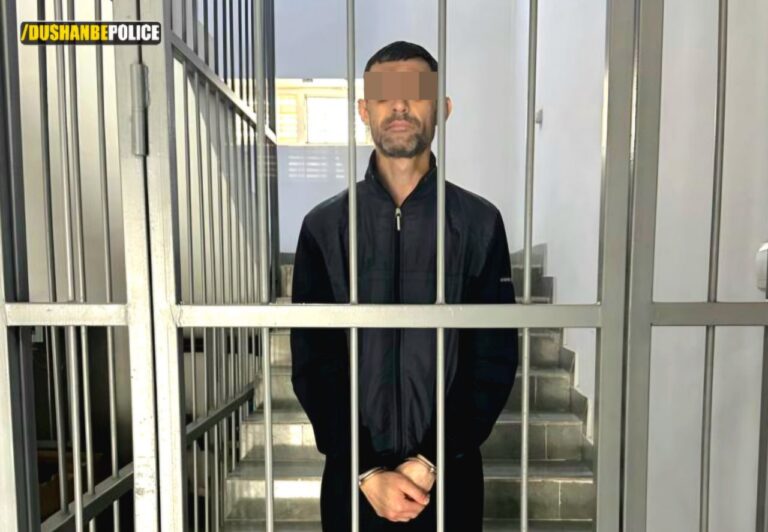
Two residents of the northern city of Khujand have been jailed for disseminating ideas of the outlawed Salafi group.
The Khujand city court sentenced Nouriddin Pochoyev and Fazliddin Bahriddinov to 5½ and 5 years in prison respectively last week.
The sentence followed their conviction on charges of organizing an activity of an extremist group (Article 307 of Tajikistan’s Penal Code).
Judge Nekrouz Marufzoda, who presided over the trial, says Pochoyev was detained by local security officers in August this year, while Bahriddinov was detained in September.
According to the judge, Pochoyev and Bahriddinov were disseminating Salafi ideas through social networks and in the Nouri Imon mosque in the Obshoron settlement of the Bobojon-Ghaforuov district.
Meanwhile, the Nouri Imon mosque imam-khatib (the leader of prayers in the mosque), Iskandar Sirojjonov, is wanting by police for dissemination of Salafi beliefs, Marufzoda added.
The Tajik authorities banned Salafism as an illegal group on January 8, 2009, saying the Salafi movement represents a potential threat to national security and the Supreme Court added Salafists to its list of religious groups prohibited from operating in the country.
The movement claims to follow a strict and pure form of Islam, but Tajik clerics say the Salafists’ radical stance is similar to that of the Taliban in Afghanistan.
Salafists do not recognize other branches of Islam, such as Shi’a and Sufism. The movement is frequently referred to as Wahhabism, although Salafis reject this as derogatory.
The overwhelming majority of Tajiks are followers of Hanafia, a more liberal branch of Sunni Islam.
On December 8, 2014, the Supreme Court of Tajikistan formally labeled the banned Salafi group as an extremist organization. The ruling reportedly followed a request submitted to the court by the Prosecutor-General’s Office. The ruling means that the group’s website and printed materials are also banned.