
The special focus section of World Bank’s Tajikistan: Economic Update – Fall 2019 – Heightening Fiscal Risks in Tajikistan elaborates on the fiscal and economic risks associated with natural disasters in Tajikistan.
The report, in particular, notes that more than 60 percent of the country’s 9 million inhabitants live in areas of high seismic risk. As such, natural disasters pose a major threat to economic and fiscal stability.
The report says that according to United Nations Development Programme (UNDP) estimates, floods and mudflows alone caused economic damages of $100 million in Tajikistan in 2015.
The World Bank analysts note that the population’s exposure to hazard risks represents explicit contingent liabilities for the government. While the government has created a number of funds (the Contingent Fund, local reserve funds, material reserves, compensation payments from the budget), these have not been allocated with sufficient resources to meet the country’s needs in post-disaster expenditures.
Recently, the government produced the Disaster Risk Finance Strategy to guide disaster preparedness and response. However, to ensure adequate implementation, further steps are required, including an accruing contingency fund earmarked for natural disasters, the introduction of improved insurance mechanisms, and the systematic collection of information on disaster-related expenditures, according to the report.
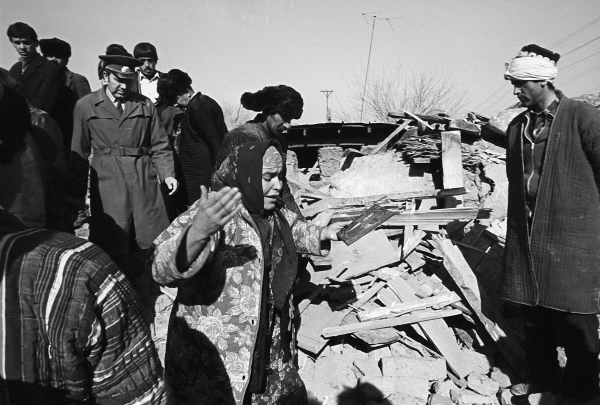
The most devastating earthquakes reported in Tajikistan
Mountains cover 93 percent of Tajikistan's surface area and its geology, hydrology, and topography make it prone to such natural hazards as avalanches, droughts, flooding, landslides and earthquakes.
The most devastating earthquakes reported in the country in the 20th century were the Qaratogh earthquake (1907), Sarez earthquake (1911), Hoit earthquake (1940) and Sharora earthquake (1989).
The 1907 Qaratogh earthquake occurred at 04:23 UTC on October 21 in the border area between Uzbekistan and Tajikistan. The shock had an estimated surface wave magnitude of 7.4 and a maximum felt intensity of IX (Violent) on the Mercalli intensity scale. Estimates of the death toll range between 12,000 and 15,000.
The 1949 Hoit earthquake occurred at 09:45 local time (03:53 UTC) on July 10 in the Rasht Valley (eastern Tajikistan). It had a magnitude of 7.5 and triggered a series of landslides that together led to 7,200 deaths.
The 1989 Sharora earthquake occurred at 23:02 UTC on January 22 in the Hisor district. The shock had a body wave magnitude of 5.3 and a maximum felt intensity of VII (Very strong) on the Mercalli intensity scale. The death toll from the event amounted to 274.