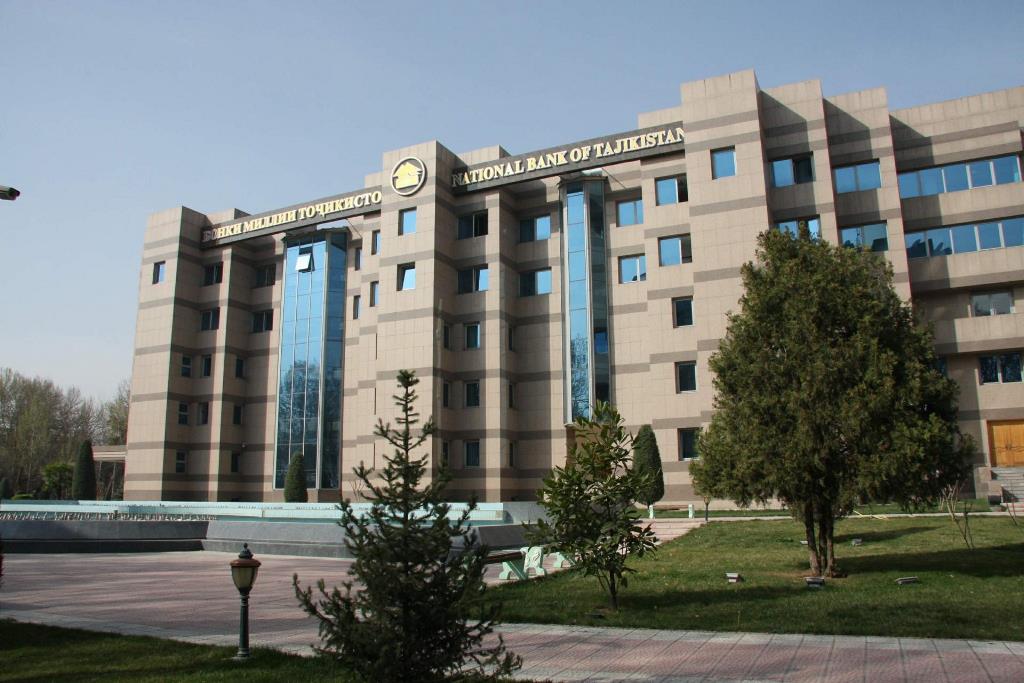
The National Bank of Tajikistan (NBT) notes it has been set to create its own transfer processing center to insure against money transfer companies being unable to repay money to the banks inside Tajikistan that hand out the hard cash to recipients.
Tajik central bank says “two payment system operators Migom and Leader went bankrupt in 2014.” They reportedly received 1 million USD and 50 million Russian rubles from Tajik nationals for sending to Tajikistan and Tajik banks were forced to repay the remittances at their own expense. “Migom and Leader have not yet repaid their debts to our banks,” the NBT said.
According to Tajik central bank, the current remittance market of the country amounts to some 2.5 billion USD. “This money is mainly sent by our labor migrants working in the Russian Federation,” the NBT stressed.
“Much of this money – some 80 percent (nearly 2 billion USD) – has been transferred to Tajikistan through the Zolotaya Korona (Golden Crown) payment system. Now just imagine what happens if Zolotaya Korona goes bankrupt?” Tajik central bank notes.
2 billion USD are a miserable sum for large economies but it is a big money for small economies like Tajikistan, the NBT says.
Recall, the National Processing Center for Remittance Management began operating in Tajikistan on December 3. It means that all cross-border remittances without opening a bank account must be repaid through this Center.
Many agencies and separate officials in Tajikistan now recognize the importance of remittances sent by Tajik labor migrants to the country. However, labor migrants’ contribution to the country’s economy is often underestimated.
Although, labor migrants still remain a critical component in the country’s economy, Tajik authorities, stopped publishing information on the volume of remittances sent to Tajikistan in May 2103. In a report released in Dushanbe, the then head of the National Bank of Tajikistan, Abdujabbor Shirinov, revealed on July 23, 2013 that Tajikistan will no longer release cash transfer data. According to him, the government stopped publishing information on the volume of remittances sent to Tajikistan in May. “I’d rather not talk about migrants'' funds because this issue may be politicized,” Abdujabbor Shirinov said.
Tajikistan is one of the world’s most remittance dependent countries and labor migrants are still a critical component in the economy of Tajikistan. Remittances keep many struggling families at home above the poverty line.