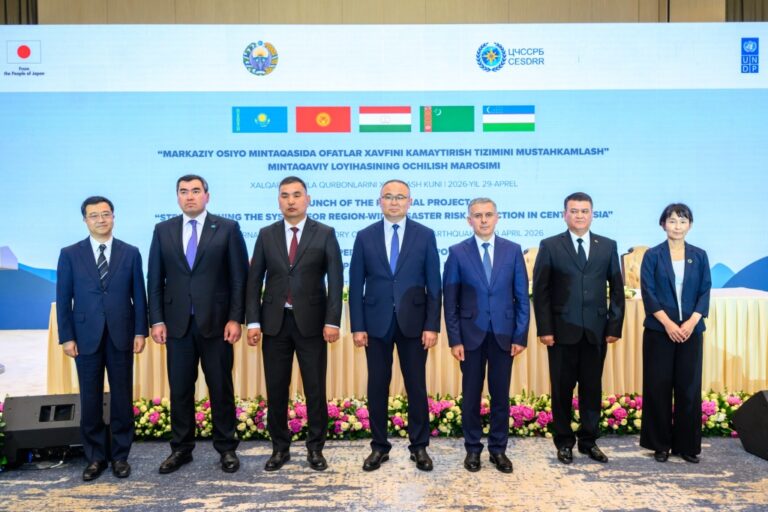
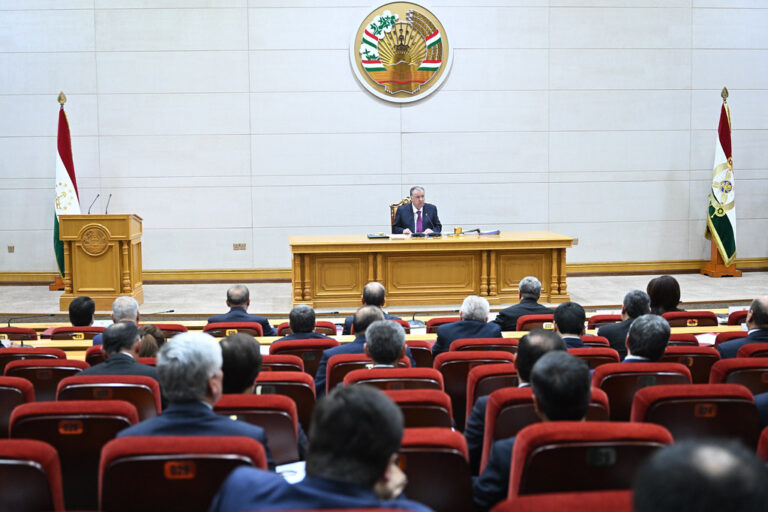
DUSHANBE, May 7, Asia-Plus — “Ukraine does not give up cooperation with CIS states; we realize significance of CIS for us and importance of cooperation within the CIS area,” Ukrainian Education and Science Minister Stanislav Nikolayenko told journalists in Dushanbe on May 4 following the CIS education ministers’ conference here.
He noted that it was his first visit to Tajikistan and expressed hope for further expansion of cooperation between Ukraine and Tajikistan both in bilateral format and within CIS. According to him, Ukraine will find way how to help Tajikistan enhance its education sector, in particular through providing its state scholarships.
Russian Education and Science Minister Andrey Fursenko speaking to journalists noted that “there has been an equal exchange of views and the countries may learn many things from each other.” “We have similar problems connected with quality of education, and education should become a clue to success for youth,” said Russian minister. “Education should not be limited just to vocational training, it is also good breeding.”
According to Fursenko, the CIS education ministers’ conference in Dushanbe considered all those issues and made specific decisions, helping them advance. “The conference offered a series of concrete instruments, decided to set up inter-country centers for training specialists in humanities and technologies.”
Russian minister added that the conference had also considered issues related to mutual recognition of diplomas. “The question is not of unification of diplomas in the CIS states but of mutual recognition of them that is principally different thing,” Fursenko said, “We must give youth an opportunity to work with their diplomas in any country. It means that it is necessary to set common quite high requirements; however, it does not mean that we should use the same programs.”
Kyrgyz Education Minister Kynybek Osmonaliyev underlined the importance of raising quality of education and expressed hope that that issue will be considered in details at the next conference.
His Armenian counterpart, Levon Mkrtchyan, told journalists that the conference had seconded Armenia’s proposal to hold the next conference in the Armenian capital city of Yerevan in October this year.