According to the National Bank of Tajikistan (NBT), the year-end inflation in Tajikistan’s consumer sector last year stood at 8.0 percent, which was 1.4 percent fewer compared to the previous year.
In December, the inflation rate in Tajikistan was 0.5 percent.According to the Agency for Statistics under the President of Tajikistan, the year-end inflation in Tajikistan’s consumer goods sector in 2020 stood at 9.4 percent.
In 2019, the year-end inflation in the country reportedly stood at 8.0 percent.
Meanwhile, NBT’s Inflation Outlook notes that in 2021, the high rate of inflation was reportedly caused by a number of factors, including demands, seasonal and external pressures.
Tajikistan’s Monetary Policy Forecast says Tajik authorities project inflation in 2022 and in the medium term (2023-2024) to stand at 6.0 percent.
The document notes that increase in the rate of the Federal Reserve System may result in rise in exchange rate and inflationary pressures in the region.
The Monetary Policy Forecast underlines that factors that may lead to a significant increase in inflation in the country arise mainly due to the impact of external shocks such as the rise in the international prices for food products and fuels since a significant share of goods enters the domestic market from abroad.
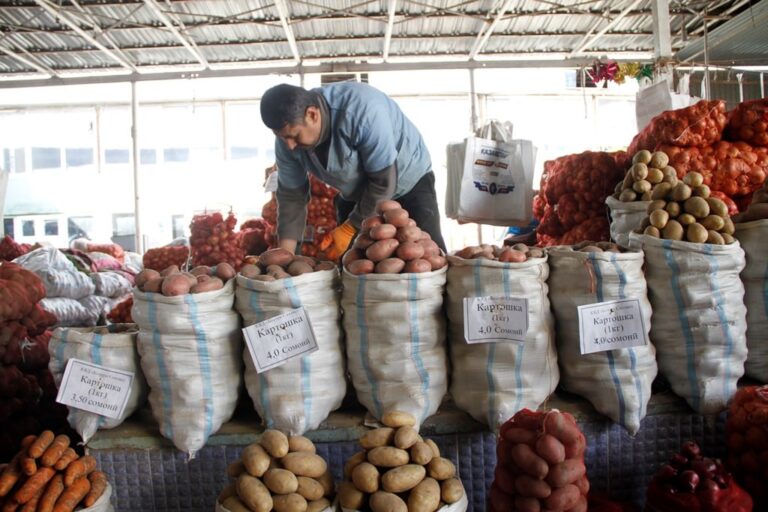
According to the document, the imported products account for about 60 percent of goods in the country’s consumer basket.
In addition to this, political instability in neighboring countries and the region may also negatively affect the growth rate of the country’s economy and cause to some extent additional exchange rate and inflationary pressure, the document says.
The document authors conclude that the economy of Tajikistan depends on changes in foreign economic conditions and remains vulnerable in the event of changes in foreign states’ policy as it is an integral part of the world economy.
Trading Economics notes that in Tajikistan, the most important categories in the consumer price index are food beverages (70 percent of the total weight) and non-food beverages (20 percent, of which clothing and footwear 9 percent and household appliances 4 percent) and services (10 percent).