

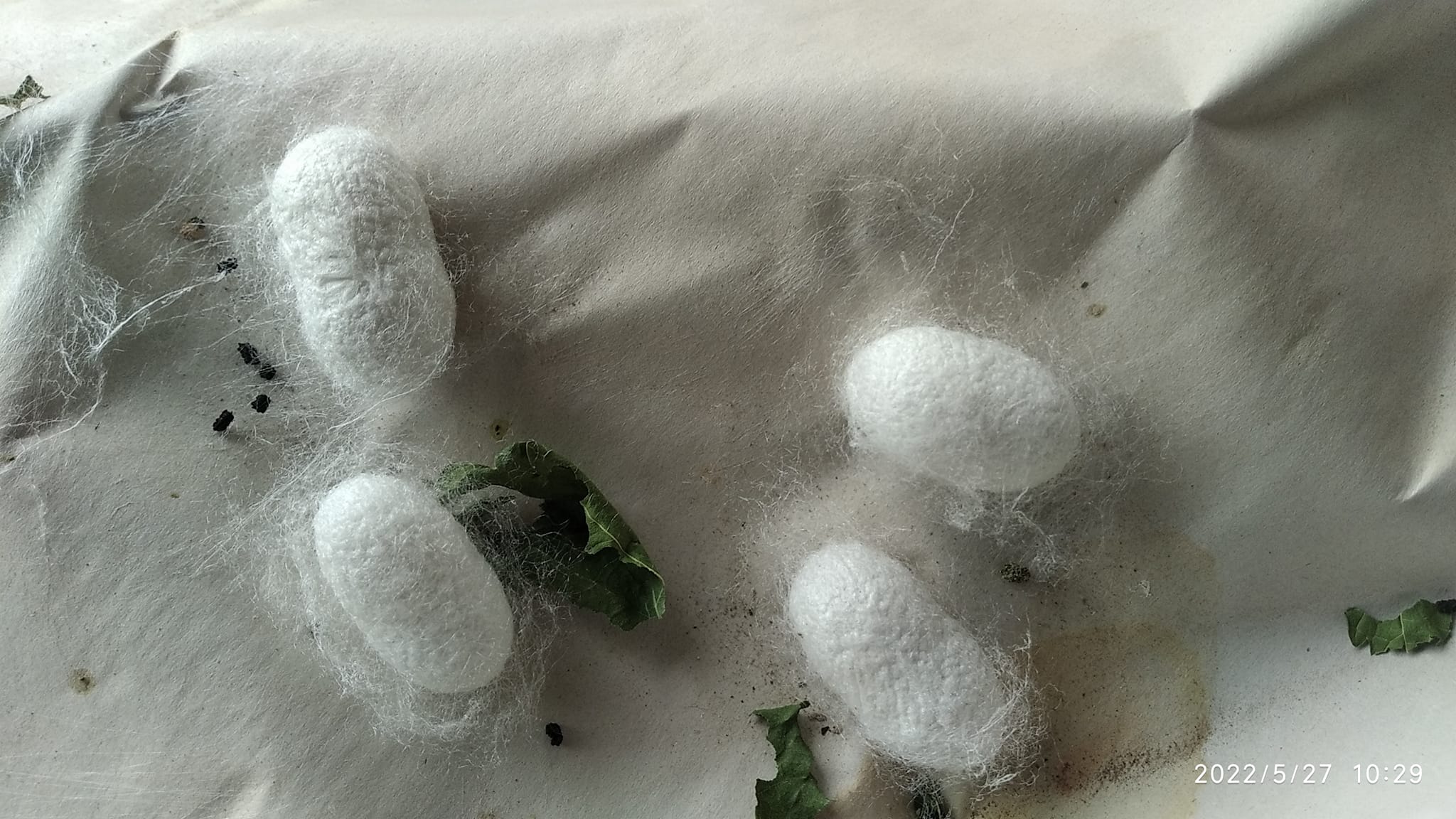
A collection of cocoon has begun in Tajikistan. The Khatlon province has reportedly produced more than 160 tons of cocoons to date. At the reception points, one kilogram of cocoons costs 15.00 somonis.
An official source within the Ministry of Economic Development and Trade (MoEDT) says Tajikistan plans to produce 780 tons of cocoons this year.
The silkworm development program designed for 2021-2024, in particular, provides for ensuring the stable development of the silkworm breeding sector through introducing new technologies.
Within the next four years, Khatlon and Sughd province will plant 2 million mulberry trees each and 300,000 mulberry trees will be planted in districts subordinate to the center.
The program reportedly provides for the cultivation of more than 33,000 boxes of silkworms, which will help to increase the production of cocoons to 1,200 tons. Of them, 800 tons will be processed within the country, which will provide jobs for more than 66,000 people.
This year, Tajikistan has reportedly exported 255 tons of raw cocoons worth 1.5 million U.S. dollars.
Meanwhile, world prices for raw cocoons show a steady growth dynamics. Since 2002, an average annual rate of increase in the international raw cocoon percent, and last year, and over the past period it has increased three times: from US$15.80 per kilogram in 2022 to US$47.00 in 2020.
The current international price for one kilogram of raw cocoons is 50.00 U.S. dollars.
Meanwhile, Tajikistan is studying Uzbekistan’s experience in the field of sericulture, cocoon processing, production of silk fabrics and design.
A Tajik delegation consisting of representatives of the Ministry of Industry and New Technologies and private enterprises companies traveled to Uzbekistan in early February this year. The delegation visited a number of sericulture enterprises in Tashkent, Margelan and Ferghana.
It is to be noted that silkworm breeding has gone into decline in Tajikistan over the past thirty years. Over the reporting period, production of silkworm cocoons has fallen in the country 12 times: from 4,528 tons in 1991 to 387 tons in 2021.
