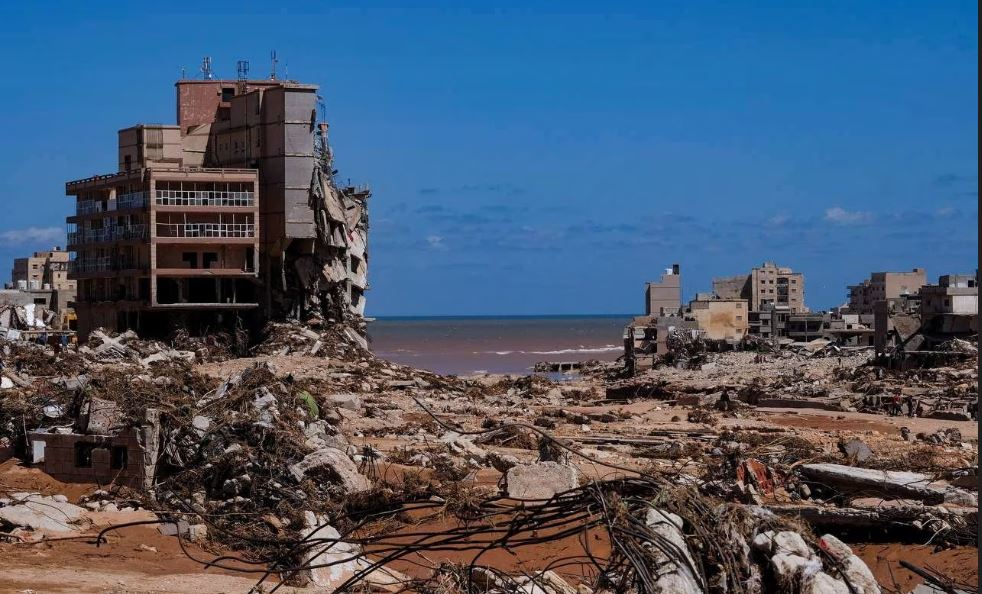
BBC reports that there are fears that as many as 20,000 people may have died in the flooding that's devastated northern Libya after dams burst during storms. The coastal city of Derna reportedly suffered the worst of the disaster. There have been desperate calls for more humanitarian support as victims lie wrapped in body bags and others have been buried in mass graves. Many people were washed out to sea when the floods struck. At least 30,000 people are said to be homeless.
Leaders of Libya's Tripoli-based administration have called on the country's prosecutor to open an investigation into the collapse of two dams that led to catastrophic flooding in the city of Derna, BBC Monitoring reports.
Mohammed al-Menfi, the chairman of Libya's highest executive institution, the Presidency Council (PC), reportedly ordered the prosecutor to hold accountable anyone found to have committed errors or neglect leading to the dams' collapse.
He also called for the prosecution of anyone hampering the arrival of international relief efforts, local media said.
There have been criticisms that the dams were not properly maintained for years.
Libya has been split between rival governments in the east and west for around a decade.
The country was under foreign control for centuries until it gained independence in 1951 and came under the control of Colonel Muammar Gaddafi in 1969.
He ruled until he was toppled and killed in 2011 – in a rebellion assisted by Western military intervention.
In 2014, renewed fighting broke out, with Libya split between two administrations – one based in the east, and one in the west in the capital Tripoli. The two sides signed a ceasefire in 2020 but political rivalries continue.
In 2021, a Government of National Unity was formed in Tripoli with Abdul Hamid Dbeibeh as the internationally-recognized prime minister, but the following year the eastern-based parliament formed a rival – and rather similarly named – Government of National Stability.