At the opening of its first-ever meeting held in Central Asia, the UN Convention to Combat Desertification (UNCCD) unveils new data showing land degradation rapidly advancing in the region and around the world.
UNCCD’s website reports that between 2015 and 2019, the world lost at least 100 million hectares of healthy and productive land each year. This adds up to 420 million hectares, or 4.2 million square kilometers, slightly over the combined area of five Central Asian nations: Kazakhstan, Kyrgyzstan, Tajikistan, Turkmenistan and Uzbekistan. These statistics underscore the need for urgent action, as escalating land degradation continues to destabilize markets, communities, and ecosystems around the globe.
The UNCCD Data Dashboard compiles national reporting figures from 126 countries, allowing users to explore the trends in their own regions and countries.
According to the latest UN data, over 20 percent of the total land area in Central Asia is degraded, equivalent to roughly 80 million hectares, an area almost four times the size of Kyrgyzstan. This affects an estimated 30 percent of the region’s combined population.
As far as Tajikistan is concerned, 47 percent of its territory – 6.7 million hectares – is reportedly susceptible to varying degrees of drought.
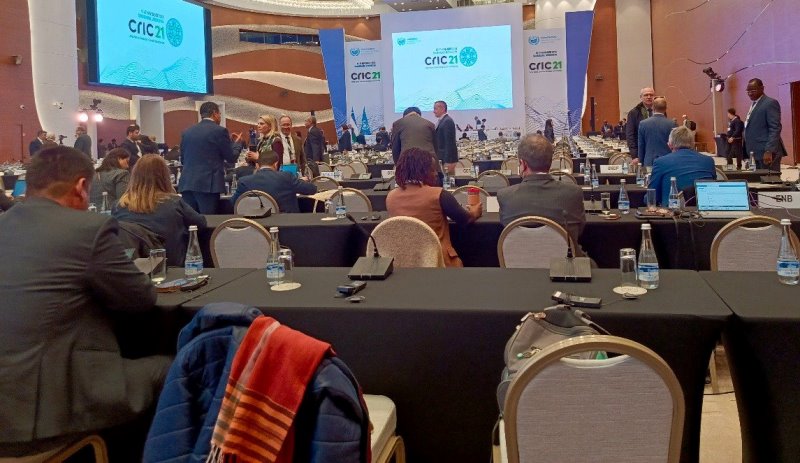
Recall, a five-day 21st session of the UNCCD Committee for the Review of the Implementation of the Convention (CRIC 21) kicked off in the Uzbek city of Samarkand yesterday. The event brought together 500 delegates from 196 countries and the European Union, civil society, and academia to reflect on progress in delivering the Convention’s strategic objectives.