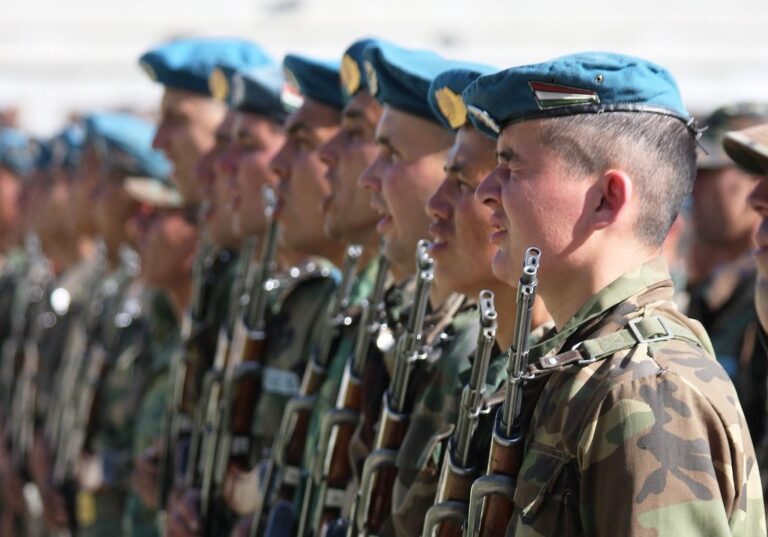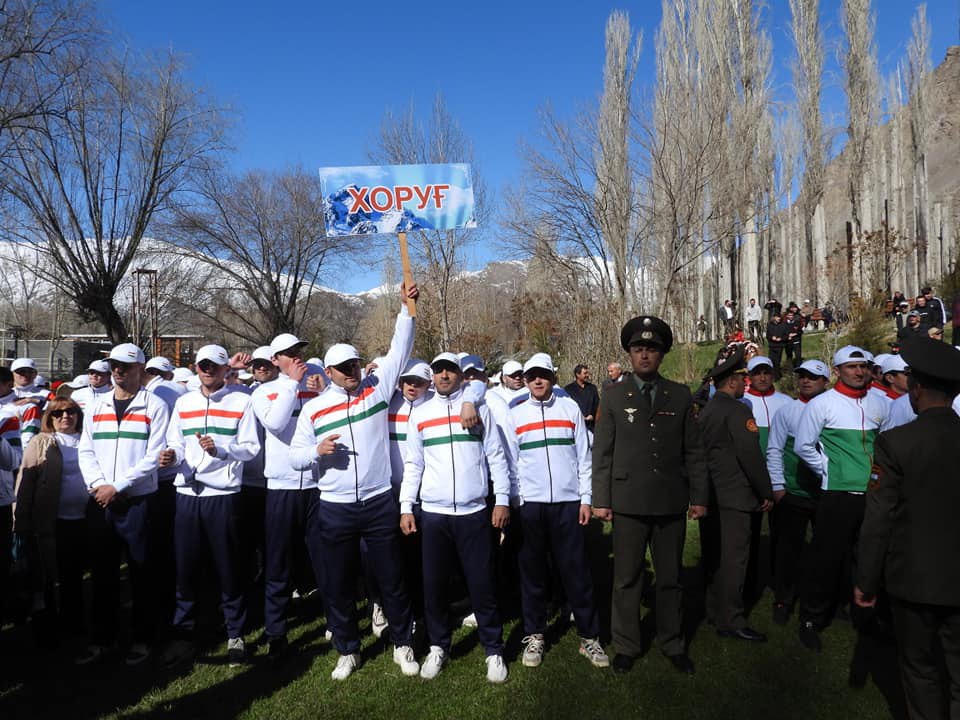
Twenty cities and districts of Tajikistan have fulfilled their spring conscription targets over the first ten days of the spring conscription campaign, Faridoun Mahmadalizoda, a spokesman for the Ministry of Defense (MoD), told Asia-Plus in an interview Tuesday (April 16) afternoon.
Recall, the Gorno Badakhshan Autonomous Region, or GBAO, was the first to fulfill its spring conscription campaign target. The region reportedly fulfilled the spring conscription target on the same day when the spring conscription campaign was launched in Tajikistan, April 1.
“Rasht, Sangvor, Lakhsh, Nourobod and Tojikobod district in the Rasht Valley, Vakhsh, Farkhor, Khuroson, Muminobod and Nosir-Khusrav districts in Khatlon province have also fulfilled their spring conscription campaigns,” Mahmadalizoda said, noting that Tajikistan has reached 50 percent of its spring conscription target by April 11.
In the territorial cross section the percentage the target reached was: GBAO – 100 percent; Dushanbe – 30 percent; districts subordinate to the center (RRP) – 55 percent; Khatlon province – 62 percent; and Sughd province – 36 percent.
The spring conscription campaign is carried out from April 1 through May. The draft affects able-bodied male citizens in the age bracket of 18 years old to 27 years old, who are not members of the armed forces reserve.
The same decree provides for the retirement from active duty of soldiers and sergeants whose service under conscription is over.
Some sources say the usual annual conscription target in Tajikistan is some 15,000-16,000.
The two-month-long effort seeking to enlist young men aged 18-27 for the two-year compulsory military service takes place twice a year, in the spring and in the autumn.
Exact numbers on how many young men are conscripted are not made public. According to some sources within the Ministry of Defense, every year, some 15,000-16,000 young Tajik men are drafted into the country’s armed forces.
Read more: https://asiaplus.news/en/news/tajikistan/security/20230724/when-conscription-season-comes-tajik-military-recruitment-officers-resort-to-desperate-measures
Young Tajiks can avoid or postpone military service if they are ill, studying at university, an only son, or if they have two children.
Recall, amendments have been made to the country’s law on military service in early 2021. The amendments came into effect on February 4, 2021 and young men in Tajikistan who wish to forgo the military service may now do so by paying a fee to the government. A one-month basic reserve service is organized for those who did not perform conscript service for a fee. At the end of basic reserve service they receive military cards.
Besides, under the law on the universal military duty in new edition, graduates of universities having military department will also be drafted into the army for one year.
Only people who have done military service will be permitted to obtain employment with the government or join the army in a professional capacity.
Tajikistan’s armed forces consist of Ground Forces, Mobile Forces (paratroopers of the armed forces of Tajikistan), Air Force and Air Defense Force.
Meanwhile, messages about desperate measures taken by military recruitment offices to ensure the fulfillment of conscription target have reappeared on social networks. Several young people reported on social networks that “they were forced into minibuses without number plates in different parts of the capital to find out whether they served in the army or not.”
To fulfill conscription campaign, the Tajik authorities sometimes still use military recruitment raids. During two months in spring (April-May) and two months in autumn (October-November), Tajik men of serving age are routinely hauled off streets or taken from their homes and forced into cars by plainclothes law enforcement officers.
A ‘hunt’ for persons of draft age, more commonly known as ‘raid’, which is sometimes used to catch young people, is a violation of the law. The Tajik authorities do not admit the use of raids, but ordinary citizens and analysts have repeatedly expressed concern about the forced recruitment of young people, and other illegal methods used in recruiting campaigns.