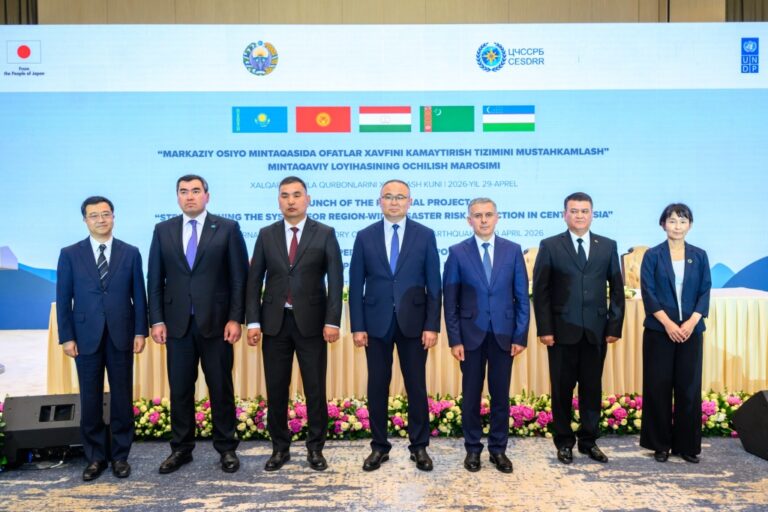
DUSHANBE, March 16, 2009, Asia-Plus — The Government of Japan has provided 336,000 US dollars for demining operation in the Rushan district, Gorno Badakhshan.
According to Japan’s Embassy in Dushanbe, an appropriate grant agreement was signed with the Swiss Foundation for Mine Action (FSD) on March 13.
Implementation of the GBAO’s Rushan Demining Operation Project designed for nine months will start in the village of Vaznavd this spring, the source said, noting that the project includes organization of a mission for instructing combat engineers in operating new advanced demining equipment.
The project also provides for campaign to raise awareness of mines and Unexploded Ordnance (UXO) through teaching local people in affected areas some rules of safe conduct. In all, some 718,000 square meters of land will be cleared under the project.
The FSD has had a permanent representative in Tajikistan since February 2002. It is the only international demining operator in Tajikistan. The FSD has been carrying out technical surveys and demining operations since 2003, in partnership with the OSCE.
The mine-strewn areas in Tajikistan are a legacy of the country’s disastrous civil war in the 1990s. Most land mines in Tajikistan were laid during the five-year civil war, which ended in 1997. In many areas the mines still pose a deadly threat as well as a major impediment to effective land use. Additional mines were laid along the Tajik-Uzbek border by the authorities in Tashkent in the late 1990s. The action was reportedly taken to stave off incursions by the Islamic Movement of Uzbekistan (IMU).
According to Tajik Mine Action Cell (TMAC), which is the governmental structure responsible for all mine action related issues in the country, more than 600 civilians in Tajikistan have become victims mine explosions since the 1990-s.
Demining teams have cleared more than 1.5 million square meters of land so far and they have to clear another 20 million square meters.
Tajikistan signed the Convention on the Prohibition on the Use, Stockpiling, Production and Transfer of Antipersonnel Mines and on their Destruction (the Ottawa Convention) in 2000. All signatory states undertook to ensure the destruction of all anti-personnel land mines they possess, as soon as possible but no later than 10 years after signing the convention. In the case of Tajikistan, this means that the country should be mine-free by 2010.