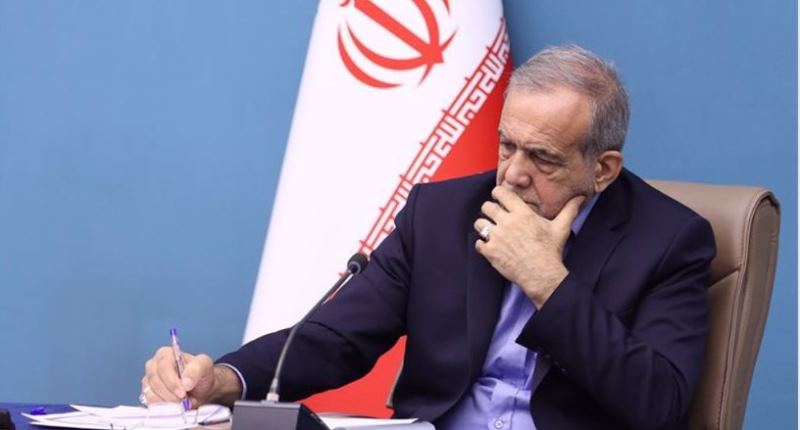
Iranian President Masoud Pezeshkian announced on Wednesday the suspension of his country’s cooperation with the International Atomic Energy Agency (IAEA), the official Press TV and Mehr news agency reported. The semi-official Tasnim news agency also said that the president approved the law requiring the government to suspend ties with the IAEA.
Mehr new agency reports that Iran’s parliament (Majlis) approved a bill to suspend Tehran’s cooperation with the International Atomic Energy Agency (IAEA) on June 25, following its politically-motivated resolution against the Islamic Republic.
The general and specific provisions of the bill to suspend cooperation with the IAEA have been approved by lawmakers, Alireza Salimi, a member of the parliament’s presiding board, was cited as saying on July 2.
According to the parliament’s resolution, IAEA inspectors will not be permitted to enter Iran unless the security of the country's nuclear facilities and that of peaceful nuclear activities is guaranteed, which is subject to the approval of Iran’s Supreme National Security Council.
The vote reportedly came a few days after Iran’s Parliament Speaker Qalibaf said the top legislative body was considering a bill to suspend Tehran’s cooperation with the UN nuclear watchdog.
“Majlis (the Iranian Parliament) is drafting a plan to suspend cooperation with the agency until tangible guarantees regarding the professional attitude of this international organization are received,” Qalibaf was cited as saying during an open session of the parliament on June 30.
Press TV reports that Iran is also considering an entry ban on the IAEA chief, Rafael Grossi, who has come under fire for his politically-motivated reports against Iran.
The IAEA Board of Governors reportedly used his report in its latest session to pass an anti-Iran resolution which became an excuse for the Israeli regime to launch its aggression against the Islamic Republic.
Iranian state-run media report that Iranian President Masoud Pezeshkian put a law passed by parliament to suspend cooperation with the IAEA into effect on July 2, Iranian state media reported.
Meanwhile the Associated Press (AP) says the order by President Masoud Pezeshkian, however, included no timetables or details about what that suspension would entail. However, Iranian Foreign Minister Abbas Araghchi reportedly signaled in a CBS News interview that Tehran still would be willing to continue negotiations with the United States.
Iran’s 2015 nuclear deal with world powers, negotiated under then U.S. President Barack Obama, allowed Iran to enrich uranium to 3.67% — enough to fuel a nuclear power plant, but far below the threshold of 90% needed for weapons-grade uranium. It also drastically reduced Iran’s stockpile of uranium, limited its use of centrifuges and relied on the IAEA to oversee Tehran’s compliance through additional oversight.
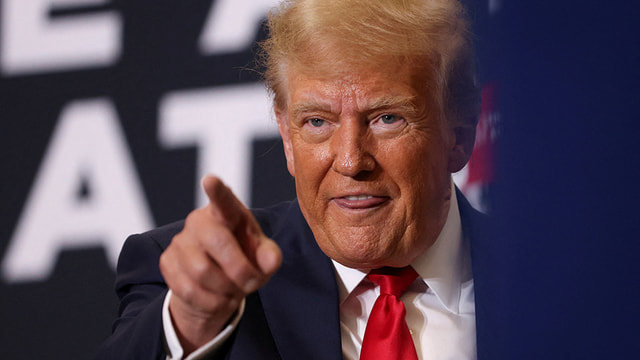
But U.S. President Donald Trump, in his first term in 2018, unilaterally withdrew Washington from the accord, insisting it wasn’t tough enough and didn’t address Iran’s missile program or its support for militant groups in the wider Middle East.