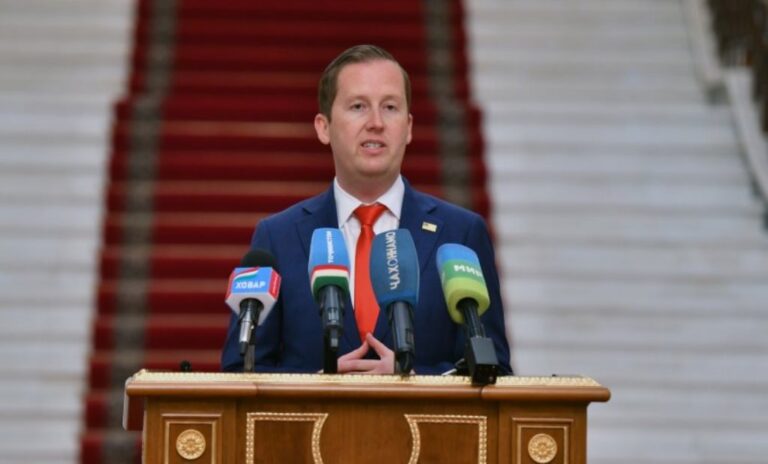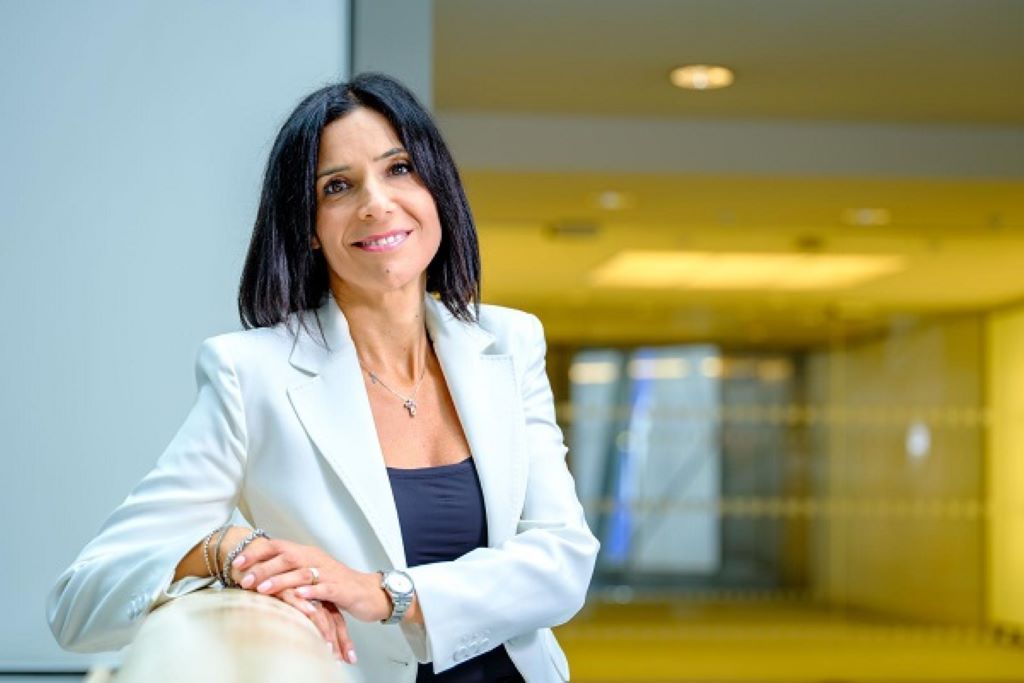
Ms. Giusi Princi, Member of the European Parliament, Chair of the EU Delegation for Relations with Central Asia (DCAS), and Co-Chair of the EU–Tajikistan Parliamentary Cooperation Committee, took part in the Committee’s meeting in Dushanbe on September 15.
During her visit, Princi held talks with government officials, members of parliament, and Tajik students. In an interview with Asia-Plus, she shared her views on EU–Tajikistan cooperation.
On EU–Tajikistan relations
Ms. Princi described the relationship as strong and steadily improving, underscored by the Enhanced Partnership and Cooperation Agreement. However, she stressed the importance of collective responsibility in defending international law, countering aggression, and addressing crimes against humanity.
“Central Asia and Tajikistan hold a vital geopolitical role and history, which we fully recognize and respect,” Princi said. “If the world is increasingly divided between free nations and autocracies, then the EU and Central Asia must step up efforts to safeguard shared values.”
She emphasized that this process should begin with deeper people-to-people ties, particularly through student exchanges, more scholarships, and easier visa access.
On parliamentary cooperation
At the Committee meeting, discussions covered a wide range of issues with lawmakers, government officials, civil society representatives, and students. Ms. Princi reiterated the EU’s support for Ukraine against Russian aggression, as well as its commitment to the UN Charter and the International Criminal Court.
Human rights, press freedom, and the urgent need for domestic violence legislation in Tajikistan were central topics, alongside regional security concerns, climate change, multilateral cooperation, and free trade. “The European Union does not change its policy — we remain a reliable friend to Tajikistan and to our other partners,” Ms. Princi noted.
On investment and economic cooperation
Ms. Princi highlighted the potential of granting Tajikistan GSP+ status, which would boost exports to the EU by making local production more competitive. But she cautioned that this requires full compliance with 27 international conventions, particularly in improving the country’s human rights record.
Even without GSP+, she said, the EU can and should increase investment in Tajikistan, provided the country focuses on strengthening digital and physical connectivity — a theme discussed at this year’s EU–Central Asia Summit.
“Supporting young entrepreneurs with vocational training is essential,” Princi added. “Simplifying visa procedures would also make it easier for Tajik business leaders to engage directly with EU partners. At the same time, Tajikistan must improve its investment climate by reinforcing the rule of law — something vital for both citizens and foreign investors.”
On security and regional challenges
Ms. Princi underlined the EU’s commitment to a regional approach in Central Asia. She noted ongoing EU support for Tajik border control with Afghanistan, including surveillance equipment and training for security personnel.
“This is not only Tajikistan’s problem — with 1,400 kilometers of shared border, it is Europe’s concern as well,” she said.
But Ms. Princi stressed that security is broader than military measures. “The best way to ensure safety and prosperity is through quality education, job opportunities, freedom under the law, and respect for human rights. That is the most effective path to counter radicalism and other threats.”
On her impressions of Dushanbe
Reflecting on her visit, Princi praised Tajik hospitality and openness, noting that discussions addressed even sensitive issues with sincerity and mutual respect.
“Dushanbe is a vibrant and dynamic capital,” she said. “We noticed China’s growing presence in infrastructure and daily life, but what impressed us most were the many young people we met — they are the future of Tajikistan and deserve better opportunities, which the European Union is ready to help provide.”