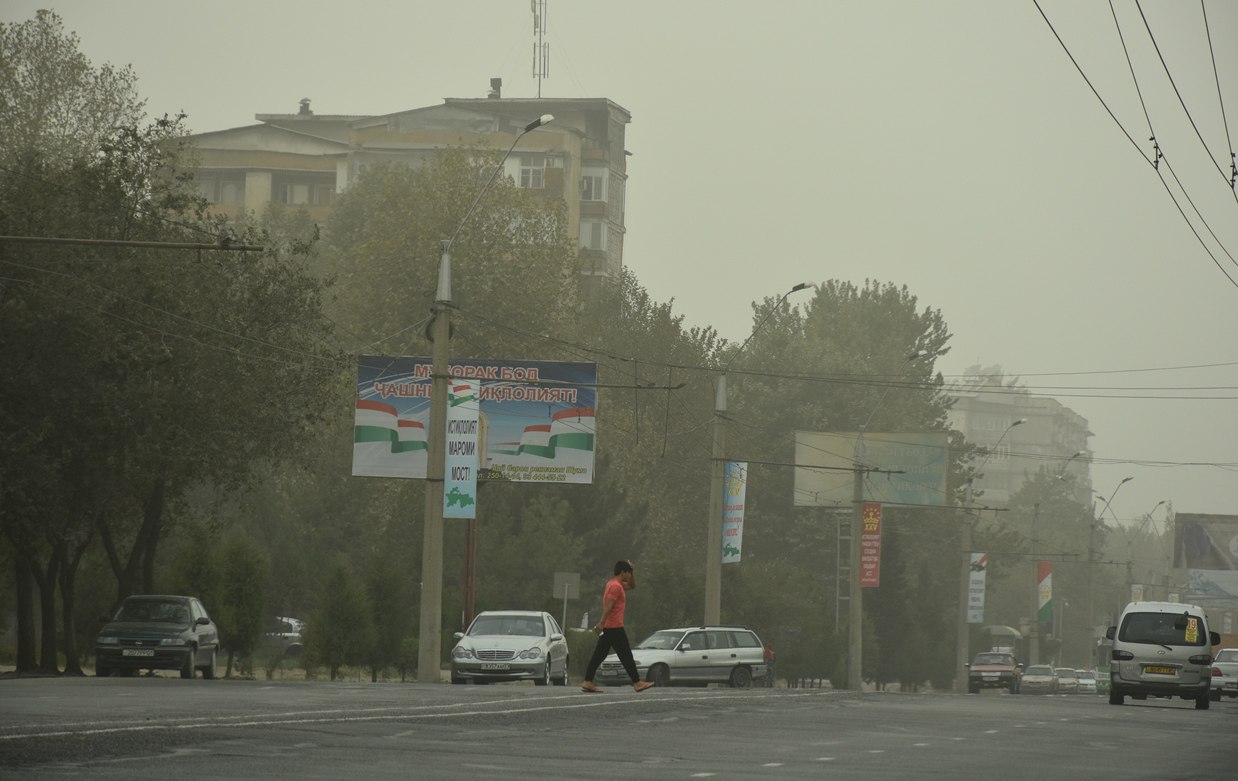
Air pollution remains one of the greatest environmental threats to human health. According to the 2024 World Air Quality Report by the Swiss firm IQAir, Tajikistan is ranked 6th among 138 countries in terms of average annual concentration of PM₂.₅ particles — a measure of fine particulate air pollution.
Alarming PM₂.₅ concentrations in Tajikistan
In 2024, Tajikistan’s average PM₂.₅ concentration was 46.3 µg/m³, placing it in the category of “35.1–50” on IQAir’s scale — a level that exceeds the World Health Organization (WHO)’s guidelines by 7 to 10 times. For comparison, in 2023, the city of Dushanbe ranked 4th among the worst cities globally in air quality metrics; in 2024, it appears on the city ranking at position 176 out of 8,954 cities.
By contrast, the cleanest nations in 2024 achieved average PM₂.₅ levels as low as 2.3 to 2.5 µg/m³ (e.g. Bahamas, Bermuda Islands, French Polynesia).
How the ranking is compiled
IQAir’s annual report draws upon data from over 40,000 air-quality monitoring stations and low-cost sensors across more than 8,954 locations in 138 countries. The PM₂.₅ measurement, expressed in micrograms per cubic meter (µg/m³), is visualized in reference to the WHO’s recommended annual guideline of 5 µg/m³.
Health risks and global trends
According to global health authorities, tiny particulate matter like PM₂.₅ can penetrate deep into the lungs and bloodstream, contributing to diseases such as asthma, lung cancer, stroke, and cardiovascular illness.
The IQAir report underscores that 99% of the global population lives in regions that do not meet WHO air quality standards. In 2021 alone, roughly 8.1 million deaths were linked to air pollution, with 58% of those cases attributed to ambient PM₂.₅.
While globally only 17% of cities in 2024 met the WHO’s annual guideline for PM₂.₅ (an improvement over 9% in 2023), the vast majority of countries continue to exceed safe levels.
Context & implications for Tajikistan
- Tajikistan’s leap to 6th most polluted among countries places it ahead of many larger nations and reflects a worsening regional trajectory.
- Within Central Asia, Tajikistan leads as one of the most affected, surpassing many neighboring countries.
- Vehicle emissions, industrial activities, burning of solid fuel, and geographic or meteorological factors often contribute significantly to elevated PM₂.₅ levels in the region.