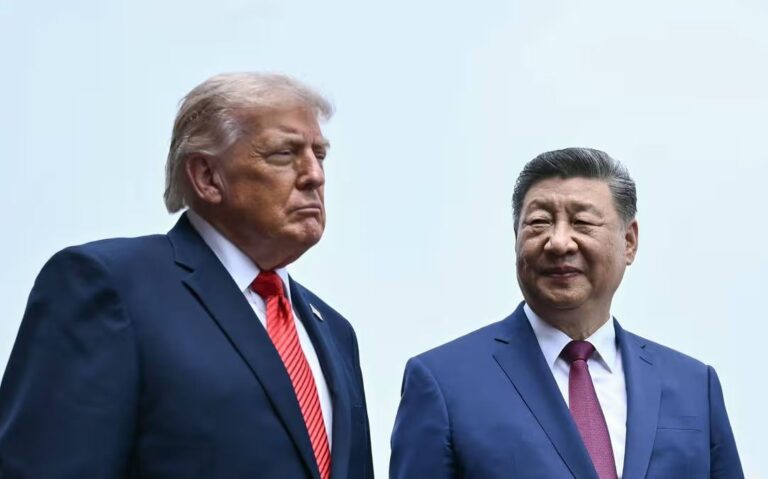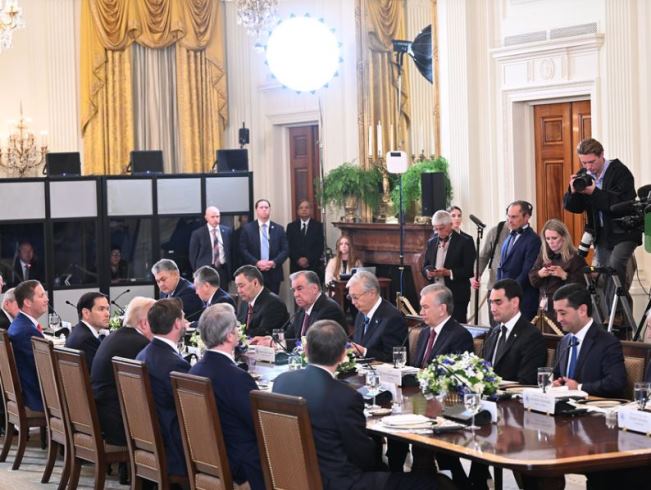
Western media report that U.S. President Donald Trump hosted the leaders of Kazakhstan, Uzbekistan, Kyrgyzstan, Tajikistan, and Turkmenistan at the White House on November 6, as part of efforts to diversify Washington’s supply of critical minerals essential for high-tech manufacturing.
According to Euronews, President Trump welcomed the Central Asian leaders last Thursday as he ramped up initiatives to secure rare earth elements vital for the production of high-tech devices such as smartphones, electric vehicles, and fighter jets.
Prior to a working dinner, Trump and the presidents of Uzbekistan, Kazakhstan, Kyrgyzstan, Tajikistan, and Turkmenistan reportedly held bilateral meetings in the Oval Office.
Euronews notes that Central Asia possesses vast reserves of rare earth minerals and produces nearly half of the world’s uranium—a key component in nuclear energy production. However, further investment is required to fully develop the region’s resource potential.
Meanwhile, Al Jazeera reported on November 6 that, according to the U.S. Department of State, the summit aims to deepen cooperation between Washington and the Central Asian nations by “advancing regional solutions to global challenges” through “fair and reciprocal economic partnerships, enhanced energy security, and promoting peace through strength.”
The report also noted that the “C5+1” working groups are centered around three main pillars: economy, energy, and security.
The meeting coincides with growing interest from both Russia and China, who are also seeking to solidify trade relationships within the region.
Western analysts observe that while the C5+1 format has remained relatively low-profile, it has quietly shaped U.S. policy in Central Asia for over a decade. According to The Diplomat, this framework—bringing together the five Central Asian states and the U.S.—has maintained consistent engagement, which intensified after the COVID-19 pandemic in 2020 and following Russia’s invasion of Ukraine in 2022. Since 2015, the foreign ministers of the six nations have met almost annually, typically on the sidelines of the U.N. General Assembly. A dedicated secretariat was established in 2022, marking a key step in the institutionalization of the format.
In 2023, then-President Joe Biden hosted the first-ever C5+1 Leaders’ Meeting in New York, coinciding with the U.N. General Assembly.
Meanwhile, U.S. Secretary of State Marco Rubio welcomed his Central Asian counterparts at the State Department during a formal reception. In his remarks, Rubio said, “We often spend so much time addressing crises and urgent problems—rightfully so—that we sometimes overlook promising new opportunities. What we have here is just that: an exciting opportunity where our nations’ strategic interests align.”
Rubio reportedly also announced his intention to visit all five Central Asian countries in 2026. If carried out, he would become the second U.S. Secretary of State to complete the so-called “grand Stan slam,” following John Kerry’s historic 2015 tour of the region during which the C5+1 initiative was launched.