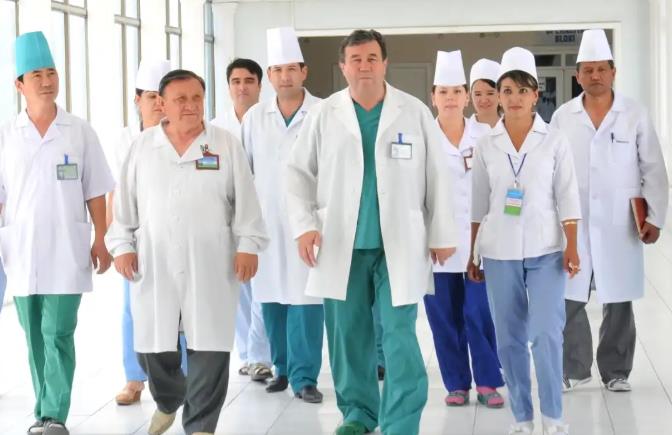
Starting in 2026, Uzbekistan will introduce sweeping changes to its healthcare leadership structure by appointing business-savvy professionals with management experience to key positions in hospitals and clinics across the country. The move is part of a broader strategy to modernize the healthcare system and improve service quality.
Under the new system, the roles of chief physician and administrative director will be separated in all medical institutions. Entrepreneurs with proven management skills and successful track records will now be eligible to lead regional and district healthcare departments, medical centers, and family clinics.
President Shavkat Mirziyoyev announced the reforms during a meeting with medical and pharmaceutical workers, emphasizing that healthcare institutions should be managed not only by medical professionals but also by competent administrators capable of driving efficiency and delivering better outcomes for patients.
To support this transition, two top-performing leaders—one from a district healthcare department and one from a family clinic—in each region will be sent abroad for management training. Partner countries include the United States, Germany, the United Kingdom, South Korea, and Turkiye.
President Mirziyoyev noted that the rising expectations of citizens in terms of quality of life and healthcare require modern approaches. Each newly appointed healthcare director will be required to follow detailed monthly plans, visit high-risk districts, and implement targeted measures to reduce health threats, while also training medical staff and improving treatment quality.
“We will build a system where the voice of the people is heard,” said the president.
Uzbekistan is also launching a major overhaul of medical education aimed at better preparing healthcare workers and strengthening the private sector’s role in healthcare delivery.
From the next academic year, medical universities will begin training general medicine specialists under a new model that merges pediatrics and general therapy faculties. New residency and master’s programs in family medicine will also be introduced. Residency students will receive free education while working as family doctors, and upon graduation, they will be granted a specialized diploma along with a 150% salary bonus.
The country will also modernize training for mid-level medical personnel. The current Academy of Nurses will be integrated into Tashkent State Medical University, where a new Higher Academy of Professional Medicine will be established. Starting in 2026, universities will offer a bachelor's degree in advanced nursing, with annual enrollment quotas increasing by 20%. Nurses with higher education degrees will receive a 100% salary bonus.
A new system for continuous professional development will also be implemented for doctors. Beginning in 2026, training will include remote learning, hands-on practice using simulation robots, and on-the-job training. A Center for Continuing Medical Education will be established to develop modern training standards.
President Mirziyoyev highlighted that private clinics already provide around 30% of medical services nationwide and emphasized the importance of expanding public-private partnerships. To support this growth, existing tax and customs incentives for importing medical equipment and ambulances will be extended. Additional benefits will be introduced for private healthcare providers.
Furthermore, a $200 million concessional credit line will be made available to entrepreneurs aiming to open modern multi-specialty clinics.
“I view the white coat not just as a symbol of the profession, but as a sign of unwavering dedication to the homeland,” the president concluded. “We will continue to uphold the dignity of every medical professional and provide them with the conditions they deserve. I am confident that together, we will transform the New Uzbekistan into a nation with an advanced healthcare system.”